
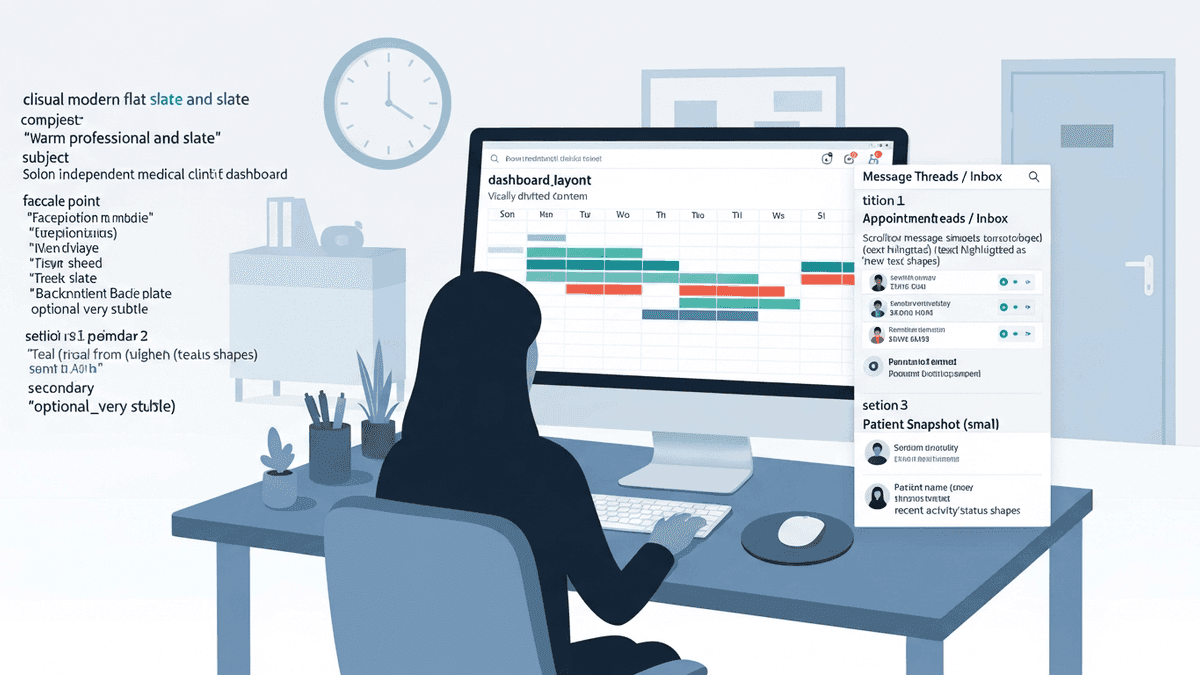
Diagnosis: the SERP for healthcare CRM for solo providers is enterprise product pages and hospital listicles comparing platforms you will never afford on a family-medicine budget. Your problem is narrower—one phone tree, one scheduler, twelve open slots next week.
Nine times out of ten, the useful question is not "Which CRM won Gartner?" It is "Can the person covering lunch see every missed call from this morning?" (Yes, you should be charting. We will not tell.)
This guide defines what CRM actually means for independent and solo clinics, what to wire before you shop software, and when a spreadsheet plus your EHR is still the honest answer.
What healthcare CRM means for solo clinics (not hospital Salesforce)
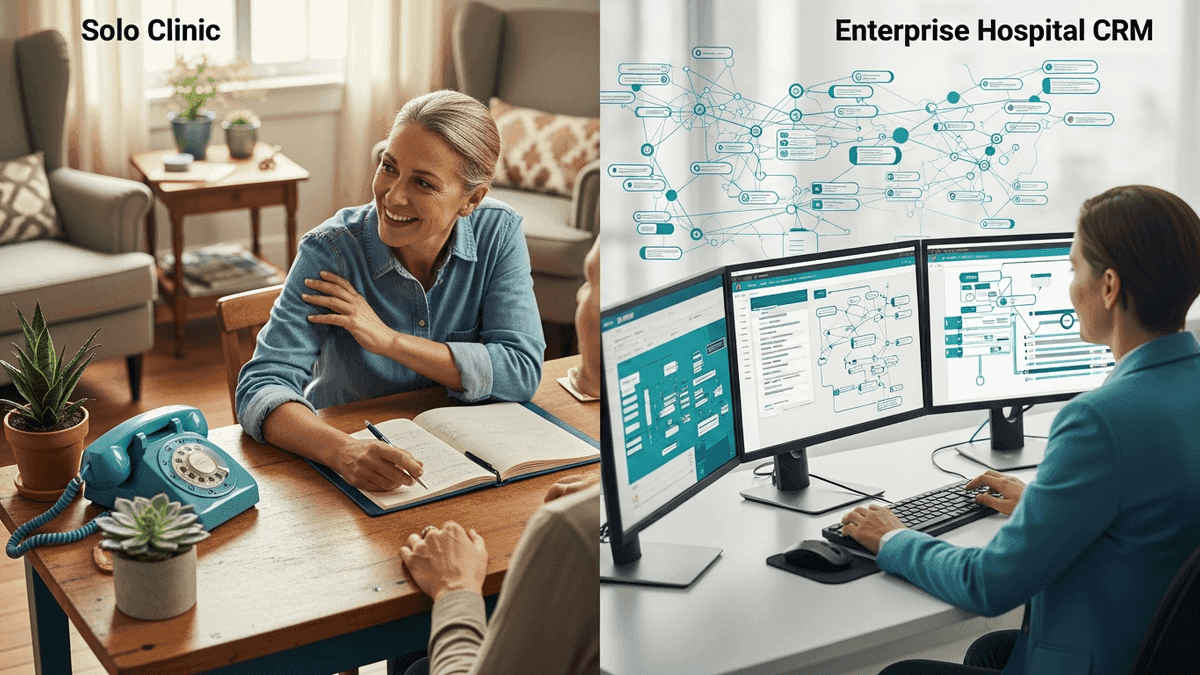
Hospital CRM unifies referral coordinators, care navigators, and population dashboards across a health system. Solo CRM is the front desk's shared brain: contact history, appointment context, message threads, and notes when a human must call back.
Healthcare CRM vs EHR patient portal is the confusion point vendors exploit. The EHR owns the chart—diagnoses, orders, billing codes. The portal lets patients message and pay bills. CRM is staff-facing: who called twice, who needs annual labs, who left a review that needs a calm reply. Different jobs, different logins, often different vendors.
You do not need a pipeline stage called "Qualified Lead." You need a thread that says "New patient, BCBS, knee pain, prefers Tuesday PM, callback if no slot online." That is solo practice lead routing and intake CRM—routing intent to the right chair, not nurturing a funnel like you sell timeshares.
Opinion we will defend in any doctors' lounge: if your electronic health record cannot integrate with modern online booking, it is actively costing you patients. Millennials and Gen Z will choose a doctor who does not make them call. CRM without booking integration is a contact list with delusions of grandeur.
CRM layers before software shopping (triage the stack)
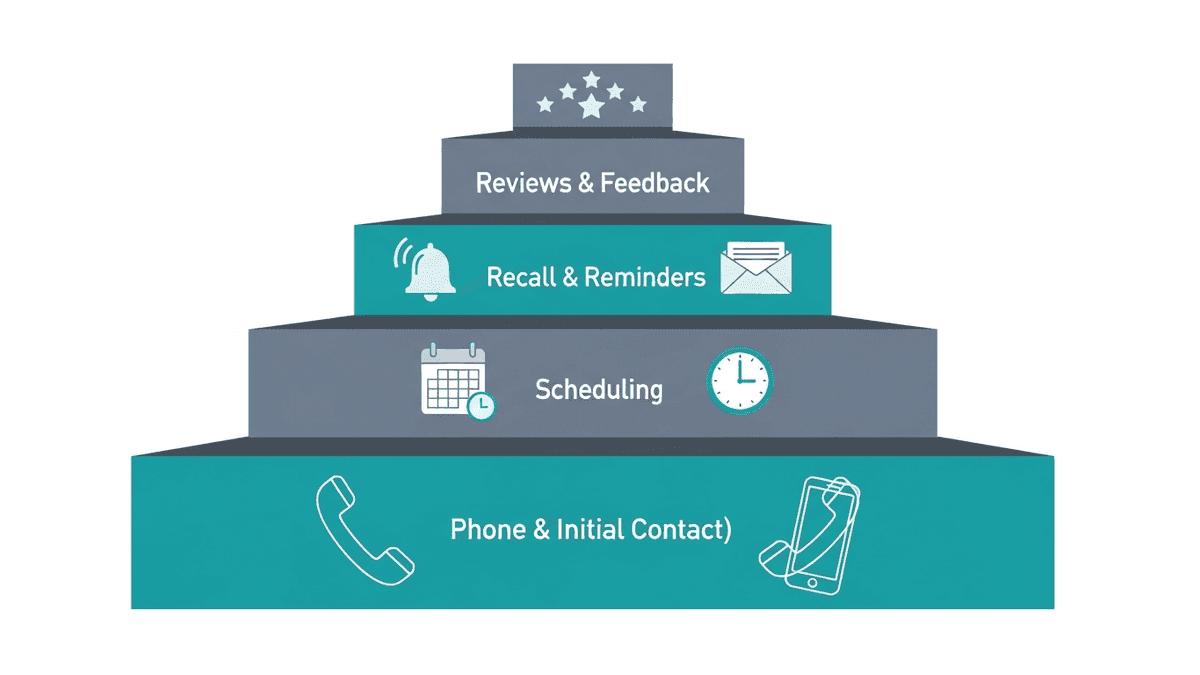
Buying CRM before the phone works is bolusing fluids into a line that is not patent. Layer the stack like triage—airway first, then circulation, then the fancy monitor.
Layer one — one canonical phone number. If map listings, the website footer, and the prescription pad disagree, CRM threads attach to the wrong patient before lunch. Merge ghost listings before you merge contacts.
Layer two — scheduling truth. Appointment types that match real chair time, buffers for how long you actually run behind, online booking that does not die on mobile. Without clean scheduling, every CRM reminder texts the wrong human about the wrong slot.
Layer three — message consent and templates. What can go in SMS preview text? Who approves recall wording? Minimum necessary is not a suggestion—it is the difference between operations and an OCR headache.
Layer four — recall and review rules. Which panel lists are due for follow-up? When do you ask for a public review versus route unhappy patients privately? Software cannot fix a recall list nobody trusts.
Only then shop best patient scheduling and CRM software for solo practice demos. Vendors love skipping to layer seven because the dashboard has gradients. You live in layer two.
Scheduling, intake, and lead routing for solo providers
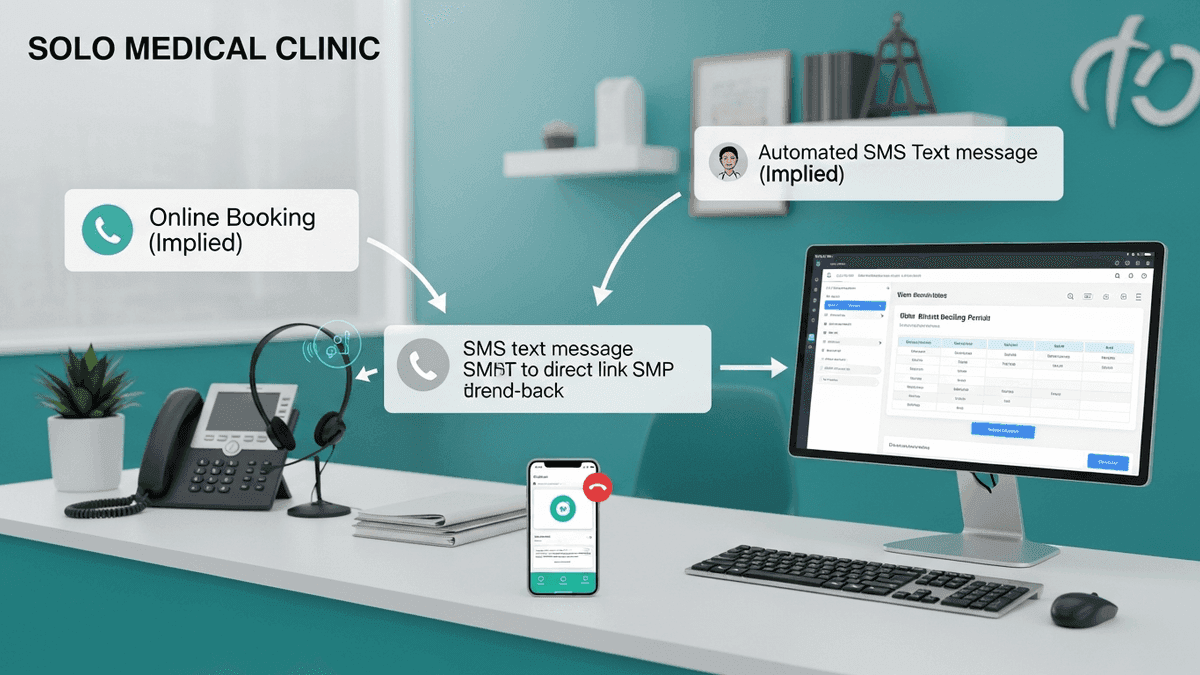
Searching how to attract new patients returns ads and directory pitches. Searching your call log returns voicemails from people who already wanted you. CRM starts where marketing ends—when the phone rings and Brenda is at lunch.
Missed-call → text-back → book. Patient calls during the noon rush → auto text with secure booking or callback queue → staff sees the thread inside CRM. Demo this path first. Pretty calendar grids are table stakes; patent airways are the test.
Lead routing without car-dealer jargon. Tag new versus established, insurance versus self-pay, procedure versus consult. Route high-intent surgical consults to a human faster than generic primary slots. That is patient acquisition strategies for solo clinics—speed and clarity, not a nurture sequence written by someone who never heard a prior auth hold message.
Phone tree before chatbot theater. A bot that cannot hand off when the question is "Do you take this obscure plan?" is a reputation grenade. Read patient communication for family medicine for the SMS hierarchy—we bias toward fewer, clearer messages.
Owned booking beats marketplace dependency. If your CRM pushes every new patient through a third-party directory, you are renting chairs on someone else's porch. Keep the schedule on infrastructure you control—see healthgrades alternative for why owned channels compound.
Recall, retention, and review workflows inside your CRM
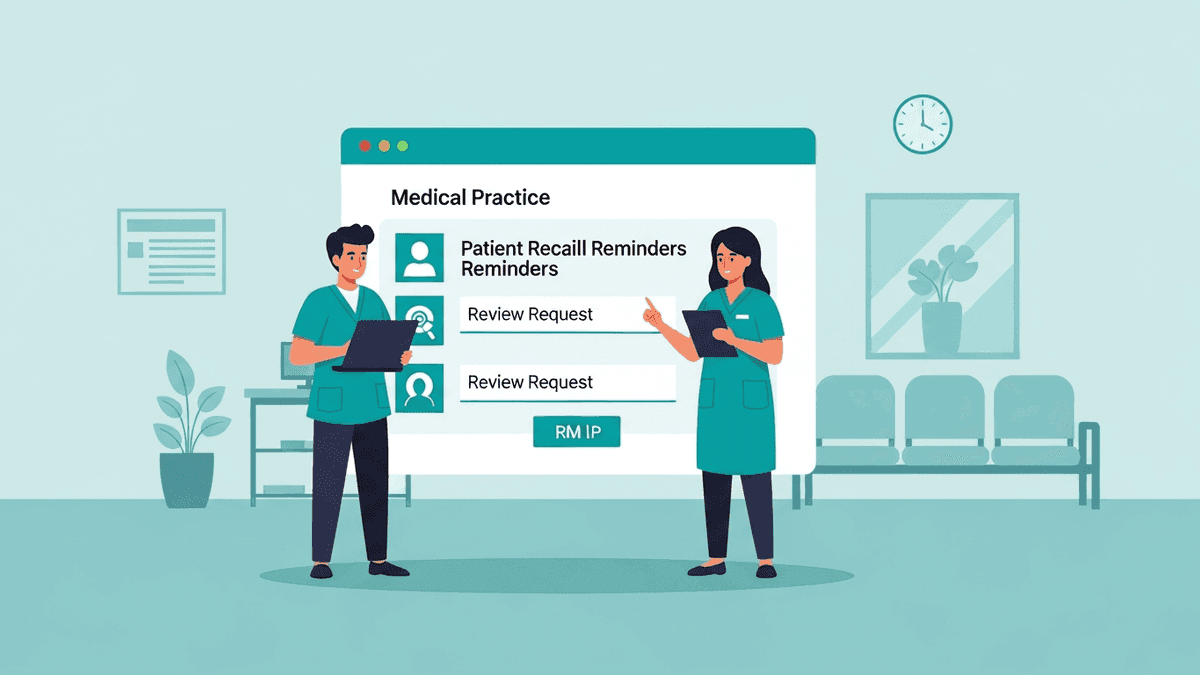
Enterprise decks love a single "patient engagement" toggle. Clinically and operationally, recall, reactivation, and reviews are different workflows wearing the same scrubs.
Recall inside the CRM. HIPAA compliant patient recall systems chase overdue follow-ups inside your panel—annuals, chronic panels, post-procedure checks. Messages should be minimum-necessary, opt-out friendly, tied to scheduling rules your staff actually agreed on.
Retention without spam. Reactivation reaches inactive patients. Longer gaps, softer tone, clear unsubscribe. Do not paste diagnosis labels into preview text because the export was lazy. Pair CRM recall with the manual discipline in medical practice patient retention.
Automated patient review generation should mean a polite ask after a clean visit—not a guilt trip before the copay clears. Unhappy patients get routed privately before they find the map pin. For public replies, see online reputation in healthcare.
Cancelled-slot backfill belongs in the same operational brain. When a visit cancels, rank your waitlist and text the top candidates. Speed beats perfection. Pair with strategies to fill empty appointment slots when holes are cancels, not just no-shows.
HIPAA boundaries and CRM vendor vetting
Tweaking website colors on a Sunday? Fine. Piping patient histories through a consumer chat tab with no Business Associate Agreement? That is not innovation. That is an OCR fine waiting for a slow news day.
Every CRM vendor touching PHI needs a signed BAA and HIPAA-eligible storage. Message content follows minimum necessary—no diagnosis names in SMS lock screens, no chart snippets in UTM parameters. HHS publishes the privacy rule hub at hhs.gov/hipaa. We are marketers, not your compliance officer—but we will not hand you a sticker without the paperwork.
A recurring nightmare on discovery calls: "My last agency won't give me the login to my own website." Unethical vendors register domains under agency credentials—hostage assets if you cancel. Same disease in CRM: who owns message history, consent logs, and export rights when you leave? Demand it in writing before you migrate panel lists.
Red flags: no BAA on request, vanity dashboards without booked appointments, bundled ad spend inside a single invoice, promises to replace clinicians, or "HIPAA compliant" stickers with no paperwork. Google's Business Profile guidelines matter too—review replies and messaging still show up in public trust signals.
Separate software fees from media spend. You should pay for strategy and tooling; pay ad platforms directly for ads. Agencies that bundle both are skimming off the top—same opinion we repeat until the breakroom coffee goes cold.
When not to hire us (or buy CRM) yet

We once talked a doctor out of a four-figure monthly retainer because he had not verified the postcard Google sent to his front desk. He ranked locally two days later. We would rather lose a deal than sell CRM on top of a haunted map pin.
Do not buy CRM yet if Google Business Profiles are unclaimed, intake calls go to voicemail, review velocity is mostly silence or one-star grenades, or mobile booking breaks mid-flow. Fix the free stuff first—claim the map, answer the phone, patch the form.
Do not buy CRM yet if staff have not agreed on recall rules. Software cannot fix a panel list nobody trusts. Clean the spreadsheet before you bless it with SMS.
Do not buy CRM yet if the EHR calendar is fiction—double-booked templates, provider schedules that ignore reality, no buffers for how long you actually run behind. Scheduling truth before contact database theater.
Pouring outreach into a slow, broken website is bolusing fluids into a line that is not patent. Fix owned-site speed and mobile booking first—see doctor website builder if the handoff from CRM texts lands in a digital waiting room from 2012.
Straight answers

What is healthcare CRM for solo providers?
Front-desk operational memory—contact history, appointments, message threads, handoff notes—not a hospital referral pipeline.
Do solo doctors need a CRM or is the EHR enough?
EHR owns the chart. CRM owns conversations before and between visits. Many solo clinics survive on EHR plus discipline until volume outgrows sticky notes.
What is the best scheduling and CRM software for a solo practice?
The one staff use at 8:04 a.m. Monday—with HIPAA-safe messaging and a missed-call path that books, not the prettiest demo grid.
Is healthcare CRM HIPAA compliant?
Only with a BAA, eligible storage, and minimum-necessary templates—not a generic chat widget pasted into the breakroom.
How is CRM different from a patient portal?
Portal is patient-facing. CRM is staff-facing. Different permissions, different workflows, often different vendors.
What should a solo clinic set up in the CRM first?
Missed-call text-back, confirmations, overdue recall, polite review asks—after the main line gets answered.
When should a small practice not buy CRM software yet?
Unverified map pin, voicemail intake, broken mobile booking, or untrusted recall lists—fix foundations first.
If the waitlist still lives in a spreadsheet while vendors pitch hospital CRM demos, book a discovery call on pricing. Read how it works when the phone tree is patent and you need owned intake routing. Go finish your charting.