

Diagnosis: the SERP for AI automation for medical practices is twelve-item listicles from scheduling vendors and EHR keynote slides about population health. Your problem is narrower—one door, one phone tree, a waitlist spreadsheet named Final_v3_REAL.xlsx.
Nine times out of ten, the useful question is not "Which AI vendor won LinkedIn?" It is "Which repetitive task still dies when Brenda is at lunch?" (Yes, you should be charting. We will not tell.)
This guide maps what to automate, in what order, with HIPAA boundaries intact—for independent and solo clinics that cannot afford a compliance department the size of a residency class.
The automation stack for solo practices (layer it like triage)
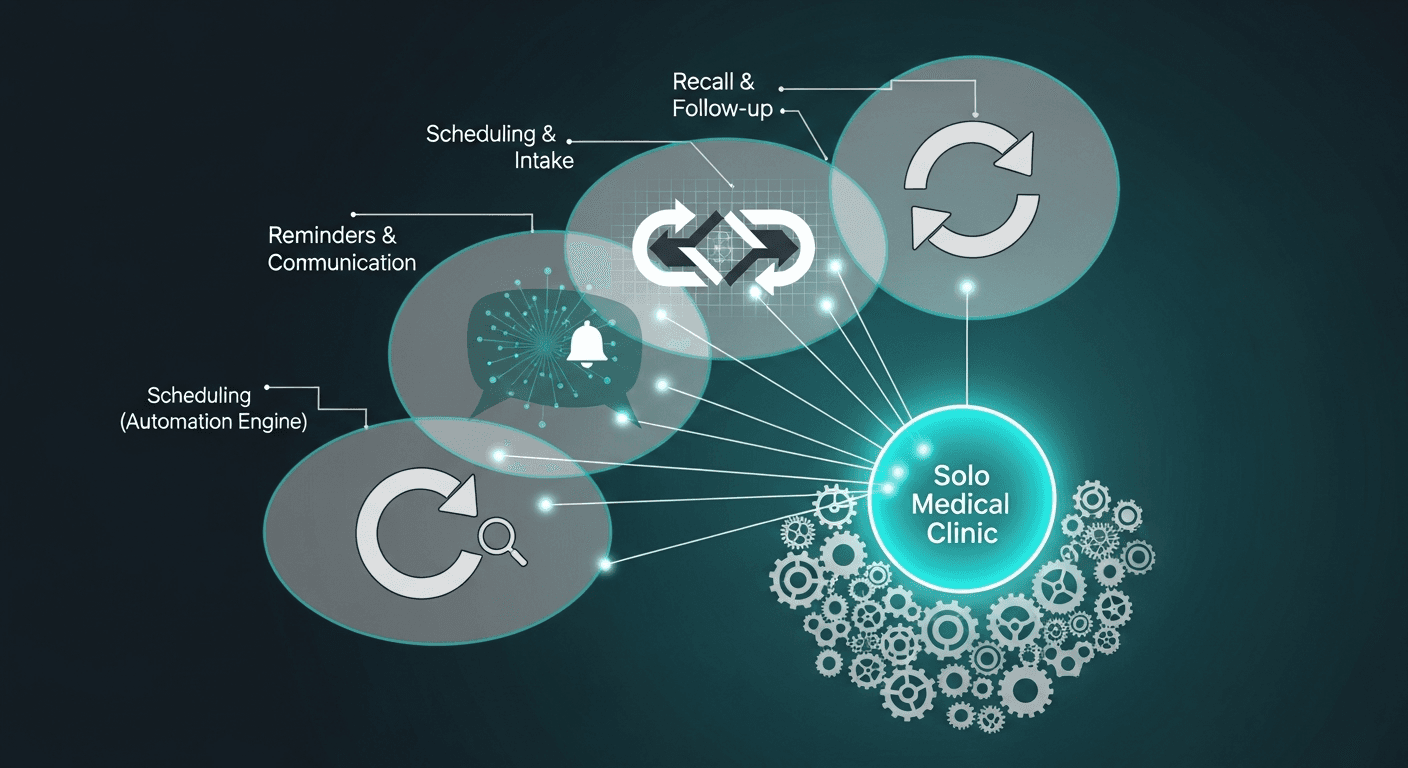
Enterprise blogs stack clinical AI on top of clinical AI. Solo clinics need a shorter ladder. Think circulation: scheduling at the heart, reminders as pressure support, recall as long-term maintenance, reviews as public vitals, intake routing as the airway.
Layer one — scheduling and calendar hygiene. Online booking, appointment types that match real chair time, buffers that reflect how long you actually run behind. Without clean scheduling, every downstream automation texts the wrong patient about the wrong slot.
Layer two — reminders and confirmations. Automated SMS or email nudges before visits. This is where reduce patient no-shows with automated SMS lives—not in a chatbot that quotes WebMD at midnight.
Layer three — recall and reactivation. HIPAA compliant patient recall systems chase overdue follow-ups inside your panel. Reactivation wakes inactive lists. Different lists, different consent language, different expectations.
Layer four — reviews and reputation routing. Automated patient review generation should mean a polite ask after a good visit—not a guilt trip before the copay clears. Unhappy patients get routed privately before they find the map pin.
Layer five — intake routing. Missed call → text-back → booking link → human if needed. That is what value AI can bring into my current medical practice on a Tuesday, not a diagnostic model trained on a hospital warehouse.
High-ROI workflows to automate first
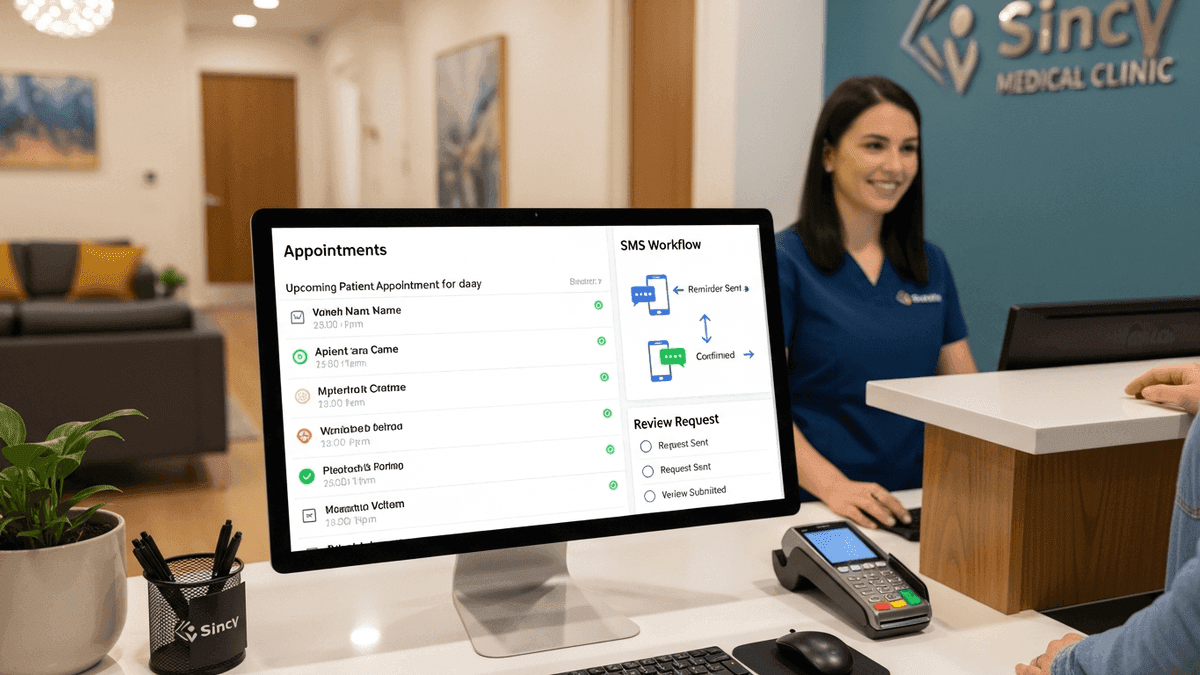
Vendors demo ambient documentation because it looks futuristic. Your ledger cares about empty chairs and silent phones. Automate where staff time already burns without adding headcount.
No-show and confirmation SMS. Patients forget. Staff forget to call. A timed reminder sequence is boring automation—and boring is good. Pair it with the manual playbook in reduce no-shows without more staff.
Cancelled-slot backfill. When a visit cancels, rank your waitlist and text the top candidates. Speed beats perfection. The slot that stays empty until tomorrow is revenue evaporating while you finish a prior auth.
Review requests after clean visits. Most clinics do not have a reputation problem—they have an ask problem. Automate the ask; keep humans on the angry replies. See online reputation in healthcare for the public-reply half.
Intake form nudges. Incomplete digital intake before the visit means the MA becomes a data entry clerk. Automated reminders that link back to secure forms beat clipboard déjà vu.
Opinion we will repeat until the breakroom coffee goes cold: marketing and automation spend is wasted if the front desk still puts patients on hold. Audit answer rates before you fund another SaaS tile.
Recall, reactivation, and waitlist automation are not one button

Vendor decks love a single "patient engagement" toggle. Clinically and legally, these are different workflows wearing the same scrubs.
Recall targets patients due for indicated follow-ups—annuals, chronic panels, post-procedure checks. Messages should be minimum-necessary, opt-out friendly, and tied to your scheduling rules. This is core HIPAA compliant patient recall systems territory.
Reactivation reaches patients who have gone quiet. Longer gaps, softer tone, clear unsubscribe. Do not paste diagnosis labels into preview text because the EHR export was lazy.
Waitlist backfill is urgent and narrow: a slot opened, who gets the text first? Rank by clinical priority, distance, and who already said yes to standby. For the manual discipline behind empty chairs, read strategies to fill empty appointment slots.
Monday morning, late 2023: a multi-location ortho clinic called because their online intake form broke over the weekend. High-value consults evaporated while the answering service looped hold music. Our dev team rebuilt the EHR API connection in under two hours. The lesson is not "buy more AI." It is "fix the pipe before you automate the faucet." Recall texts into a broken booking link are just faster failure.
Scheduling, healthcare CRM, and intake routing for solo providers
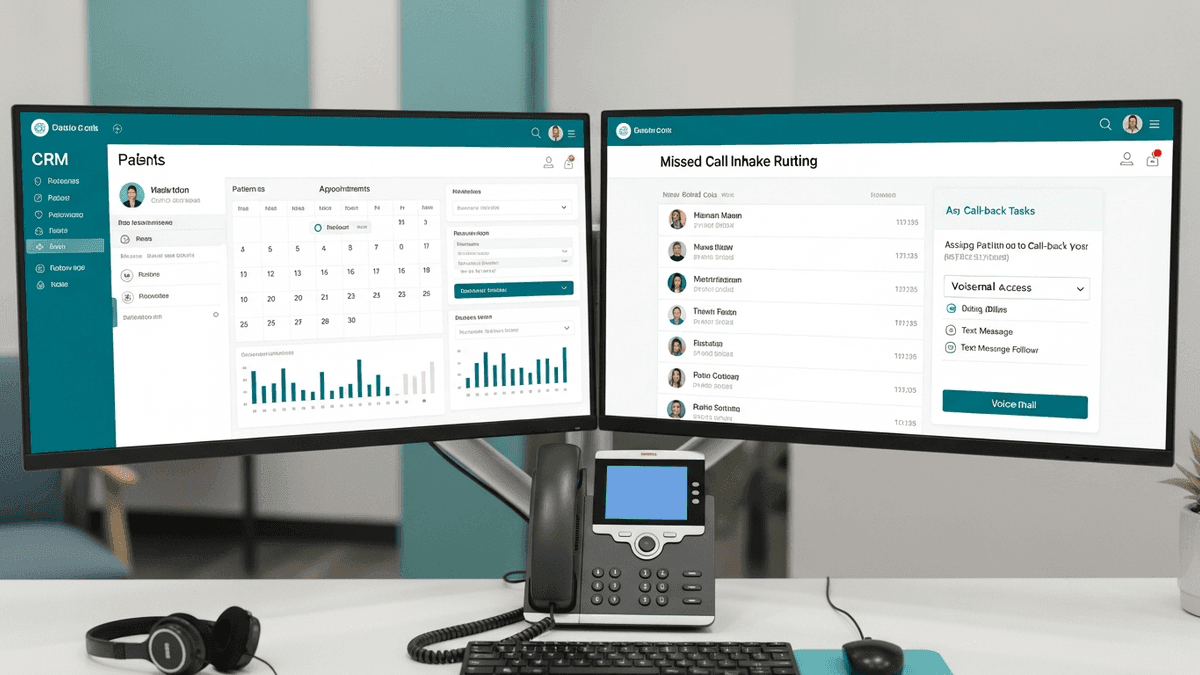
Searching best patient scheduling and CRM software for solo practice returns forty tabs and zero honesty. The best system is the one Brenda trusts on Monday at 8:04 a.m.
Healthcare CRM for solo providers should mean: unified contact history, appointment context, message threads with consent flags, and handoff notes when a human must call back. It should not mean a sales pipeline built for car dealerships.
Demo the missed-call path first. Patient calls during lunch → auto text → secure booking or callback queue → staff sees the thread inside the CRM. Pretty calendar grids are table stakes; patent airways are the test.
Phone tree before chatbot theater. A bot that cannot route to a human when the question is "Do you take this obscure plan?" is a reputation grenade. Read patient communication for family medicine for the SMS-vs-blast hierarchy—we bias toward fewer, clearer messages.
Owned booking beats marketplace dependency. If your CRM pushes every new patient through a third-party directory, you are renting chairs on someone else's porch. Keep the schedule on infrastructure you control.
HIPAA-safe automation boundaries (minimum necessary is not a suggestion)
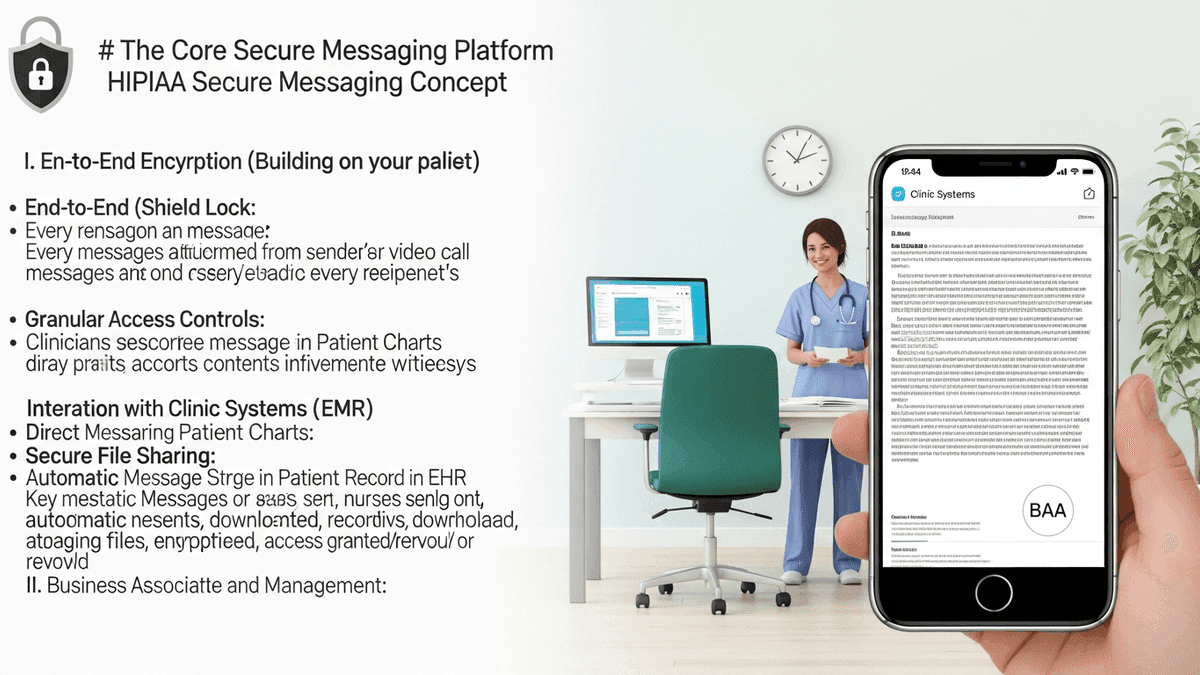
Tweaking website colors on a Sunday? Fine. Piping patient histories through a consumer chat tab with no Business Associate Agreement? That is not innovation. That is an OCR fine waiting for a slow news day.
Every automation vendor touching PHI needs a signed BAA and HIPAA-eligible storage. Message content follows minimum necessary—no diagnosis names in SMS lock screens, no chart snippets in UTM parameters. HHS publishes the privacy rule hub at hhs.gov/hipaa. We are marketers, not your compliance officer—but we will not hand you a sticker without the paperwork.
Separate marketing automation from clinical documentation AI. Reminder texts and review asks are operations. Ambient scribes and diagnostic suggestions live under different regulatory scrutiny—see the FDA's AI as a medical device framing when software makes clinical claims.
Train staff on what never goes into an automated template. Staff shortcuts—pasting full chief complaints into SMS fields—turn compliance into a Monday morning incident report.
EHR integration reality and vendor vetting

Legacy EHR bottlenecks are real. If your system cannot talk to modern online booking, younger patients will choose a doctor who does not make them call. AI that ignores integration is a screensaver with a monthly fee.
Ask vendors: API or webhook? Scheduled export? Who owns the data if you cancel? What happens to message history and consent logs? Hostage domains and bundled ad spend inside a single invoice are the same disease in different scrubs.
Red flags: no BAA, vanity dashboards without booked appointments, promises to replace clinicians, paste-PHI-into-a-consumer-LLM workflows, or "HIPAA compliant" stickers with no paperwork on request.
Harvard's continuing education team frames near-term AI as augmentation—not replacement—for physicians. See their physician-facing overview. We agree with the headline and disagree with buying the enterprise bundle on credit.
Month-to-month cancellation beats twelve-month copilot hostage deals. For how we scope before any retainer, read how it works.
When not to hire us (or anyone) for automation yet

We once talked a doctor out of a four-figure monthly retainer because he had not verified the postcard Google sent to his front desk. He ranked locally two days later. We would rather lose a deal than sell automation on top of a haunted map pin.
Do not automate yet if Google Business Profiles are unclaimed, intake calls go to voicemail, review velocity is mostly silence or one-star grenades, or mobile booking breaks mid-flow. Fix the free stuff first—claim the map, answer the phone, patch the form.
Do not automate yet if staff have not agreed on recall rules. Software cannot fix a panel list nobody trusts. Clean the spreadsheet before you bless it with SMS.
Pouring outreach into a slow, broken website is bolusing fluids into a line that is not patent. Speed and mobile conversion come before clever bots—see doctor website builder if the owned site is the leak.
Straight answers
What is AI automation for medical practices?
Operational workflows—reminders, recall, waitlists, reviews, intake routing—not replacing exam-room judgment.
Is automated patient texting HIPAA compliant?
Only with a BAA, eligible storage, and minimum-necessary message content—not a generic chat widget.
What should a solo practice automate first?
No-show reminders, cancelled-slot waitlists, overdue recall, and review asks—after the main line gets answered.
How is recall automation different from reactivation?
Recall chases due follow-ups inside your panel; reactivation wakes inactive patients; waitlist fills one open slot fast.
Do I need a new EHR to use AI automation?
Usually no—integrations and exports from the EHR you already tolerate are enough for ops automation.
What is the best scheduling and CRM software for a solo practice?
The one staff use daily, with HIPAA-safe messaging and a missed-call path that actually books—not the prettiest demo grid.
When should a clinic not invest in automation yet?
Unverified map pin, voicemail intake, broken mobile booking, or untrusted recall lists—fix foundations first.
If the waitlist still lives in a spreadsheet while vendors pitch ambient scribes, book a discovery call on pricing. Pilot operational automation on AI Suite when the pipes are patent. Go finish your charting.