

Diagnosis: the SERP for AI for medical industry is mostly academic PDFs and enterprise slide decks. Your problem is simpler—chairs empty, phones ringing, a shadow list of patients who never booked the follow-up.
Nine times out of ten, the useful question is not "Will AI replace me?" It is "Which boring workflow is still held together by a sticky note on the front desk monitor?" (Yes, you should be charting. We will not tell.)
We have managed 412 scaled campaigns since 2016 with a 92% retention rate because we separate hospital theatrics from what a solo or small group can actually deploy this quarter.
What AI for the medical industry actually means for independent practices

Google's top results talk about imaging algorithms, drug discovery, and population health models built for health systems with compliance teams the size of your entire staff. That is real AI for medical care—just not the version that fixes your no-show rate on a Tuesday.
For AI for doctors in private practice, the honest stack looks like operations: outreach to inactive lists, ranking a waitlist when a slot opens, intercepting a one-star draft review before it posts, routing intake without another hold message. Clinical copilots and ambient scribes belong on the roadmap, not in slide one of a vendor pitch aimed at a three-provider clinic.
Harvard's continuing education team frames AI as augmentation, not replacement— see their physician-facing overview. We agree with the headline and disagree with buying the enterprise bundle on credit.
HIPAA boundaries, vendor BAAs, and why generic chatbots are not intake forms
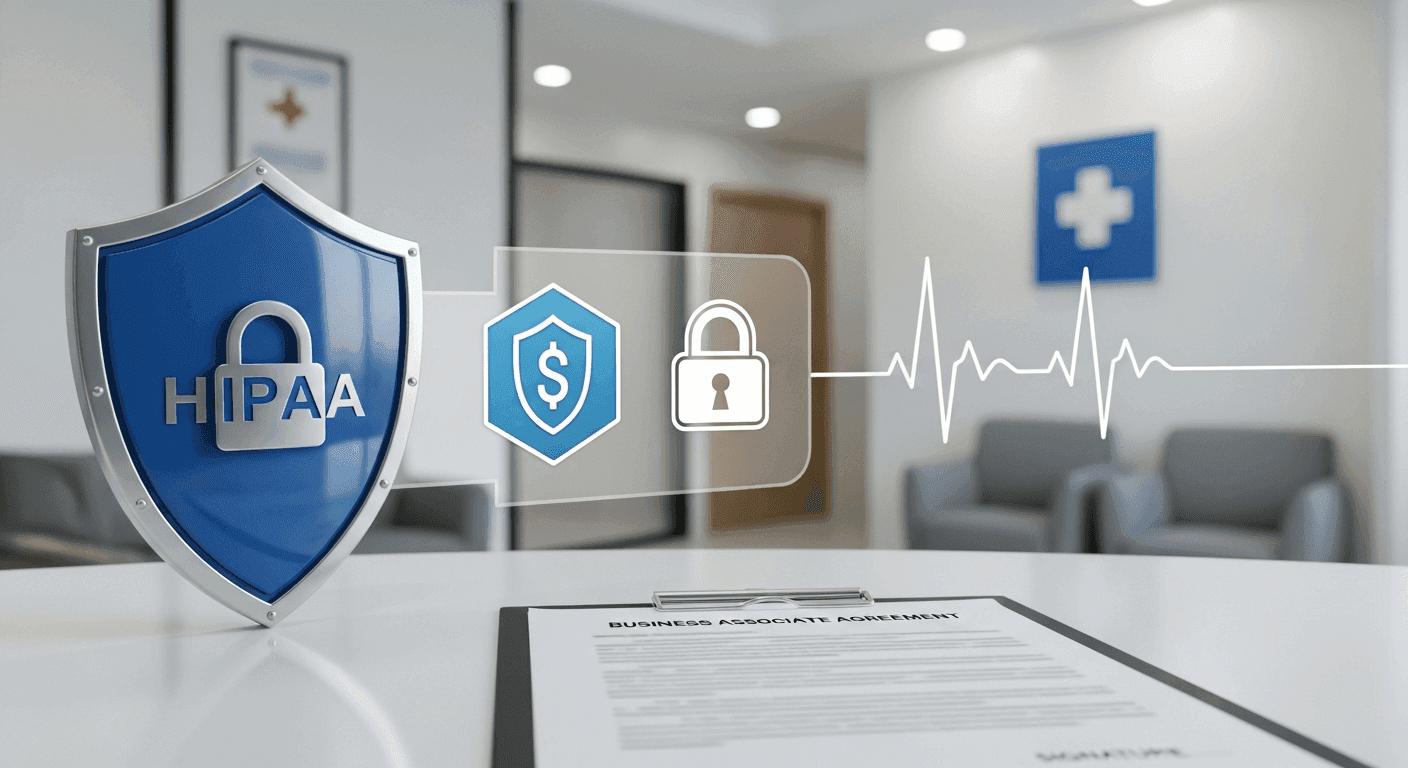
Tweaking your website colors on a Sunday? Fine. Piping patient histories through a consumer chat tab with no Business Associate Agreement? That is not innovation. That is an OCR fine waiting for a slow news day.
HIPAA AI tools require signed BAAs, HIPAA-eligible storage, and message content that follows minimum necessary—no diagnosis labels in SMS previews, no chart snippets in marketing UTMs. HHS publishes the privacy rule hub at hhs.gov/hipaa. We are marketers, not your compliance officer—but we will not hand you a "HIPAA compliant" sticker without the paperwork.
Monday morning, late 2023: a multi-location ortho clinic called because their online intake form broke over the weekend. High-value consults were evaporating while the answering service played hold music. Our dev team rebuilt the EHR API connection in under two hours. The lesson is not "buy more AI." It is "fix the pipe before you automate the faucet."
Front-desk wins before you fund another clinical copilot

Marketing's job is to make the phone ring. If the front desk puts patients on hold for ten minutes, AI medical practice automation just accelerates the hang-up. Audit the intake path first—then automate the parts that already convert.
Three operational layers pay for themselves before ambient documentation does: AI patient reactivation on inactive lists, smart waitlists that text the top five candidates when a slot cancels, and review engines that route unhappy patients privately before they hit the map pin. Our AI Suite ships those add-ons with BAAs and month-to-month cancellation—not a twelve-month copilot hostage situation.
For the manual version of waitlist discipline, read reduce no-shows without more staff. For reputation plumbing, see online reputation in healthcare.
Vendor red flags, EHR reality, and vanity dashboards

If a vendor promises to "10x your practice" in thirty days, ask what happens to your domain when you cancel. Hostage domains and bundled ad spend inside a single invoice are the same disease in different scrubs.
Legacy EHR bottlenecks are real. If your system cannot integrate with modern online booking, Millennials and Gen Z will choose a different doctor rather than make a phone call. AI that ignores that integration story is a screensaver with a monthly fee.
Vanity metrics do not pay malpractice insurance. Impressions without booked appointments are noise. The FDA's AI as a medical device guidance matters when software makes clinical claims—not when you are texting a patient that their annual is overdue.
Let us look at the math on attention. A slow website—loading in over three seconds—can push roughly 40% of visitors away. Pouring AI outreach into a broken digital waiting room is like bolusing fluids into a line that is not patent.
When not to buy AI tools yet
We once talked a doctor out of a four-figure monthly retainer because he had not verified the postcard Google sent to his front desk. He ranked locally 48 hours later. We would rather lose a deal than sell automation on top of a haunted map pin.
Do not buy AI yet if Google Business Profiles are unclaimed, intake calls go to voicemail, ratings sit under 4.0 stars—online conversion can crater by up to 60% in that zone—or your contact form still dumps PHI into an unencrypted inbox. Fix the free stuff first.
Opinion we repeat until the breakroom coffee goes cold: ad spend belongs on Google's card, not buried inside an agency invoice.Same rule for software that bundles media buys with "management." For how we scope work before any retainer, read how it works.
Straight answers

What does AI for the medical industry mean for independent practices?
Operational automation first—reactivation, waitlists, reviews—not replacing clinical judgment in the exam room.
Is AI for doctors HIPAA compliant by default?
No. You need BAAs, eligible storage, and minimum-necessary messaging—not a generic chat widget.
Where should we start with AI medical practice automation?
Inactive lists, cancelled slots, and review routing—where revenue already leaks without extra hires.
How is AI for medical care different from industry-level AI?
Clinical AI supports diagnosis and documentation at the point of care; practice AI runs the operations stack that fills schedules.
What are red flags when evaluating HIPAA AI tools?
No BAA, bundled ad spend, vanity dashboards, replace-the-doctor marketing, or paste-PHI-into-ChatGPT workflows.
Will AI replace physicians in private practice?
Credible research frames near-term AI as augmentation—documentation and outreach—not a substitute for exam-room judgment.
When should we not buy AI tools yet?
Unverified GBP, missed calls, sub-4.0 reviews, or broken mobile intake—fix operations before automation.
If the front desk still loses calls while vendors pitch ambient scribes, book a discovery call on pricing. We launch new campaigns within 14 days from kickoff per our onboarding SLA. Pilot the operational add-ons on AI Suite when the pipes are patent. Go finish your charting.