

Diagnosis: treat podiatry patient growth like circulation—you open the big vessels before you decorate the waiting room.
Nine times out of ten, the empty-chair problem is not that strangers dislike feet. It is that your digital front door forks: old map pins, a site that loads like it is waiting on prior auth, and a phone tree that sends heel-pain callers to voicemail while a hospital ortho directory ranks above you anyway.
This guide folds in the cluster you would type after a long clinic day: podiatrist near me, podiatry marketing, grow podiatry practice, diabetic foot and heel-pain intent, and honest questions about patient acquisition cost benchmarks for podiatrists. Each tactical layer has its own spoke—this page tells you which door to fix first.
What getting more podiatry patients means for solo clinics

For a two-provider foot and ankle group, patient growth is not vanity traffic. It is booked visits that match what you actually treat—conservative care, wound follow-up, surgical consults—not random "foot doctor" clicks that bounce when the site reads like a 2009 hospital brochure.
Think in three layers: discovery (Maps and search), conversion (site speed, booking, phone triage), and operations (front desk capacity, HIPAA-safe intake, referral follow-through). Skip a layer and the next tactic behaves like widening a blocked IV—louder, not healthier.
For the specialty overview, start at podiatry marketing on Patients Finder. For software-led acquisition economics, see podiatry patient acquisition.
Map and intake before podiatry marketing spend
Claim your Google Business Profile before you fund a content calendar or a paid search retainer. Most high-intent foot searches still begin in a rectangle with driving directions and stars—not your Instagram grid.
Marketing makes the phone ring. If the front desk puts new patients on hold until they hang up, you are setting budget on fire. Audit the answer script, after-hours routing, and whether online booking actually lands in the schedule your MA can see. Fix intake before you buy traffic you cannot convert.
Older podiatry groups often carry ghost listings like tree roots under the sidewalk: a partner left, the suite moved, and now two profiles argue about the fax line. Merge duplicates, align name-address-phone, then let new volume hit one coherent tap-to-call path. Full Maps ops live in local SEO for podiatrists.
Condition intent: heel pain, diabetic foot, and orthotics

Patients rarely search for "podiatric medicine." They search for heel pain, bunions, neuromas, diabetic foot checks, and custom orthotics near me. Your site and map services should mirror that language—not anatomy-textbook headings that read well in a journal nobody googles.
Split conservative and surgical paths on the page and in booking. A bunion consult and a wound follow-up need different intake questions, different expectations, and often different staff triage. One generic "request appointment" button trains the front desk to play telephone tag all afternoon.
Build and content depth sit in web development for podiatrists and SEO and content marketing for podiatrists. This hub only insists you publish condition intent before you publish thought leadership about thought leadership.
Referral paths, PCPs, diabetes care, and hospital ortho noise

A meaningful slice of podiatry volume still walks in through primary care and endocrine clinics—not through your blog. Give referring providers something they can forward: wound-care scope, diabetic foot pathways, post-op availability, and a phone line that picks up like it matters.
Hospital ortho directories and multi-location health systems dominate map packs in dense markets. You win the coherent tap with a verified local entity, recent reviews that mention specific conditions, and a mobile site that loads before the patient gives up in the parking lot. Stock photography of smiling models in white coats will not outrank a health system—but real clinic photos and clear service lines can compete for the patient who wants a foot-and-ankle specialist, not a generic find-a-doctor maze.
Paid search is rent; owned search behaves more like equity over time. We recommend a hybrid once the foundation is stable—as long as ad spend is paid directly to Google and the agency fee stays separate. Bundling the two is how budgets disappear without a receipt. Social cadence comes after Maps; see social media management for podiatrists when the free layer is boring but true.
Top US cities to prioritize podiatry patient growth
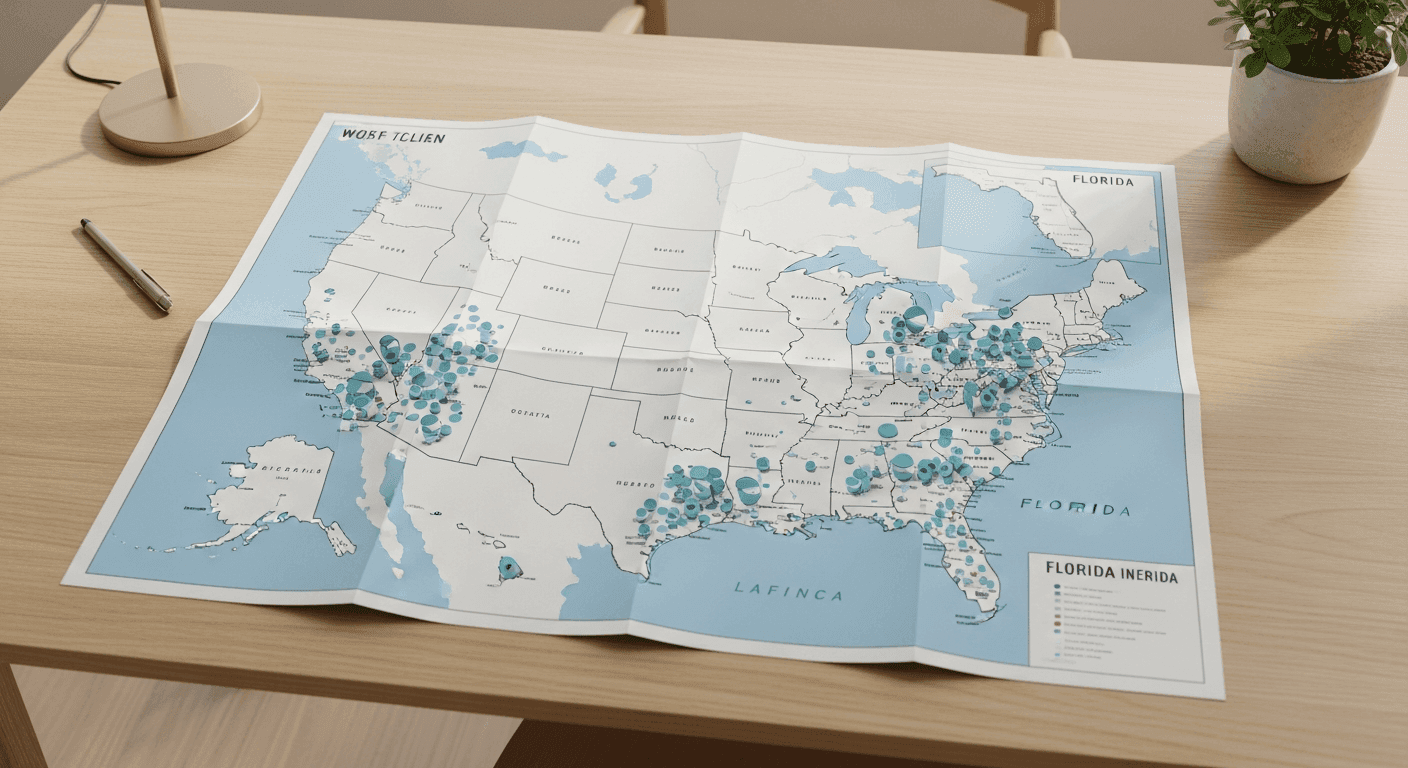
DataForSEO city-volume pulls were unavailable on our account when this guide shipped, so we tier metros the way we advise podiatry launches: population density, hospital map noise, and whether you actually have satellite hours or privileges there. Never build location pages for cities you cannot serve.
| Tier | Metros to prioritize |
|---|---|
| Tier 1 | New York, Los Angeles, Chicago, Houston, Phoenix |
| Tier 2 | Philadelphia, Dallas–Fort Worth, Miami, Atlanta, Boston |
| Tier 3 | Denver, Seattle, San Diego, Charlotte, Nashville |
Florida foot-and-ankle groups often run Miami, Tampa, Orlando, and Jacksonville with different NAP and hours per site. Treat those as one brand story with distinct booking paths—not four copy-paste pages with the same phone number and a prayer. Start with your real service radius. Expand when intake can handle the volume.
When we want you to keep the credit card in your coat pocket
We once had a frantic call from a podiatrist ready to sign a heavy SEO retainer because a new clinic was not showing on Google Maps. He had not verified the postcard Google mailed to his front desk. We told him to find the envelope, enter the code, and call back if he still needed help. The pin appeared within days. We talked ourselves out of a retainer because it was the right thing to do.
Do not hire us—or anyone—if the profile is unclaimed, ghost listings still fork your number, intake cannot answer, or the surgical schedule is full and marketing would lie about capacity. Fix the free layer first. When HIPAA boundaries on forms and pixels are still fuzzy, read HIPAA-compliant tools for podiatrists before you scale traffic.
When the map is clean, the site converts, and you have new-patient room, read how it works or book a discovery call on pricing.
Straight answers

How do podiatrists get more patients without buying ads first?
Fix map intent and intake: verify Google Business Profile, merge duplicates, align citations, and make sure the phone tree books—or at least answers.
Should podiatrists fix Google Business Profile before marketing?
Usually yes. Maps is where heel-pain and diabetic-foot intent begins. A forked profile sends callers to the wrong door while you fund content.
What pages should a podiatry practice website have?
Condition pages patients search, conservative vs surgical booking paths, provider bios, and HIPAA-safe intake—not a generic foot doctor brochure.
How do PCPs and endocrinologists send diabetic foot patients?
Through clarity: wound and diabetic foot pages they can forward, consistent NAP, and a phone line that picks up without a maze.
Do podiatrists need TikTok to grow?
Most practices do not. Fix Maps, search, and referrals before you staff a platform patients rarely use to find foot care.
Which US cities should a podiatry group prioritize first?
Cities where you have real hours and capacity. Tier large metros by competition and hospital noise; add pages only when booking differs by market.
When should a podiatry practice hire a marketing agency?
When the map layer is coherent, intake can handle volume, and you have clinical room—not when verification mail is still unopened.
For owned-search fundamentals, skim Google's SEO Starter Guide. For PHI boundaries on public surfaces, see HHS HIPAA guidance. Both pair well with coffee that has been on the warmer since rounds.
Go finish your charting. If the map still looks haunted after you verify the pin, merge the ghosts, and fix the phone tree, book a discovery call on pricing—we will tell you the truth even when the truth is a postcard and ten minutes of admin time.