

Diagnosis: fix the map entity and the conversion layer before you fund a content calendar.
Foot and ankle patients still start in Maps, skim stars, and tap call. SEO & content marketing for podiatrists only compounds when that tap lands on pages that answer real intent—heel pain, bunions, diabetic foot, same-week eval—not a generic wellness blog. For the build layer (booking, HIPAA, speed, condition-page IA), see web development for podiatrists. For specialty context, see our podiatry marketing overview. For a done-for-you implementation layer, see our podiatry patient acquisition platform. This page stays on ongoing search and content ops.
Map and GBP before the content calendar

Claim your Google Business Profile before you hire someone to write twelve posts about summer sandals. It drives a large share of local podiatry traffic and it is free. (Yes, you should be charting. We still mean it.)
Older podiatry practices often carry ghost listings under the sidewalk—a partner left, the suite number changed, and now two profiles argue about the fax number. The algorithm does not roll its eyes. It splits authority and sends callers to whichever listing looks coherent. We merge duplicates, align name-address-phone data, and clean citations so Maps has one story. Boring work. Same class as reconciling vitals before you order a pressor.
When the profile matches the site footer character-for-character, map traffic stops forking. For full map-pack discipline, read local SEO doctors. Only then does a podiatrist content calendar Florida earn its keep.
Condition content for foot-pain search

Nobody wakes up and types "board-certified podiatric physician accepting new patients." They type heel pain doctor, bunion specialist near me, ingrown toenail same week, and foot doctor for diabetes. Your medical practice marketing strategies should mirror that language on owned pages—not on a directory you do not control.
Schedule capacity is the governor. If surgical blocks are full and eval slots are booked two weeks out, publishing SEO pages that scream "book today" is digital false advertising. Match publishing to reality: waitlist messaging, conservative-care depth, or referral criteria for PCPs—not vanity volume. One high-intent plantar fasciitis SEO Florida page that ranks beats six thin posts that smell like a content mill.
Topic clusters that work for podiatry: plantar fasciitis and heel pain, bunions and hammertoes, ingrown nails and nail disorders, ankle sprains and sports injuries, diabetic foot care and wound pathways, and location-specific service pages if you cover multiple sites. Tie each page to a booking or referral path. If it does not connect to intake, it is a pamphlet, not content marketing.
Florida local SEO for podiatry practices
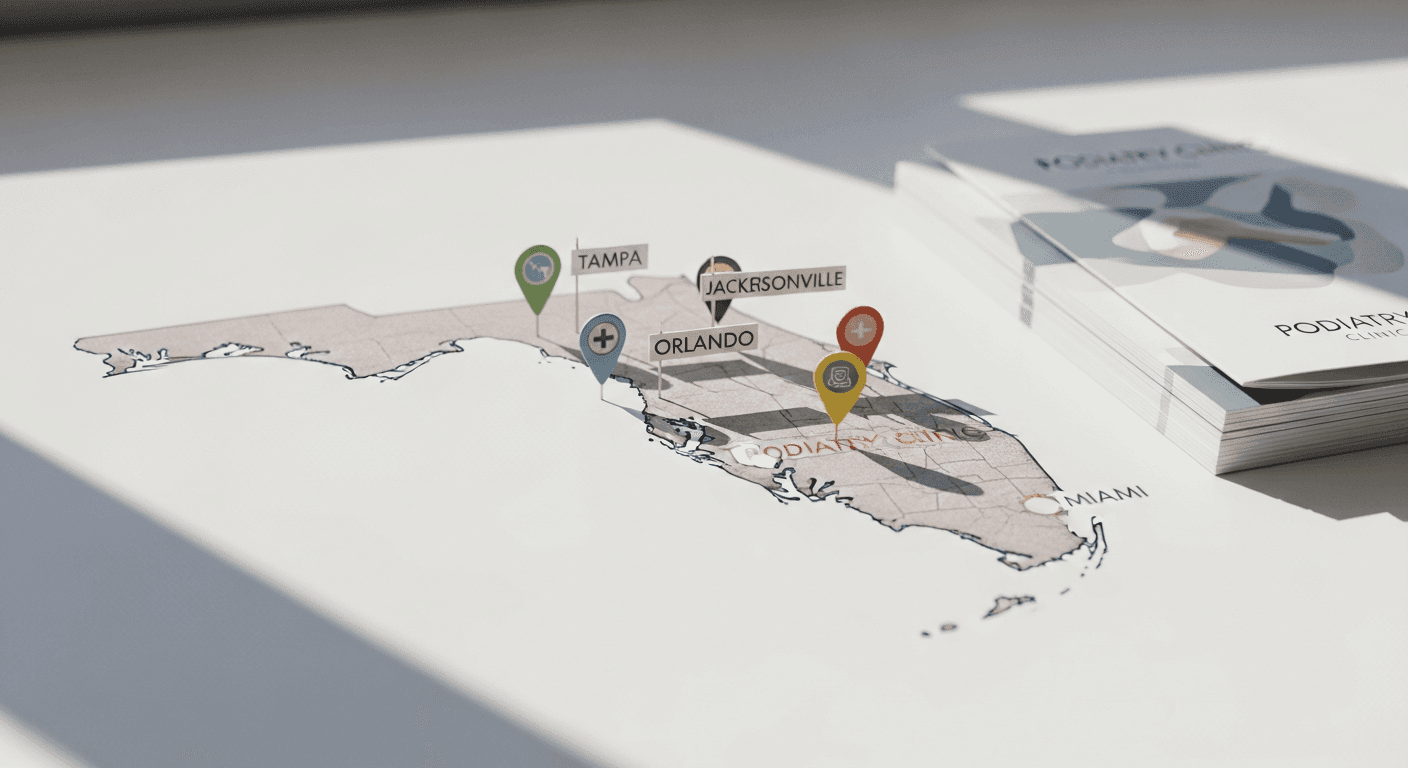
Florida podiatry is not one market. A group with offices in Miami, Tampa, Orlando, and Jacksonville is four distinct local entities—not one statewide landing page with a hero photo of palm trees. Podiatry SEO Florida means location pages with unique NAP, provider rosters, parking and access notes, and service lines that match what each community actually searches.
Snowbird and retiree demand shifts seasonally. Content that mentions diabetic foot screening, wound care access, and same-week eval windows lands better than generic foot health copy. A foot doctor content marketing Florida plan should make it obvious which city you serve on every page—not bury it in the footer after three paragraphs of boilerplate.
Podiatrist near me intent is hyper-local. Treat it like triage: one verified GBP per location, one location page per address, internal links between related conditions—not keyword-stuffed clones. Multi-location groups that publish one page and hope Google sorts it out usually watch hospital ortho directories eat the map pack anyway.
Referral-aware content for PCPs and diabetes care

Podiatry is referral-heavy in ways retail foot care is not. A diabetic foot care content Florida page should answer what primary care and endocrine teams actually need: ulcer criteria, vascular workup expectations, typical turnaround for urgent eval, and which insurances you take for wound pathways—not marketing adjectives.
Publish referral criteria in plain language. "When to send within one week" beats "comprehensive podiatric excellence." If your site hides criteria behind a contact form, busy PCPs will keep sending to the hospital directory because it lists phone numbers without a scavenger hunt. Content marketing for podiatrists includes the pages referring clinicians bookmark—not just patient blog posts.
Link condition pages to referral paths. A plantar fasciitis page for patients and a one-page PDF-style summary for PCPs can coexist without duplicate cannibalization if intent differs. The goal is fewer phone-tag loops between front desk and referring offices—the same friction that makes prior auth feel like a second job.
On-page SEO and content cadence you can staff

Healthcare SEO and physician SEO do not require a full-time hire if the practice respects a short maintenance list. Title tags that say what the page does. Meta descriptions that match the first paragraph. Internal links between related foot and ankle services. Real provider names on bio pages. A location block that matches GBP exactly.
Wire Physician and MedicalBusiness schema once, then stop treating markup like a science fair project. Slow pages bleed map clicks before anyone reads your bunion FAQ. Keep content images compressed and resist stacking widgets on every condition page.
Google's SEO Starter Guide is calmer than most agency decks. Use it when someone sells you a forty-page content plan before anyone audits your service pages. One high-intent page or refresh per month is realistic for many small podiatry groups once core condition pages exist—OR days beat vanity cadence every time.
Reviews, EEAT, and hospital directory noise
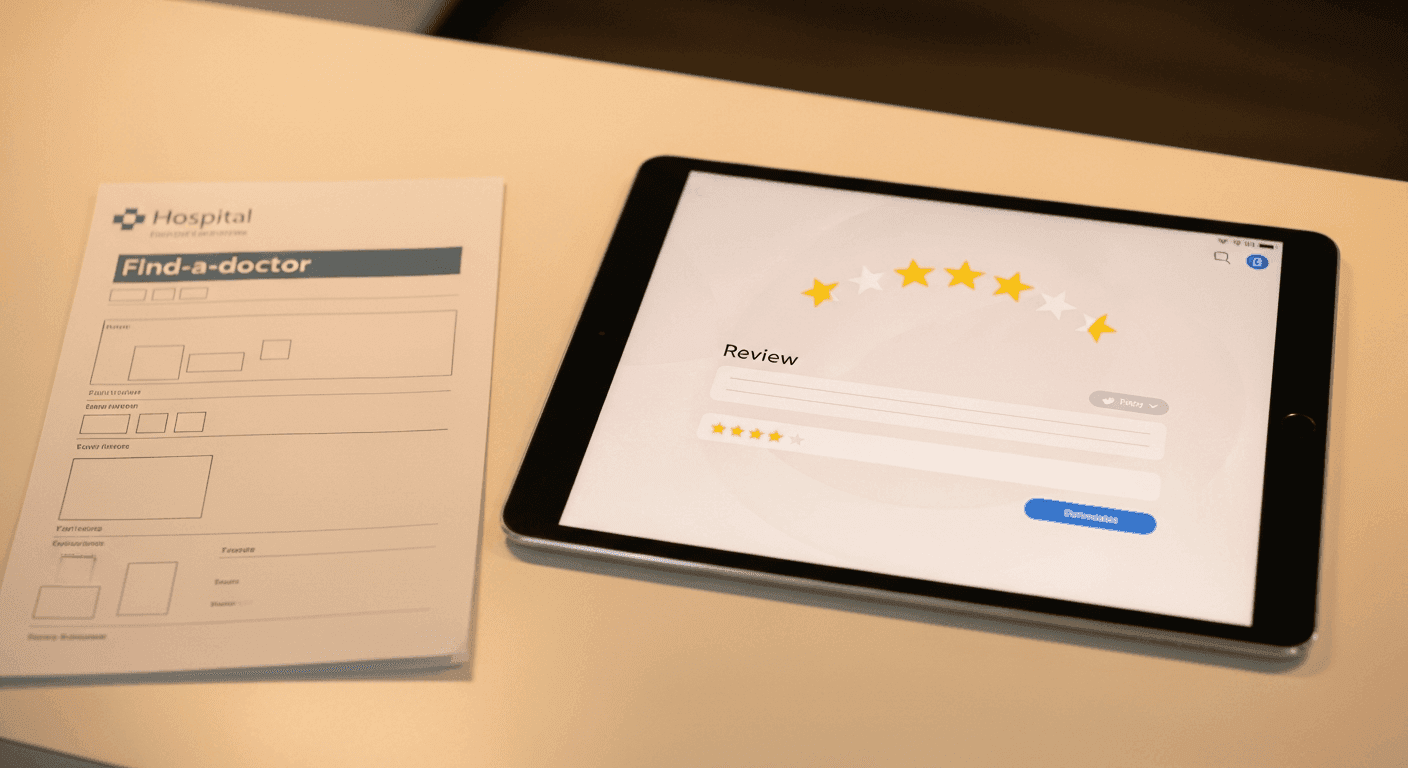
Nine times out of ten, the reason a podiatry clinic has no reviews is not bad care. Nobody asked. Automate a polite text after a successful visit. Train the front desk to mention it once, not twelve times. Stars are a content signal Google reads before humans read your About page.
If ratings slip, fix operations and the phone tree before you buy traffic. Stock photography of models who have never touched a scalpel converts worse than a slightly imperfect iPhone shot of your actual waiting room. Experience, expertise, authoritativeness, and trust are not acronyms to paste in a footer—they are consistent NAP, real bios, and reviews that match what patients actually felt.
Hospital-owned ortho and podiatry programs win on brand search. Independent groups win on symptom and location intent—if content and reviews back it up. Never publish identifiable patient stories on the public site without documented consent and a HIPAA-safe workflow. Summaries and de-identified outcomes beat dramatic testimonials that invite an audit.
When podiatry SEO is rent vs owned

Our opinion stays blunt: paid ads are rent; SEO is a mortgage. Ads get patients tomorrow. The second you stop paying, you disappear from the auction. Mature grow medical practice online work compounds—especially local search where foot and ankle practices still win on intent, not dance trends.
Hybrid wins for many groups, but only when the listing looks credible when the ad turns off. Ad spend should be paid directly to Google. Agencies that bundle it into one invoice are skimming—you should pay us for strategy and pay the platform for the clicks. That separation is non-negotiable here.
Content that supports SEO is not the same as boosting posts on platforms your patients do not use to find a foot doctor. Unless you are building a real local audience, skip the performance theater. Condition pages that rank beat sponsored posts about national foot health awareness month.
When not to hire us yet
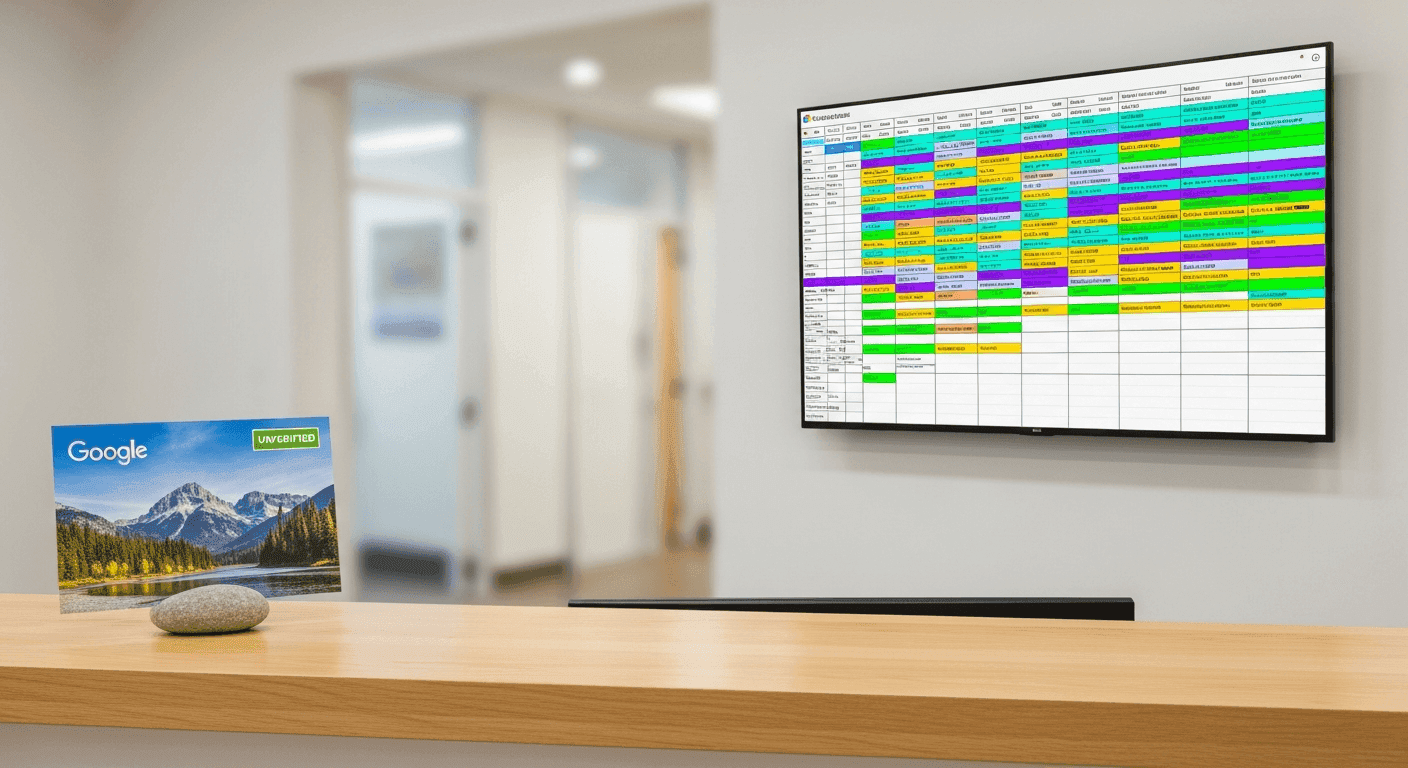
We once had a frantic call from a podiatrist ready to sign a monthly SEO retainer because his new clinic was not showing up on Google Maps. He had not verified the postcard Google sent to the front desk. We told him to find the postcard, enter the five-digit code, and call back if he still needed help. He was ranking locally within two days. We talked ourselves out of a retainer because it was the right thing to do.
Do not hire us—or anyone—if the profile is unclaimed, if ghost listings still fork your phone number, if the site cannot convert map traffic, or if the schedule is full and marketing would lie about capacity. Fix the free layer first. If the site cannot convert, rebuild before you fund content—see web development for podiatrists.
When the map is clean, the site converts, and you have eval room, read how it works or book a discovery call on pricing. We make money when the work is real.
Straight answers
What is SEO and content marketing for podiatrists in plain terms?
Matching foot and ankle search intent to owned pages, plus the local signals—GBP, reviews, citations—that make Google trust one coherent practice entity.
Should we blog before fixing Google Business Profile?
Usually no. Verify the profile, merge ghosts, align NAP. Content on top of a forked map layer wastes quarters.
How often should a podiatry practice publish?
One high-intent page or refresh per month is realistic for many small groups once core condition pages exist. Schedule capacity beats vanity cadence.
Are paid ads enough without SEO?
Ads are rent. Hybrid works, but the listing must stay credible when spend pauses. Separate ad invoices from agency fees.
What content topics rank for foot and ankle practices?
Symptom-led pages—plantar fasciitis, bunions, ingrown nails, diabetic foot, ankle sprains—outrank jargon. Florida location pages help multi-site groups.
How is this different from the web development post?
Web development is the build. This page is what you publish and optimize after that foundation can convert map traffic.
When should we hire an agency?
When map hygiene is done, the site converts, the schedule has eval room, and nobody in-house can maintain on-page SEO plus a realistic calendar.
For performance budgets on mobile, Core Web Vitals still matter when content pages pile on images and widgets. Light pages rank better and bleed fewer map clicks.
We tell podiatrists when to keep charting instead of signing a retainer. Go finish your charting. When the map is clean and the content layer still cannot convert, we will say so—even when the answer is boring.
Want this implemented for your clinic end-to-end? Explore ourpodiatry patient acquisition platform.