
Diagnosis: fix the map layer first. Then build the site that earns the tap from foot-pain search — not the hospital ortho directory.
Patients looking for a podiatrist rarely start with faculty titles. They start in Maps or Google with a problem: heel pain, a bunion rubbing in every shoe, an ingrown nail, an ankle that still swells after a weekend pickleball match. Web development for podiatrists only matters when that search lands on a fast, credible next step. For the specialty context, see our podiatry marketing overview. For a full growth system after the build, see our podiatry patient acquisition platform. This page stays on the build: GBP, condition pages, Florida local search, referral paths, HIPAA boundaries, surgical vs conservative booking, and when not to pay anyone — including us.
Map and Google Business Profile before the rebuild
Our hot take stays simple. Claim your Google Business Profile before you spend on a new site. It drives local patient traffic and it is free. (Yes, you should be finishing notes. We still mean it.)
We once had a frantic call from a podiatrist ready to sign a monthly SEO retainer because a new Tampa location was not showing on Google Maps. We looked. The verification postcard was sitting in a stack of mail on the front desk. He typed in the code. The pin appeared within two days. We talked ourselves out of a retainer because it was the right thing to do. Fix the free layer before you fund the rebuild.
Multi-location podiatry groups often carry ghost listings — a partner left, the suite number changed, and now two profiles argue about the fax number. These ghost listings confuse Google's algorithm, split authority, and send callers to whichever listing looks coherent. We merge duplicates, align name-address-phone data, and clean citations so Maps has one story. Same class as reconciling vitals before you order a pressor.
When the profile matches the site footer character-for-character, map traffic stops forked. For the full map-pack discipline, read local SEO doctors. Build the website to reinforce that entity — not to compete with it.
What a podiatry site actually needs
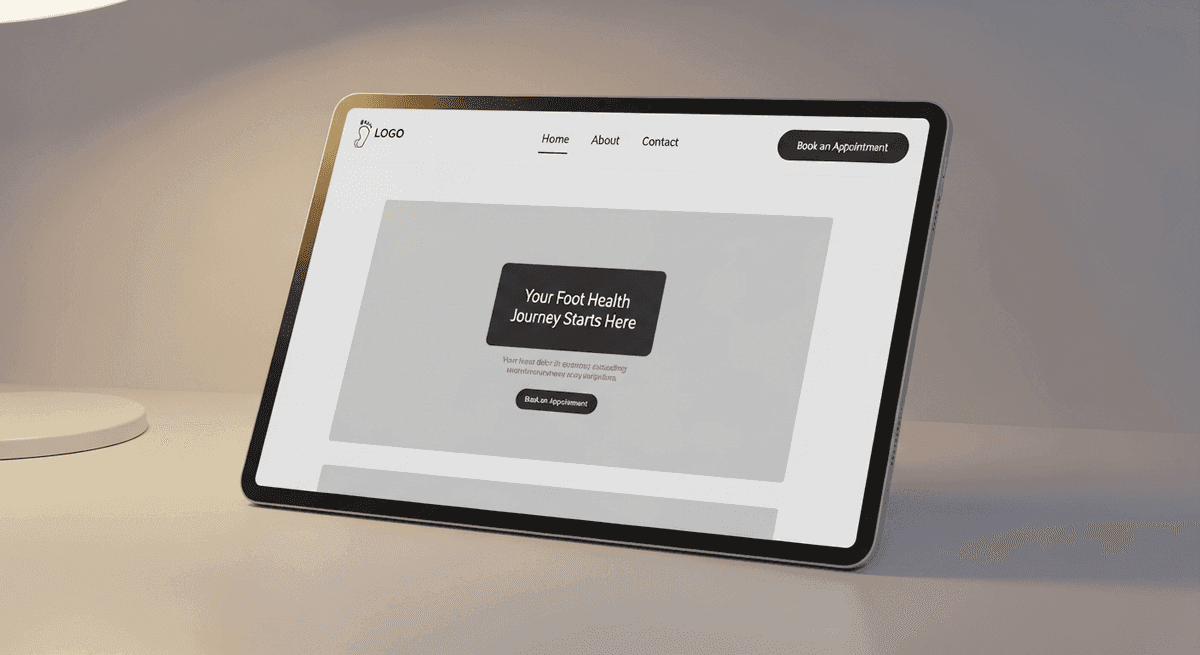
Foot and ankle patients and referring clinicians want three things, in order: confirm you are a real practice with the right service lines, see hours and location, book or refer without a phone maze. A medical practice website that loads quickly, lists current podiatrists with real photos, and offers a one-tap booking or referral path beats a glossy design deck every time.
Cut what does not book appointments or route referrals: autoplay videos, splash pages, carousels nobody scrolls, chat bots that ask "How can we help?" while the patient is trying to read your new-patient policy. This is foot and ankle medicine — not a med-spa brochure. Stock foot imagery and generic "world-class excellence" copy belong in the recycling bin.
Minimum page set for a solo or small-group Florida podiatry practice website: home, providers, service lines in patient language (plantar fasciitis, bunions, ingrown nails, ankle sprains, diabetic foot care, wound care, surgical consults when offered), locations with schema, insurance and new-patient policy, contact with a safe intake boundary, referral criteria for PCPs. For parallels in another specialty without copying the same IA, see web development for neurologists. Anything beyond the podiatry minimum waits on traffic data.
Condition pages, not anatomy-textbook jargon

Nobody wakes up and types "board-certified podiatric physician accepting new patients." They type "heel pain doctor near me" or "bunion specialist [city]" or "ingrown toenail same week." Your foot doctor website Floridaarchitecture should mirror that language with dedicated pages for the conditions you actually treat — plantar fasciitis, bunions, ingrown nails, ankle sprains, diabetic foot care, wound care — not a single paragraph buried under "Our Services."
Hospital-owned ortho and podiatry programs win on brand search. Independent groups win on specificity: a page that answers what the visit includes, what insurance you take, expected wait times, and how to book or get referred. Each page links to the same booking or referral path. Healthcare SEO and physician SEO compound when those URLs match real search demand instead of faculty titles.
Template-churning agencies put dozens of podiatry practices on the same website skin, swap the logo, and call it custom. Google sees duplicate structure. Patients see a generic clinic that could be anywhere. A doctor website built for your actual service lines — conservative care, injections, wound care, surgical consults — converts because it answers the search that brought someone to the page.
Florida local search and multi-location NAP
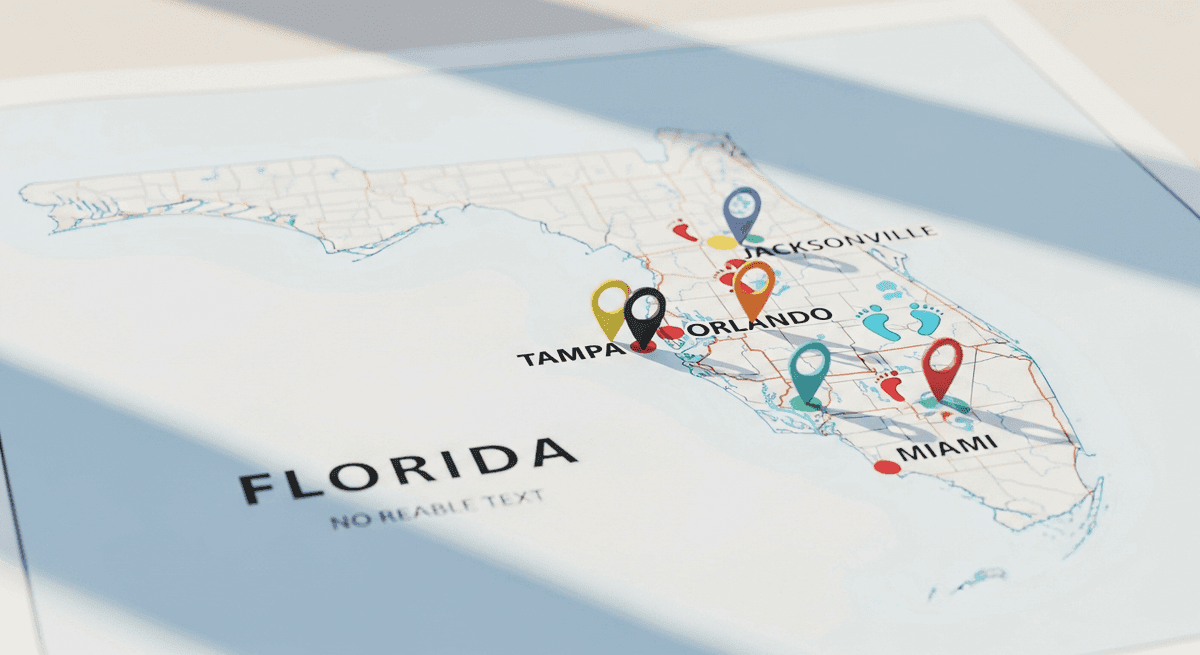
Florida podiatry is not one market. A group with offices in Miami, Tampa, Orlando, and Jacksonville is competing in four different map packs — each with its own hospital systems, ortho groups, and urgent-care foot clinics. A single homepage that lists addresses in a footer paragraph does not tell Google which entity serves which metro. Each location needs its own URL, its own GBP, and NAP data that matches the site character-for-character.
Snowbirds and retiree-heavy counties add seasonal demand swings. A podiatrist website design Florida build should make it obvious which locations accept walk-in evals, which run wound-care clinics, and which book surgical consults — without forcing a patient in Naples to call a Jacksonville front desk by mistake. Podiatrist near me Florida intent is hyper-local. Treat it that way in the IA, not as an afterthought on a contact page.
Multi-location groups also inherit duplicate listings when a practice merges or a partner relocates. Clean those before you launch new condition pages. A beautiful diabetic foot care website Florida page sends traffic to the wrong fax number if the map layer still shows the old suite. For broader local discipline, see local SEO doctors.
Referral paths for PCPs and diabetes care teams

Podiatry is referral-heavy in ways retail foot care is not. A practice website strategy includes pages PCPs and endocrinology teams can bookmark: what you accept, what you do not, how to send records, average wait by service line, and a direct line for urgent diabetic foot questions. Fax numbers still matter. So do portal links that do not require a sales call to configure.
The referring-clinician audience reads differently from patients. They want criteria, not marketing adjectives. "We evaluate new diabetic foot ulcers within one week" beats "comprehensive podiatric excellence." If your site hides referral instructions behind a generic contact form, you are forcing a phone call that busy clinicians will skip — and the consult goes to whoever answered faster.
Build a dedicated referring-physicians section with downloadable criteria PDFs only if they stay off unencrypted email. Prefer secure portal handoffs. Link each condition page back to the same referral hub so a PCP landing from "diabetic foot clinic [city]" sees how to send the patient without hunting.
HIPAA and the intake handoff

Most practice website audits we run find a generic contact form on the homepage. Medication lists in the message field. Wound photos described in plain text. Unencrypted email to a shared inbox. That is not intake. That is an HHS breach notification waiting for a postmark.
Tweaking colors on the weekend is fine. Collecting what is functionally PHI through a plugin called Easy Forms is not. The fix is a HIPAA-compliant intake provider with a signed business associate agreement, encrypted submission, and a documented audit trail. Name and reason for visit on the public form. Symptoms, history, medications, and identifiers behind authentication in the portal.
If the developer cannot explain that boundary in one sentence, they are not the right developer for a clinical site. Do not touch the gas.
Booking conservative care vs surgical paths

Podiatry schedules live and die on visit-type honesty. A booking flow that treats every click like an urgent same-day slot fills the schedule with the wrong cases and burns out the front desk. Separate same-week evaluation, established follow-up, wound-care clinic, and surgical consult paths. Gate new patients when the panel is closed. Say so plainly on the site. Patients respect honesty more than a hidden phone tree.
The path that converts is two taps from a map result to a confirmed slot when capacity exists. No account creation. No PDF. Pick a time, enter name and date of birth, let the EHR integration handle the rest after confirmation. Millennials and Gen Z will pick a different doctor rather than make a phone call. That is revenue walking out the digital waiting room.
If the EHR cannot integrate with modern online booking, the EHR is the bottleneck. Route through a HIPAA-compliant booking layer that can write back. For what a rebuild should cost before you sign, read doctor website cost.
Speed, schema, and hospital-ortho noise

Most slow clinic sites suffer from digital plaque — a widget here, an oversized exterior photo there, until the page crawls and Google stops sending traffic. Map traffic that lands on a slow site is map traffic wasted. Same diagnosis as a clogged artery: fix circulation before you add more pressure.
Wire MedicalBusiness schema into the build, not as an afterthought. Independent podiatrists compete with hospital find-a-doctor pages, ortho groups, and directory sites that scrape NAP data. Your owned site should load faster, answer the condition query directly, and link back to the same GBP entity — per Core Web Vitals guidance.
Rebuild threshold: if the podiatry site is five or more years old and is not reliably mobile-responsive, rebuild it. Do not pour budget into a leaking bucket. If the site converts well and only the hero photo is dated, swap the photo before quoting a full redesign. For template vs custom tradeoffs, see medical website templates.
When not to hire us yet
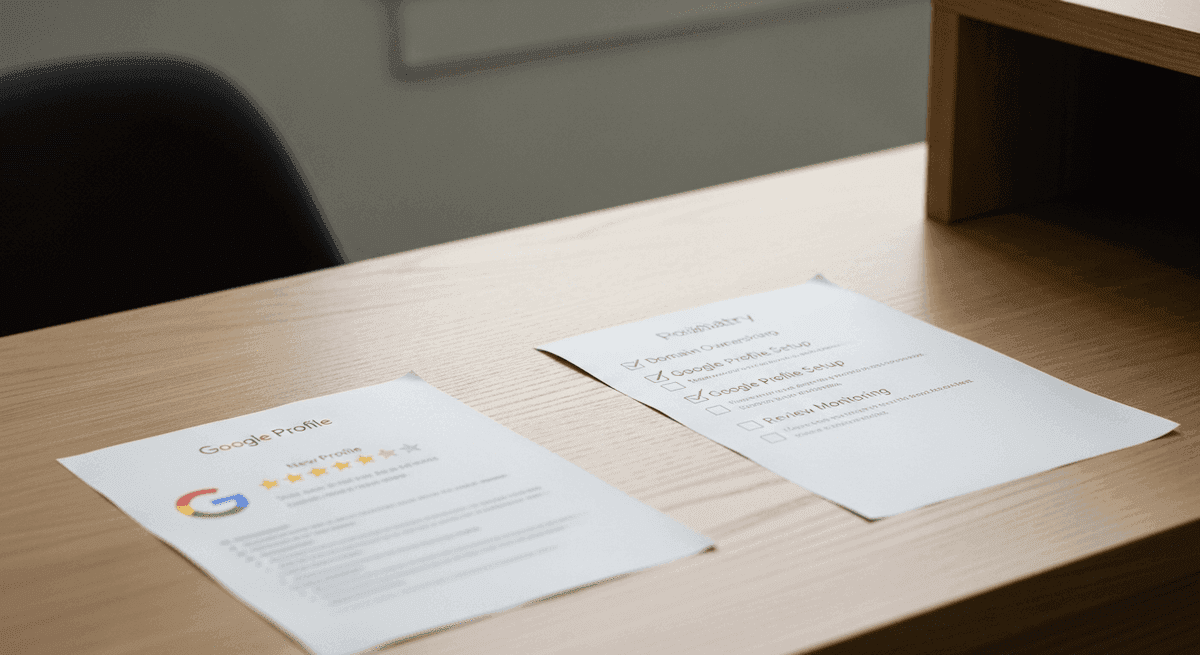
If the Google Business Profile is unclaimed, hiring a developer is premature. Verify the profile. Fill hours, services, and a real description. Respond to reviews that exist. That is an afternoon and it costs nothing. Often, that fixes the problem the website was supposed to solve.
If online reviews are weak, fix operations before ads or a rebuild. Marketing cannot outrun a front desk that puts patients on hold or a referral fax that sits unread. Audit the front desk before you audit the homepage. We will not recommend a rebuild when a tweak will do.
When the map layer is clean and a rebuild is the obvious next step, read how it works or book a discovery call on pricing. Flat-fee scope, custom build, real photography, aggressive speed budget, no template sharing, no long-term lock-in. Ad spend stays separate from the agency fee. The clinic owns every asset on day one.
Straight answers
Should podiatrists fix Google Business Profile before paying for web development?
Usually yes. A verified, complete profile drives local traffic for free. If the map layer is unclaimed, duplicated, or fighting your site about name-address-phone data, fix that first.
What pages does a podiatry practice website need?
Home, providers, locations with schema, insurance and new-patient policy, contact with a safe intake boundary, condition pages in patient language, and referral criteria for primary care and diabetes care teams.
How do patients search for podiatrists online?
Most search conditions and symptoms — heel pain, bunions, ingrown nails, foot doctor near me — not the word podiatrist. Build landing pages that match that language.
What makes a podiatry website HIPAA compliant?
Encrypted transmission for any form that could collect PHI, signed business associate agreements with every vendor that touches that data, and a clear boundary between the public site and the patient portal.
How should booking work for surgical vs conservative foot care?
Separate same-week evaluation, established follow-up, and surgical consult paths. State wait expectations plainly. Two taps from a map result to a confirmed slot when capacity exists.
When should a podiatry practice rebuild instead of refresh?
If the site is five or more years old and is not reliably mobile-responsive, rebuild it. Do not send map traffic to a slow experience that bleeds visitors before they reach the booking button.
When should a podiatry practice hire an agency for web development?
When the map layer is verified, reviews are strong, the front desk and referral workflow can handle volume, and the bottleneck is site speed, booking, or directory confusion — not an unclaimed GBP.
Google publishes a calm overview of how search fits together in the SEO Starter Guide. Use it when an agency hands you a PDF that smells like toner and fear.
Go finish your charting. When the map pin is verified and the condition pages still do not book, we will tell you the truth — even when the truth is boring.
Want this implemented for your clinic end-to-end? Explore ourpodiatry patient acquisition platform.