
Diagnosis: treat local SEO like circulation, not like a brochure refresh you schedule after the partner meeting.
Nine times out of ten, the ranking problem is not missing thought-leadership about bunions. It is duplicate keys on the digital front door: old listings, citation drift, and a mobile experience that loads like it is waiting on a prior authorization while Maps sends traffic anyway. (Yes, you should be charting. We will not tell.)
We have been at this since 2016 across 412 scaled campaigns with a 92% retention rate because we say the boring part out loud: verify the pin before you fund the poetry.
Local SEO for podiatrists starts where patients actually look: the map stack
Foot pain searches are urgent and oddly specific. The algorithm still rewards one coherent entity per address, honest categories, and a site that does not bounce the click like a patient who just saw a 45-minute wait time on the profile.
Secondary phrases like podiatrist near mebelong here when the user means "who can see my heel this week." Keep one URL honest about intent so you do not spin up thin clones that fight each other like two partners arguing over who owns the DME order.
Let us look at the math we use on calls. A clinic on page two of local results captures less than 1% of that search demand. Our internal benchmark slide still pairs a concrete paid-search anchor—dental implant CPA near $150-$300—with mature SEO blended CPA nearer $35 on a twelve-month horizon. Podiatry search is not dentistry, but the rent-versus-equity argument is the same shape.
Google Business Profile is triage: categories, hours, and proofs that survive audit

Pick primary categories that match what you actually schedule—wound care, sports medicine, surgery—not what sounds impressive on a hospital affiliation slide. Hours should reflect reality, including lunch closures and holiday skeleton crews. Nothing erodes trust faster than a profile that says open while the phone tree says try the ER.
Opinion we repeat until the breakroom coffee goes cold: claim your Google Business Profile before you spend four figures on a new website. When the profile is complete and accurate, it can drive about half of local patient traffic, and it is free.
For HIPAA-adjacent public marketing boundaries—what belongs on the profile versus what belongs in the portal—think of it like public-facing orders versus chart notes. HHS OCR publishes the privacy rule hub at hhs.gov/hipaa. We are marketers, not your compliance officer—but we will not tell you to paste PHI into a review reply to sound human.
Condition pages are how you de-noise heel pain, bunion, and diabetic foot intent
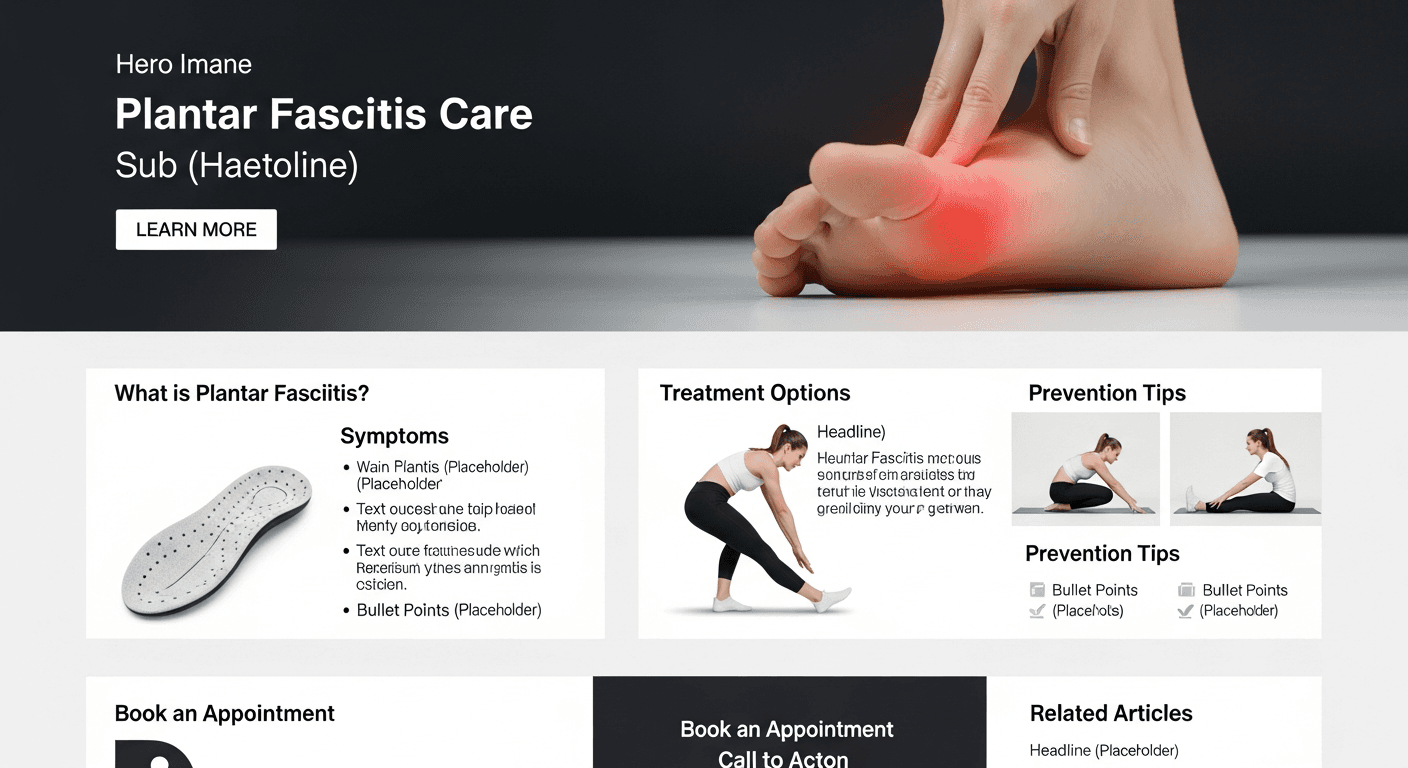
One giant "podiatry services" page is the SEO equivalent of dumping every differential into one progress note. Split intent cleanly: plantar fasciitis, bunion pain, ingrown nails, ankle sprains, diabetic foot ulcers—each with plain language, realistic timelines, and a booking path that works on a thumb.
That structure supports local landing without turning your site into keyword stuffing. Google's starter guidance still reads like medicine: be useful, be specific, do not chase tricks. See Google's SEO Starter Guide.
If you need the build layer—HIPAA intake, surgical vs conservative booking—our web development for podiatrists guide covers the foundation this map traffic should land on.
Duplicate listings and partner drift split authority like duplicate orders in the chart

Older foot and ankle groups often carry digital plaque: a profile from a 2014 address, a departed partner still listed as the owner, a rebrand half-finished so the sign and the GBP argue in public. We have merged those roots before—find the duplicates, pick the canonical phone, document who holds the login, stop pretending the fax number is still a communication channel.
We once had a frantic call from a doctor wanting a $4,000/month SEO retainer because his new clinic was not showing on Maps. He had not verified the postcard Google sent to his front desk. We told him to find the postcard, type in the five-digit code, and call back if he still needed help. He was ranking locally 48 hours later. We talked ourselves out of a retainer because it was the right thing to do.
Citations are not magic beans. They are consistency checks. When NAP drifts, the map layer gets confused, callers bounce to the hospital-owned ortho pin, and your front desk answers the same question twelve times. Fix the listing once, chart the owner, move on.
Hospital and ortho directory noise is loud; your job is to win the coherent tap

You will not out-shout a health system on brand recall. You can still win the tap when your profile is verified, your reviews are recent, your hours are honest, and your first mobile screen answers the question the patient actually asked.
Podiatry reputation management is not a euphemism for astroturfing. It is operations plus prompt, polite review requests after visits that went well—then handling the inevitable one-star novel with a HIPAA-safe public reply and a private resolution path.
If ratings slip under 4.0 stars, online conversion can crater by up to 60%. That is not a marketing problem you can keyword your way out of. It is a bedside-to-desk pipeline issue. For broader map mechanics, our Google Maps doctors guide covers the same discipline without the foot-and-ankle specifics.
Speed and stars still gate the tap (and sometimes rebuild beats more blog volume)
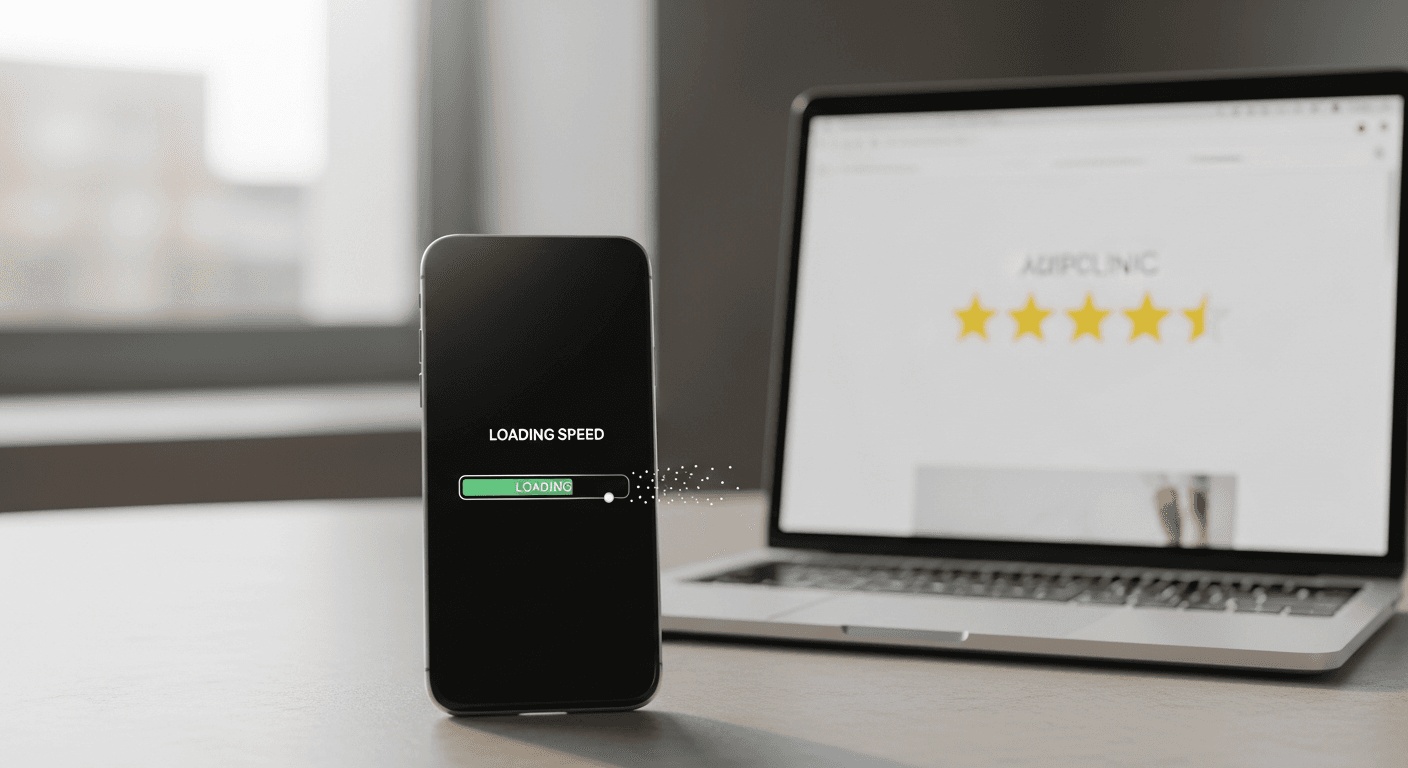
A three-second load can push roughly 40% of visitors away. That is four out of ten people leaving your digital waiting room while your MA is on hold with a pharmacy. Web.dev performance guidance is still the blunt instrument we point engineers at: web.dev/learn/performance.
If the site is five-plus years old and mobile is shaky, rebuild before you pour more local budget into traffic you will lose on the bounce. For vocabulary on clinic entities in structured data, see schema.org/MedicalClinic.
When you are ready to talk scope and fees—not bundled ad spend—start at pricing and read our podiatry specialty overview so nobody surprises you with a twelve-slide roadmap before verifying a postcard.
Straight answers
What does local SEO for podiatrists mean in plain terms?
Maps-first visibility plus consistent practice data and fast mobile pages for each door patients can walk through.
Should podiatrists fix Google Business Profile before blogging?
Usually yes. Ghost listings and NAP drift waste months of content work.
Should a podiatry group use one Google Business Profile or one per office?
One verified profile per real address. No fake suite stacking.
Do duplicate map listings hurt foot and ankle practices?
Yes. They split authority and send callers to stale numbers.
How much does Google Business Profile matter for local podiatry traffic?
About half when the profile is complete and accurate.
When should a podiatry practice rebuild the website before more local SEO spend?
If the site is five-plus years old and mobile is unreliable, rebuild first so you do not pay for clicks that bounce.
When should a podiatry practice not hire an agency for local SEO yet?
If you have not claimed GBP, merged duplicates, and aligned NAP, do the free triage first.
For the colloquial "doctor" map stack (not specialty-specific), our local SEO doctors guide covers the same mechanics with a broader intent stack.
If the map layer still looks haunted after you verify profiles and align NAP, book a discovery call on pricing. We launch new campaigns within 14 days from kickoff per our onboarding SLA, and we would rather lose a deal than sell you a dashboard that only impresses your cousin. Go finish your charting.