
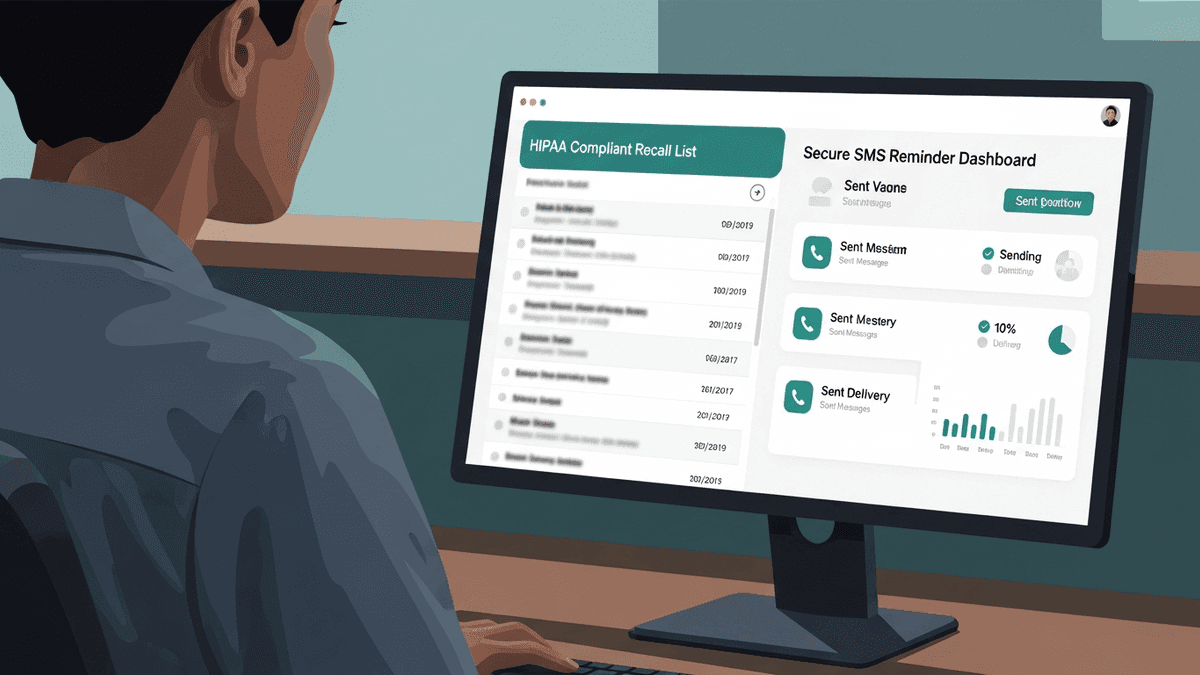
Diagnosis: the SERP for HIPAA compliant patient recall systems is vendor listicles comparing platforms built for multi-location groups. Your problem is narrower—twenty overdue mammograms, a diabetic panel that drifted, and a front desk that still trusts a spreadsheet named Recall_FINAL_v4.xlsx.
Nine times out of ten, the useful question is not "Which recall software won the comparison chart?" It is "Does our overdue list match reality, and will this text embarrass us on a lock screen?" (Yes, you should be charting. We will not tell.)
This guide defines recall for independent clinics, what to fix before you buy software, how to stay inside HIPAA guardrails, and when a disciplined EHR export is still the honest answer.
What recall means for solo clinics (not hospital campaign blasts)
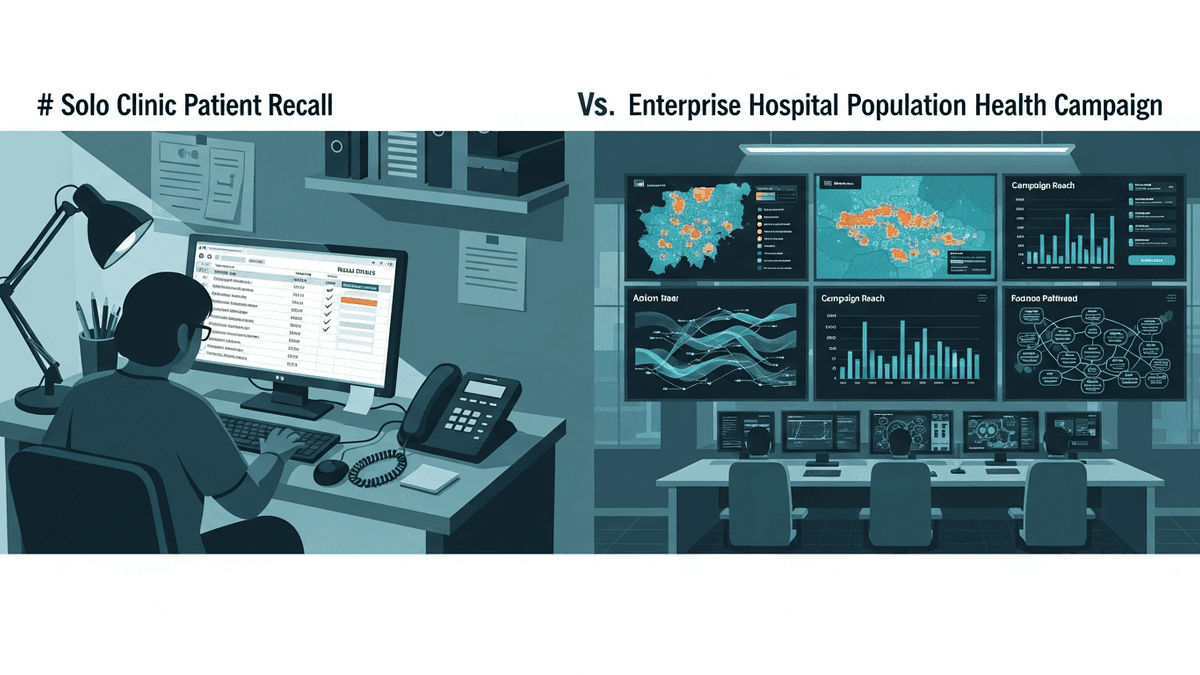
Hospital recall chases quality metrics across service lines—mammography gaps, A1c panels, readmission windows—with dashboards for executives who never answer the phone. Solo recall is Brenda's panel: who is overdue for an annual, who missed post-op week two, who needs a colonoscopy referral nudge before the year ends.
Vendors blur three workflows that clinicians already separate in their heads. Recall chases clinically overdue follow-ups inside your active panel. Reactivation reaches lapsed patients who have not been in for a long time—softer tone, longer gaps. Waitlist backfill fills cancelled slots today, not next quarter. One toggle in a sales deck does not mean one workflow at the front desk.
Tickler lists, recall modules, tracking systems—CAP calls it all patient follow-up because the label matters less than the list. If the export says 400 overdue and your scheduler knows half already booked, the system has worse circulation than a smoker who still claims to exercise.
Patient recall workflow primary care and specialty solo clinics share the same spine: identify cohort → message minimum-necessary → book → document consent. The cohort rules differ; the compliance rail does not.
Recall layers before software shopping (triage the stack)
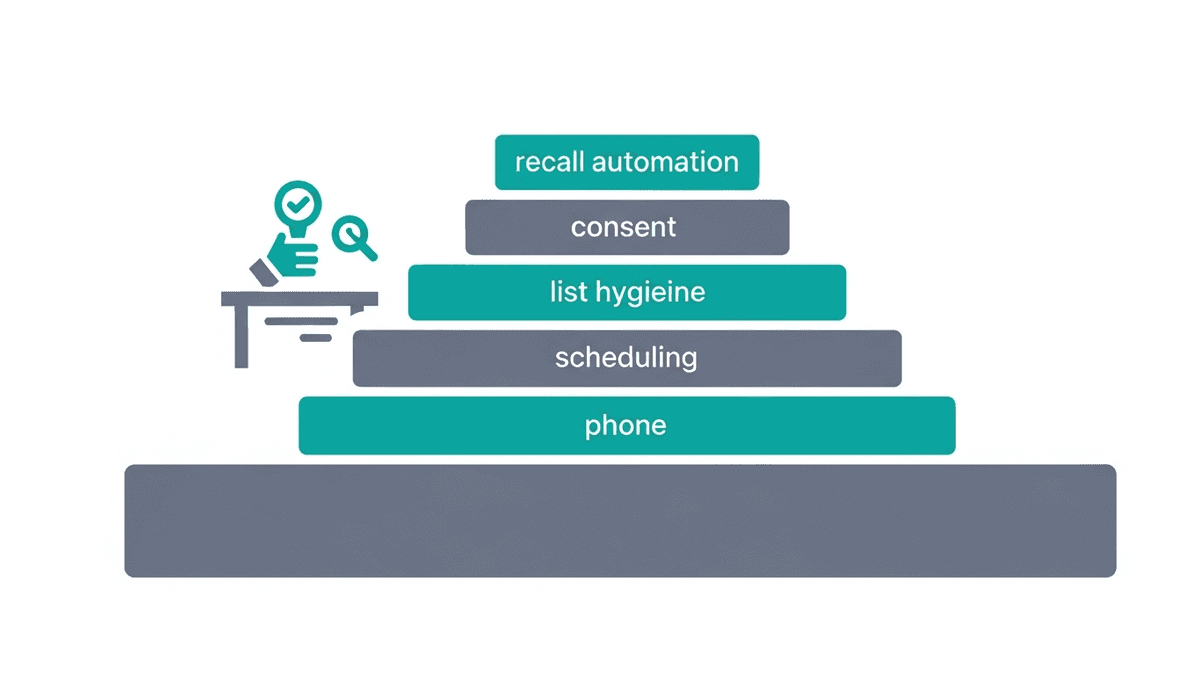
Buying recall SaaS before the phone works is bolusing fluids into a line that is not patent. Layer the stack like triage—airway first, then circulation, then the fancy monitor with the beeping recall dashboard.
Layer one — one canonical phone number and map pin. If listings, the website footer, and the prescription pad disagree, recall callbacks route to the wrong inbox. Merge ghost listings before you merge patient cohorts. See why your medical practice is not showing up on Google if the map layer is haunted.
Layer two — scheduling truth. Appointment types that match real chair time, buffers for how long you actually run behind, online booking that does not die on mobile. Recall texts that land on a broken booking link are digital triage in reverse—you created urgency, then wasted it.
Layer three — list hygiene. Who owns the overdue export? How often is it reconciled against the schedule? A recall list nobody trusts becomes spam with a HIPAA stamp. Clean the spreadsheet before you bless it with automation.
Layer four — message rules. What can appear in SMS preview text? Who approves templates? What is the opt-out path? Software cannot invent consent your staff never documented.
Only then shop platforms. Vendors love skipping to the dashboard because gradients demo well. You live in layer three—the list that matches reality on a Monday morning.
HIPAA-safe messaging, consent, and templates
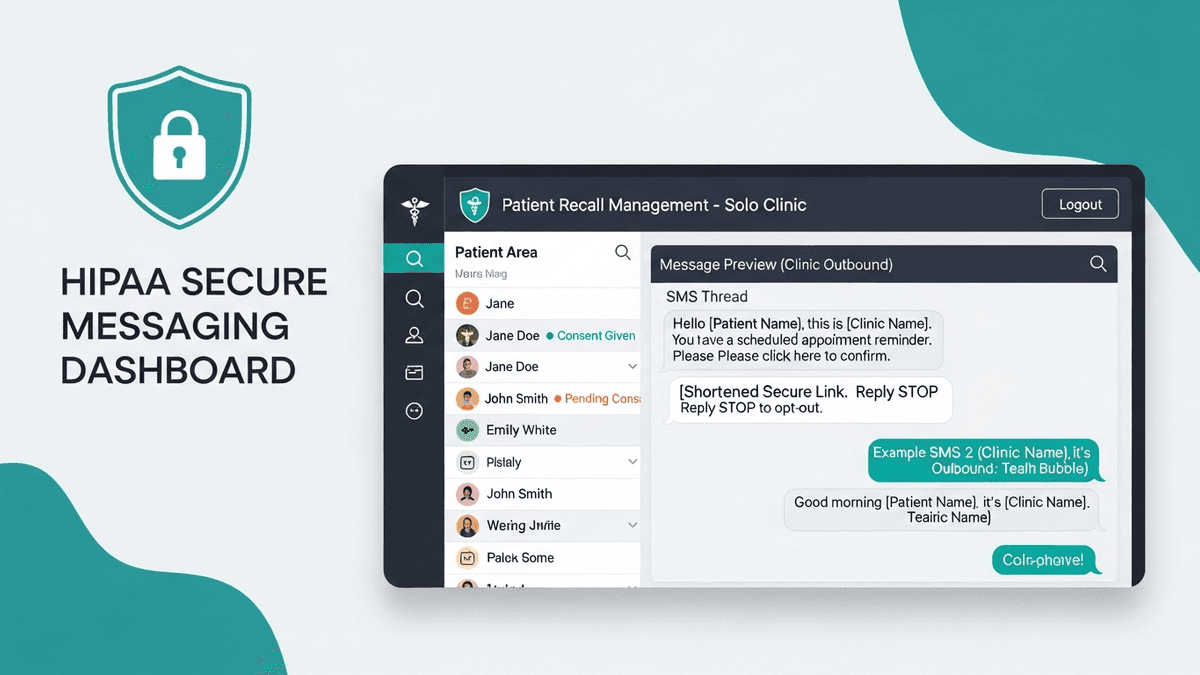
Tweaking website colors on a Sunday? Fine. Piping patient histories through a consumer group chat with no Business Associate Agreement? That is not innovation. That is an OCR headache waiting for a slow news day.
Every vendor touching PHI needs a signed BAA and HIPAA-eligible storage. Message content follows minimum necessary—no diagnosis names in lock-screen previews, no chart snippets in tracking links. HHS publishes the privacy rule hub at hhs.gov/hipaa. We are marketers, not your compliance officer—but we will not hand you a sticker without the paperwork.
HIPAA SMS consent and opt-out rules for solo clinics are boring and non-negotiable. Document how patients agree to texts—intake form, portal checkbox, verbal with note. Honor STOP replies immediately. Separate marketing blasts from clinical recall where your counsel prefers a bright line.
Template discipline beats clever copy. Good recall messages include practice name, general reason ("time for your annual visit"), booking link or callback number, opt-out language. Bad messages include condition labels, lab values, or anything you would not want a spouse glancing at a lock screen to read.
Competitors sell script libraries that boost response rates. Use them as starting points, not gospel—your tone should sound like your front desk, not a car dealership. Pair polite post-visit review asks with recall only when workflows differ; see online reputation in healthcare for the public reply rail.
Building recall lists and cadence (preventive, chronic, reactivation)
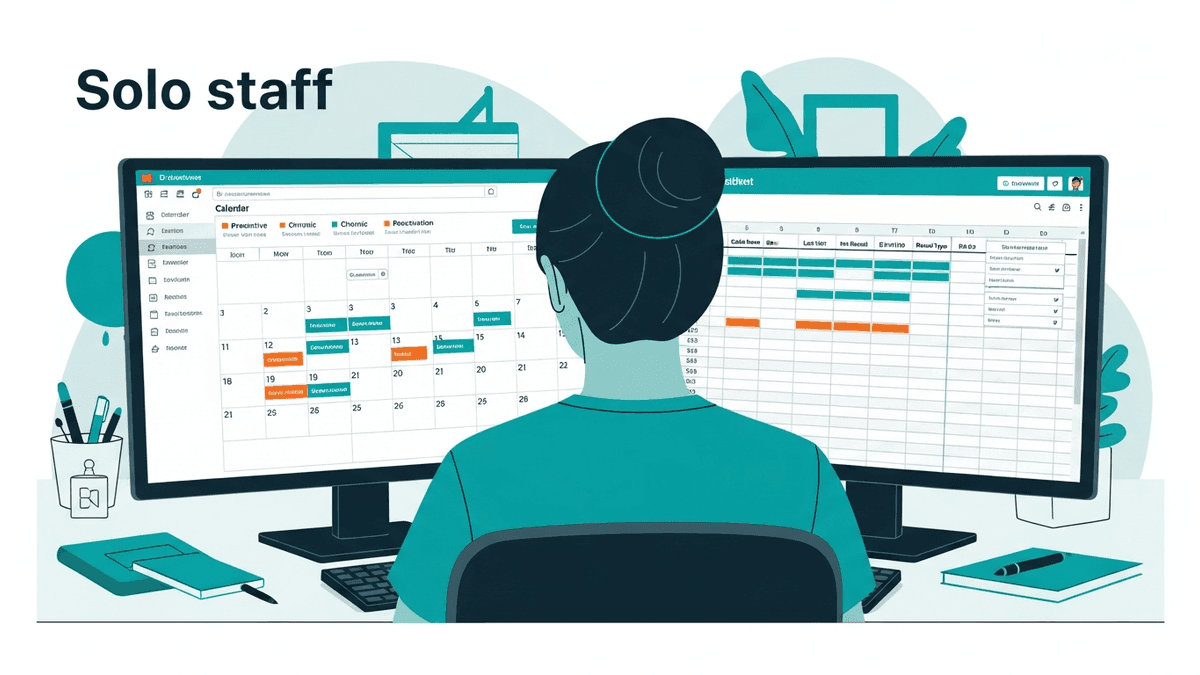
Enterprise decks love one "engagement" slider. Clinically, preventive annuals, chronic panels, and lapsed-patient reactivation need different cadences wearing the same scrubs.
Preventive recall. Annual physicals, well-woman visits, age-based screens. Shorter intervals, clear booking links, stop when the patient schedules. Do not text someone who booked yesterday because the export lagged.
Chronic panel recall.Diabetes, hypertension, COPD—follow your clinic's clinical policy, not a vendor's default drip. Message general follow-up language; keep specifics for the visit.
Recall vs reactivation for solo clinics. Reactivation targets patients inactive beyond your defined window—often six to eighteen months depending on specialty. Longer gaps between touches, softer tone, explicit unsubscribe. Never paste diagnosis labels because the export was lazy.
Tie recall to attendance, not just outreach volume. Reduce patient no-shows with automated SMS belongs on the day-of visit rail—confirmations, frictionless reschedule, waitlist backfill when someone cancels. Read how to reduce no-shows without more staff for that workflow. Recall fills the gap before the hole opens; no-show tools patch the hole the same morning.
Cancelled-slot backfill is sibling workflow, not recall. When a visit cancels, rank your waitlist and text the top candidates. Speed beats perfection. Pair with strategies to fill empty appointment slots when holes are cancels, not overdue panels.
Retention discipline still matters after the book. Medical practice patient retention covers the map-and-desk leaks recall alone will not fix.
EHR integration and recall vendor vetting
Listicles rank recall platforms by feature count. Solo buyers should rank them by Monday-morning survivability—does the overdue list match the schedule when Brenda is covering lunch?
Native EHR recall vs bolt-on. Many EHRs include ticklers and reminder modules adequate for small panels. Bolt-on recall shines when messaging, consent logging, and multi-channel outreach outgrow what the EHR ships. Buy the gap, not the brochure.
Demo the export path, not the marketing site. Ask: How often does the list sync? What happens when a patient books between export and send? Can staff pause a cohort without opening a ticket? Who owns message history if you leave?
A recurring nightmare on discovery calls: "My last vendor won't give me the login to my own website." Same disease in recall—export rights, consent logs, and template ownership when you cancel. Demand it in writing before you migrate panel lists. Unethical vendors register assets under agency credentials; do not let recall history become a hostage situation.
Red flags: no BAA on request, "HIPAA compliant" stickers with no paperwork, vanity dashboards without booked appointments, bundled ad spend inside a single invoice, promises to replace clinicians. Google's Business Profile guidelines still matter—patients often book from the map after a recall text.
If recall sits inside a broader ops stack, see healthcare CRM for solo providers for how recall, reviews, and intake share one front-desk brain. Apply the same Monday-morning demo rules when CRM and recall share a vendor contract.
When not to hire us (or buy recall software) yet

We once had a frantic call from a doctor ready to sign a four-figure monthly retainer because his new clinic was not showing on Google Maps. We looked. He had not verified the postcard Google sent to his front desk. He typed in the five-digit code. He was ranking locally two days later. We talked ourselves out of a retainer because it was the right thing to do.
Do not buy recall software yet if Google Business Profiles are unclaimed, intake calls go to voicemail, mobile booking breaks mid-flow, or the schedule is already full and outreach would spam booked patients. Fix the free layer first—claim the map, answer the phone, patch the form.
Do not buy recall software yet if staff have not agreed on cohort rules. Software cannot fix a panel list nobody trusts. Reconcile exports against reality before you automate texts.
Do not buy recall software yet if you plan to run messages through personal phones or consumer apps to save money. Minimum necessary is cheaper than a compliance event. Hooking unencrypted channels to patient lists is the gas line you do not touch on a weekend.
Pouring recall into a slow, broken website is bolusing fluids into a line that is not patent. Fix owned-site speed and mobile booking first—see pricing when foundations are solid and you want owned intake routing, not before.
Straight answers
What is a HIPAA compliant patient recall system?
List hygiene plus minimum-necessary reminders through BAA-covered channels, with consent logs and booking handoff—not a hospital blast engine.
Is patient recall SMS HIPAA compliant?
Only with a BAA, safe preview text, documented consent, and opt-out handling—not a consumer texting app pasted into the breakroom.
What is the difference between recall and reactivation?
Recall chases overdue follow-ups in your active panel. Reactivation reaches lapsed patients with softer tone and longer gaps.
Do solo practices need recall software or can the EHR handle it?
Many EHR ticklers suffice until volume breaks manual workflows. Fix list hygiene first, then buy software when exports lie too often.
What should HIPAA-safe recall messages say?
Practice name, general reason, booking path, opt-out—not diagnosis labels or lab values in preview text.
How does recall relate to reducing no-shows?
Recall fills preventive and chronic gaps before the visit. No-show tools handle confirmations and same-day backfill. Most solo clinics need both.
When should a small clinic not automate recall yet?
Unverified map pin, voicemail intake, untrusted lists, or a full schedule that would get spammed—fix foundations first.
If overdue patients still live in a spreadsheet while vendors pitch hospital recall demos, book a discovery call on pricing. Read how it works when list hygiene is clean and you need owned recall routing. Go finish your charting.