

Diagnosis: run the self-test from the wrong chair before you fund a retainer or rebuild a site that was never the problem.
Google shows different things in the map pack, in organic results, and on your own logged-in screen. Why is my medical practice not showing up on Google usually means one of those layers is broken—not all three. This guide sorts the differential. For map-layer operations see Google maps doctors. For the full owned-site stack see physician SEO. We stay on triage here.
Search yourself from the wrong chair
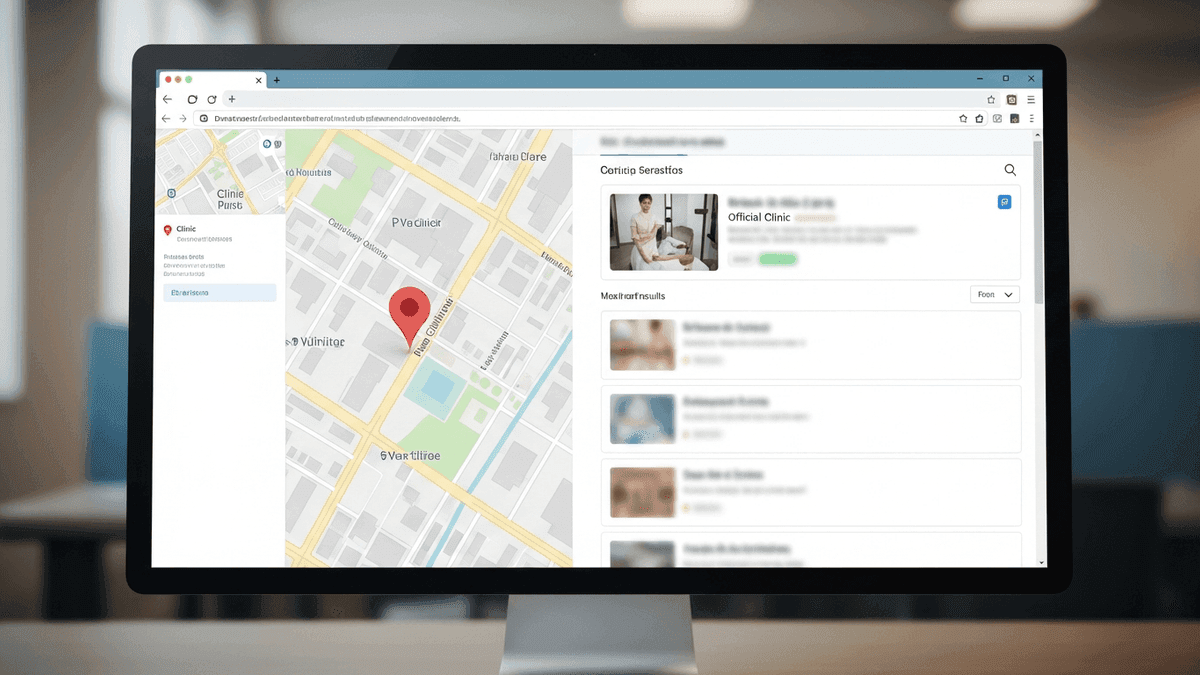
The first step in digital triage is admitting you might be the unreliable narrator. Search while logged into your Google account from the office and you will see a different universe than a new patient in an incognito window three zip codes away. Personalization is not a conspiracy—it is the product working as designed while you panic.
Open a private window. Set location to your real service area—or hand the phone to someone who lives there. Compare the Maps tab to All. A practice can hide in one and appear in the other. That single observation saves quarters of misallocated budget. My clinic manager once declared us invisible because she searched from her home two states over during a snow day. We were not dead. She was just not in market.
Search the phrases patients actually use—"family doctor near me," your specialty plus city, your practice name with a typo the front desk hears weekly. Document what you see: map pack only, organic only, nothing, wrong number, hospital directory instead of your suite. That note becomes the handoff when you do need help—and keeps you from buying organic SEO when the map pin was never verified.
Use Google Search Console to see whether Google knows your site exists at all. It is free, it is blunt, and it beats guessing from the breakroom laptop.
Map pack invisibility is not organic death

When someone asks why their clinic is not on Google, they often mean the map pack—the three pins with stars—not page ten of blue links. Those are different ranking systems with different vitals. Winning organic does not automatically populate the map layer, and a strong map pin does not fix a site Google refuses to index.
Map pack signals lean on Google Business Profile, proximity, reviews, and consistent name-address-phone. Organic rankings lean on crawlable pages, relevance, and authority on your owned domain. Treating them as one disease is how practices pay for content calendars while the postcard sits under lab faxes.
If the symptom is "doctor not showing in Google Maps pack," start map-side. If the symptom is "medical practice website not appearing in search," start site-side. If both are missing, fix verification and one canonical entity before anything else. For the local layer playbook beyond triage, see local SEO doctors.
Our opinion stays blunt: anyone who bundles map, ads, and organic into one mystery fee without separating symptoms is selling fog. Diagnose the branch first. Pay for the branch second.
Google Business Profile still in postcard limbo

A claimed but unverified profile is a patient chart with no attending signed. Google mailed a postcard. Someone stacked it under refill requests. The listing stays in limbo while the physician searches "why is my medical practice not showing up on Google" from the parking lot.
Verification is not optional decoration—it is how Google knows you control the listing patients see. Postcard, video where eligible, or another approved path. Enter the code. Merge suggested duplicates in the dashboard. Set primary category to how patients search, not how the partnership agreement labels the LLC. Hours must match the door—including lunch closures nobody remembers until a one-star review mentions them.
"Claimed Google Business Profile still not visible" often means verification incomplete, suspension for policy mismatch, or a duplicate profile still winning. Fix status in the profile dashboard before citations, before ads, before an agency discovery call. Follow Google Business Profile guidelines for what belongs on a medical listing—accuracy under pressure when the schedule shifts on a holiday Monday.
Telehealth links belong only when you truly offer them and intake is compliant. A pin promising video visits that route to a broken form is worse than no link— patients blame the clinic, not the widget vendor.
Ghost listings and split phone numbers

Older practices carry ghost listings like tree roots under a sidewalk—a move from years ago, a departed partner, a satellite office that closed. Three profiles, three phone numbers, one confused algorithm. That is "medical practice not indexed on Google" wearing a white coat: authority splits, callers hit the old main, faxes go nowhere.
Citations are directories repeating your name, address, and phone. When they disagree, Google picks a winner you did not choose. Audit major healthcare and general directories after verification, not before. Merge or remove duplicates in Google's tools, then update the ecosystem so the ghost does not respawn next quarter.
Wrong-number fixes start at the verified profile, then the website header and footer, then high-trust citations. Changing only the map pin while the site still shows last decade's fax line is how you get two ringing phones and one angry office manager. Document the canonical number in one internal runbook—front desk, billing, after-hours service. Wound care, not fireworks.
Hospital-affiliated groups compete with mother-ship find-a-doctor pages. Your owned pin should still be accurate for the suite where you chart. Affiliation badges when true; keyword-stuffed hospital names in the business title belong nowhere.
Website signals Google can actually crawl

Clinics that built sites in the early 2010s sometimes think they need "a little SEO." Underneath, the code is obsolete, mobile layout buckles, and Google's mobile-first indexer sees a waiting room with no chairs. You cannot put premium fuel in a galvanized pipe and expect circulation to improve.
Check for accidental noindex tags, staging domains still linked, password walls on patient pages that block whole sections, and brochure sites with three paragraphs total. Thin pages do not earn organic rankings for competitive specialties no matter how polished the logo. Core pages should answer what you treat, where you are, and how to schedule without a scavenger hunt.
Digital plaque narrows the pipe over years—appointment widgets, chat bots, ten-megabyte exterior photos—until the site wheezes on parking-lot LTE. Map taps that land on a slow page leak patients before the front desk answers. For build-vs-patch decisions see doctor website cost. For the full owned-site playbook see physician SEO. For performance habits when pages accumulate widgets, Core Web Vitals still matter.
Track calls and form submissions by source when you can—not vanity ranking PDFs. A map pin that rings the phone is doing its job even when an agency dashboard looks bored.
Reputation gaps that shrink your map footprint

Low review velocity is usually an operations gap, not a clinical verdict—nobody asked. Patients skim stars before they tap call. A verified pin with stale reviews loses to a competitor whose front desk remembered to send one polite post-visit request where policy allows.
Public replies are compliance events, not marketing slogans. Thank the reviewer. Offer a private channel. Never confirm identity, diagnosis, or outcomes in a Google reply—that is a HIPAA event wearing a thank-you badge. For broader reputation strategy see online reputation healthcare. For privacy framing, HHS HIPAA guidance beats whatever your cousin's agency said at a barbecue.
Negative reviews about wait times or billing confusion are intake signals. Fix the hold music before you buy more map impressions. Marketing makes the phone ring; a miserable answer burns the budget. Assign one owner for review triage—usually office manager, not the surgeon between cases.
When visibility returns but the panel is full, see how to get more patients for my practice for growth paths that do not lie about capacity.
When not to hire us yet

Do not hire us—or anyone—if the profile is unclaimed, if ghost listings still fork your number, if the site cannot convert map traffic, or if the new-patient panel is full and marketing would lie about capacity. Fix the free layer first. Marketing makes the phone ring; if the front desk puts people on hold until they hang up, you are setting budget on fire.
We once had a frantic call from a physician ready to sign a four-figure monthly SEO retainer because the new clinic was invisible on Maps. The postcard Google mailed sat under a stack of lab faxes. He typed the five-digit code. The listing populated within days. We talked ourselves out of a retainer because it was the right thing to do—not every visibility problem needs an agency invoice.
Our opinion on the industry stays blunt: guaranteed number-one on Google in thirty days is a lie. Anyone promising it is using tactics that eventually get the practice penalized. SEO is a marathon; map verification is the stretch before the starting gun. We make money when the work is real—not when we sell hope on top of a broken intake path.
When the map is clean, the site converts, and you have new-patient room, read how it works or book a discovery call on pricing.
Straight answers
Why is my medical practice not showing up on Google?
Usually map verification, duplicate listings, crawl blockers, or searching from the wrong context. Map pack and organic are different branches—fix the one that matches your symptom.
Why does my clinic show up for me but not for patients?
Personalization and location. Test incognito in your service area. Compare Maps tab to All tab. Ask someone off-site to search the same phrase.
How long until a new medical practice shows on Google?
Verified profiles can appear in map results within days after the code is entered. Organic rankings need crawlable pages and time—there is an order of operations, not a magic switch.
Do I need a website to show up on Google?
Strong map presence can exist with a verified profile alone, but thin or missing sites limit organic rankings and weaken the handoff after a map tap.
Why is my practice not in the Google Maps pack?
Unverified profile, wrong category, duplicate listings, mismatched name-address-phone, low review velocity, or searching outside your service area. Fix one canonical entity first.
How do I fix duplicate Google listings for my doctor office?
Verify the correct listing, merge duplicates, align name-address-phone on the site, update major directories, document one canonical phone internally.
Should I hire an SEO agency if my practice is not on Google?
Not until verification, merges, aligned name-address-phone, and a converting site are handled. Avoid guaranteed number-one promises—they are snake oil.
Visibility is a vital sign, not a trophy. Go finish your charting. When the postcard is verified, the ghosts are merged, and the site still will not convert, we will say so—even when the answer is free work, not a retainer.