

Diagnosis: fix the map entity and the conversion layer before you fund a technical SEO audit.
Patients still start in Maps, skim stars, and tap call. Physician SEO only compounds when that tap lands on pages that answer real intent—not a generic wellness blog or a hospital find-a-doctor directory you do not control. For the map-pack layer in detail, see local SEO doctors. For the build layer, see doctor website builder. This page stays on the full physician search stack—owned site, on-page, local, and trust signals you can actually staff.
Map and GBP before technical SEO

Claim your Google Business Profile before you pay someone to crawl your site for broken links. A verified profile with accurate hours, categories, and a tap-to-call path is still the highest-leverage free channel for most physician practices—and it is the foundation Google maps doctors queries resolve to.
Older practices often carry digital plaque in the map layer: a move from eight years ago, a departed associate, a satellite office that closed. Three profiles, three phone numbers, one confused algorithm. We call them ghost listings—they split authority like tree roots cracking a sidewalk. Merge duplicates, align name-address-phone across the site and citations, then talk about schema audits. Skipping that order is like prescribing before you take a history.
Technical SEO matters. It matters after the entity Google maps to your practice is singular. Crawl errors on a site nobody finds because the map layer forks your phone line are a second problem, not the first one.
Owned-site architecture for physicians

Template-churning agencies put dozens of clinics on the same skeleton, swap logos, and call it physician website design. Google sees duplicate architecture; patients see a brochure that could belong to anyone. Your site needs a clear information architecture: service and condition pages patients search, location pages when you have distinct addresses, physician bios with real credentials—not stock models pointing at clipboards.
Every core page should answer three questions without making someone hunt: what you treat, where you are, and how to book or call. Mobile-first is not a buzzword; it is how most map clicks arrive. If the primary action is buried under a hamburger menu and three scrolls of mission statement, you are driving traffic into a waiting room with no chairs.
Hospital-owned groups often win on brand search. Independent physicians win on symptom and location intent—if the site structure matches how people actually search. A single "Services" dropdown with twelve subspecialty labels nobody types into Google is invisible SEO, no matter how polished the design looks.
For practices rebuilding from a Bush-era site—obsolete code, no mobile path, widgets stacked like sediment—you cannot put premium fuel in a broken engine. Rebuild on modern architecture, then optimize. See doctor website builder for the build-vs-patch decision.
On-page SEO you can staff

On-page SEO is not a quarterly report full of jargon. It is the maintainable layer a clinic manager or part-time marketer can touch between prior auths: title tags and meta descriptions on core pages, one H1 per page, logical H2s that match search intent, internal links from high-traffic pages to the services you want to grow.
Start with your money pages—the conditions and procedures that fill the schedule. Each needs a unique title that names the service and geography without keyword stuffing. Headings should read like a consult note outline, not a thesaurus explosion. Link related pages: knee pain to sports medicine, diabetes foot care to podiatry referral criteria, well-woman exams to the scheduling path.
Basic Physician schema and LocalBusiness markup help search engines understand who you are—template it once with a developer, then populate bios consistently. Follow Google's SEO starter guide for the mechanics; the medical part is writing for patients, not algorithms.
A realistic cadence for many solo and small-group practices: one high-intent page refresh or new condition page per month once the map layer and core architecture are stable. Panel capacity beats vanity publishing. Nobody needs forty blog posts about national awareness months if the phone tree still sends new patients to hold music.
Local SEO layer for physician practices
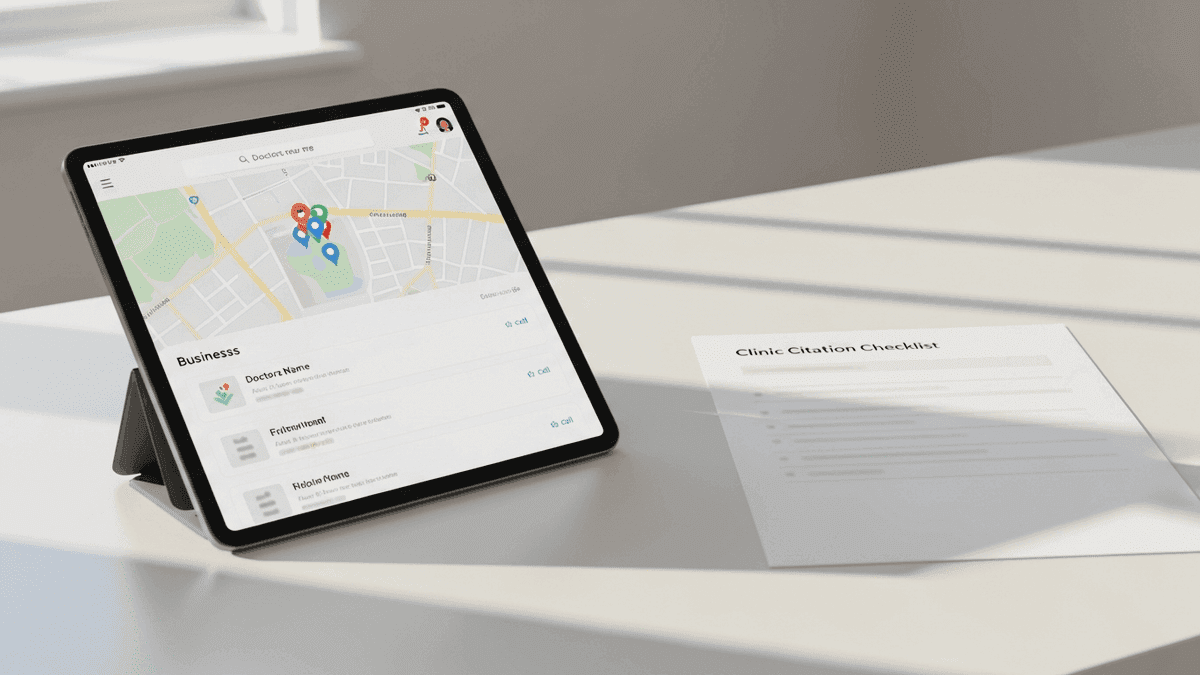
Local SEO is not the whole of healthcare SEO, but it is the layer most physician practices feel first. Map pack visibility, citation consistency across directories, review velocity, and category accuracy on your Google Business Profile—all of it supports the owned-site work above.
Multi-location groups need distinct NAP per address, not one city page spamming every metro in the state. Service-area businesses without a public storefront still need honest geography in profiles and content—patients and regulators notice when "local" pages claim cities you never serve.
Reviews are a local signal and a trust signal. Automate a polite post-visit request; train the front desk to mention it once. Generic public replies beat silence; never confirm identity or outcomes in a Google reply—that is a compliance event, not marketing. For the full map-stack playbook, read local SEO doctors. This section stays brief on purpose: physician SEO coordinates local with owned search, not replaces it.
Content and trust signals without a content factory

Content marketing for physicians is not a mandatory daily blog. It is credible pages that match search intent: condition summaries written at an eighth-grade reading level, procedure pages that explain recovery without terror, bios that list board certification and hospital affiliations patients can verify. That is how medical practice marketing strategies compound without hiring a content mill.
Symptom language beats subspecialty jargon. Patients search "doctor for knee pain" more often than "orthopedic sports medicine fellowship-trained." Referring clinicians search criteria—when to refer, what imaging you need first, expected wait times—not adjectives about your compassionate care.
Experience, expertise, authoritativeness, and trust are not footer badges. They are consistent NAP, real photos, accurate credentials, and reviews that match what patients felt. Hospital find-a-doctor pages rank on brand; your owned site ranks on intent you can control—if content and reviews back it up.
Never publish identifiable patient stories without documented consent and a HIPAA-safe workflow. De-identified outcomes beat dramatic testimonials that invite an audit. For broader patient-growth framing beyond search, see how to get more patients for my practice.
Paid search vs owned physician SEO

Our opinion stays blunt: paid ads are rent; SEO is a mortgage. Ads get patients tomorrow. The second you stop paying, you disappear from the auction. Mature grow medical practice online work compounds—especially local search where independent practices still win on intent, not dance trends on platforms your referring doctors ignore.
Hybrid wins for many groups, but only when the listing looks credible when the ad turns off. Ad spend should be paid directly to Google. Agencies that bundle it into one invoice are skimming—you should pay us for strategy and pay the platform for the clicks. That separation is non-negotiable here.
Vanity metrics do not pay malpractice insurance. Impressions without booked appointments are noise. Physician SEO should be measured against calls, form submissions, and new-patient visits you can tie to source—not a ranking report that looks pretty in a quarterly deck.
When not to hire us yet

Do not hire us—or anyone—if the profile is unclaimed, if ghost listings still fork your phone number, if the site cannot convert map traffic, or if the new-patient panel is full and marketing would lie about capacity. Fix the free layer first. Marketing's job is to make the phone ring; if the front desk puts people on hold forever, you are setting budget on fire.
We tell small practices to optimize their Google profile before signing a retainer they do not need. We tell groups with full surgical schedules to fix wait-panel messaging before we publish "book today" copy that cannot be true. We make money when the work is real—not when we sell hope on top of a broken intake path.
When the map is clean, the site converts, and you have new-patient room, read how it works or book a discovery call on pricing.
Straight answers
What is physician SEO in plain terms?
Matching search intent to owned pages, plus the local signals—GBP, reviews, citations—that make Google trust one coherent practice entity.
Should we fix Google Business Profile before hiring an agency?
Usually yes. Verify the profile, merge ghosts, align NAP. Technical work on top of a forked map layer wastes quarters.
How is this different from local SEO for doctors?
Local SEO is the map layer. Physician SEO is the full stack—site architecture, on-page, content, and local coordinated together.
What on-page tasks can we maintain in-house?
Titles, meta descriptions, headings, internal links, and bios on core service pages—plus schema a developer templates once.
Are Google Ads enough without SEO?
Ads are rent. Hybrid works, but the listing must stay credible when spend pauses. Separate ad invoices from agency fees.
How does SEO relate to website design?
Design is conversion—speed, booking, mobile. SEO is what you publish and optimize on that foundation.
When should we hire an agency?
When map hygiene is done, the site converts, the new-patient panel has room, and nobody in-house can maintain on-page SEO plus a realistic refresh cadence.
For performance budgets on mobile, Core Web Vitals still matter when content pages pile on images and widgets. Light pages rank better and bleed fewer map clicks.
We tell physicians when to keep charting instead of signing a retainer. Go finish your charting. When the map is clean and the site still cannot convert, we will say so—even when the answer is boring.