
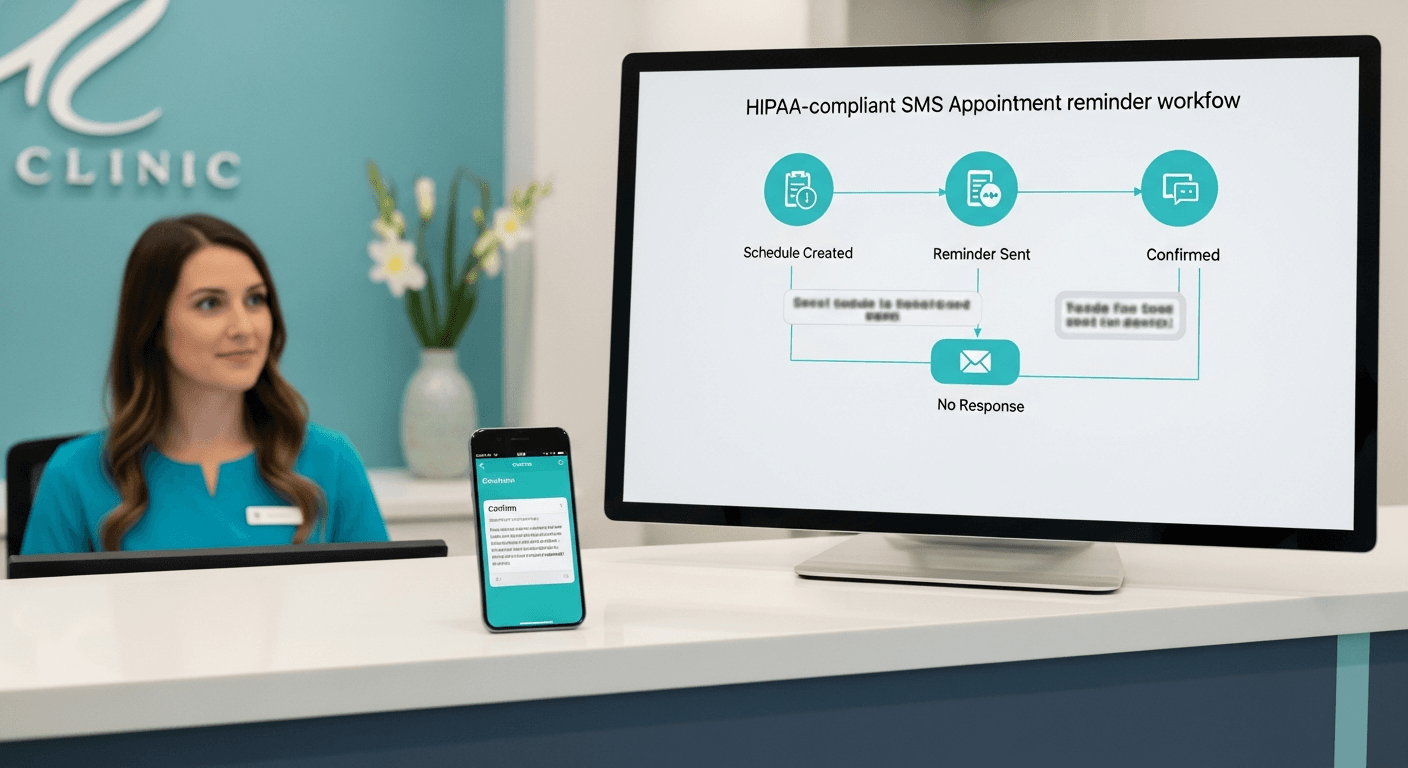
Diagnosis: the SERP for reduce patient no-shows with automated SMS is vendor homepages claiming 38% drops next to EHR upsells. Your problem is narrower—six open slots this week, a front desk that still calls patients at 4 PM, and a reminder toggle nobody tested after the last software update.
Nine times out of ten, the useful question is not "Which SMS platform won the comparison chart?" It is "Will this text embarrass us on a lock screen, and does our phone tree deserve patients who actually booked?" (Yes, you should be charting. We will not tell.)
Why no-shows cost more than an empty chair
A no-show is not just a missed copay. It is provider time you cannot sell twice, staff time spent rebooking, and a schedule that looks full on paper while the afternoon bleeds margin. Let's look at the math: a slow site that loads in over three seconds can bleed roughly 40% of visitorsbefore they ever hit book. Reminders fix a different leak—the patient who already booked and forgot—but the empty chair still hits the same P&L line.
Automated SMS wins here because humans forget, not because texts are magic. A confirmation at booking, a nudge when reschedules still backfill, and a same-day ping beat forty outbound calls that go to voicemail. The goal is predictable attendance without adding a payroll line for "reminder caller."
Fix the phone tree before you blast SMS
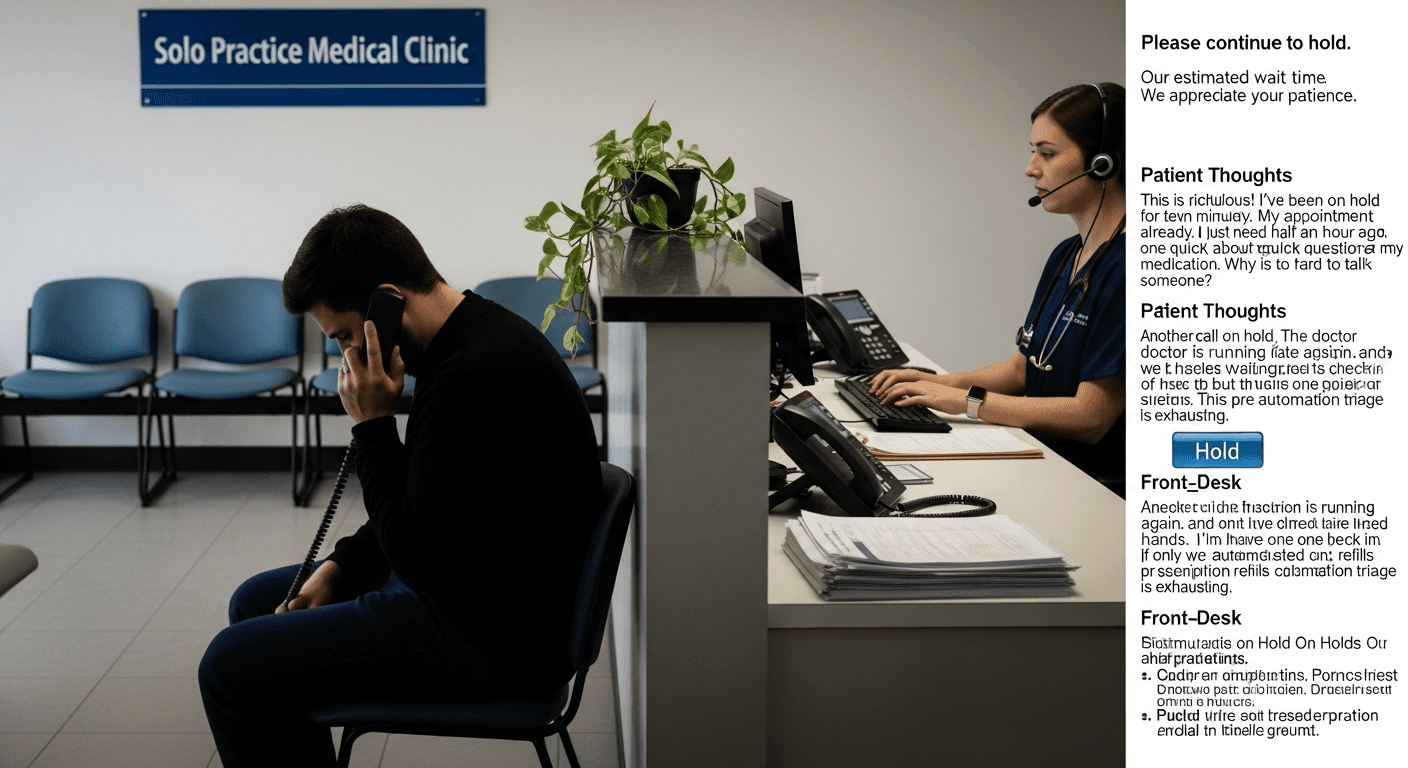
Marketing's job is to make the phone ring. The front desk's job is to convert that ring into a booked visit that actually shows up. If a patient calls, sits on hold for ten minutes, hears a clipped tone, and hangs up—reminder software is not the problem. The intake process is.
Audit your own main line on a Monday morning. Time the hold. Listen to the greeting. If that experience would make you Google a competitor, fix it before you fund SMS. Automation amplifies what already works. It cannot rescue a broken first contact. That is the opinion we share with every clinic buying reminder tiles while the hold music still loops.
Same rule for online booking: if your intake form broke over a weekend and nobody noticed until Monday, texts will confirm appointments that never should have existed. We had a multi-location ortho clinic lose high-value consults exactly that way—online intake failed silently, and the schedule looked full while leads evaporated. Dev had the API rebuilt in under two hours once someone picked up the phone. Monitor the pipes before you automate the drip.
HIPAA SMS consent and opt-out rules
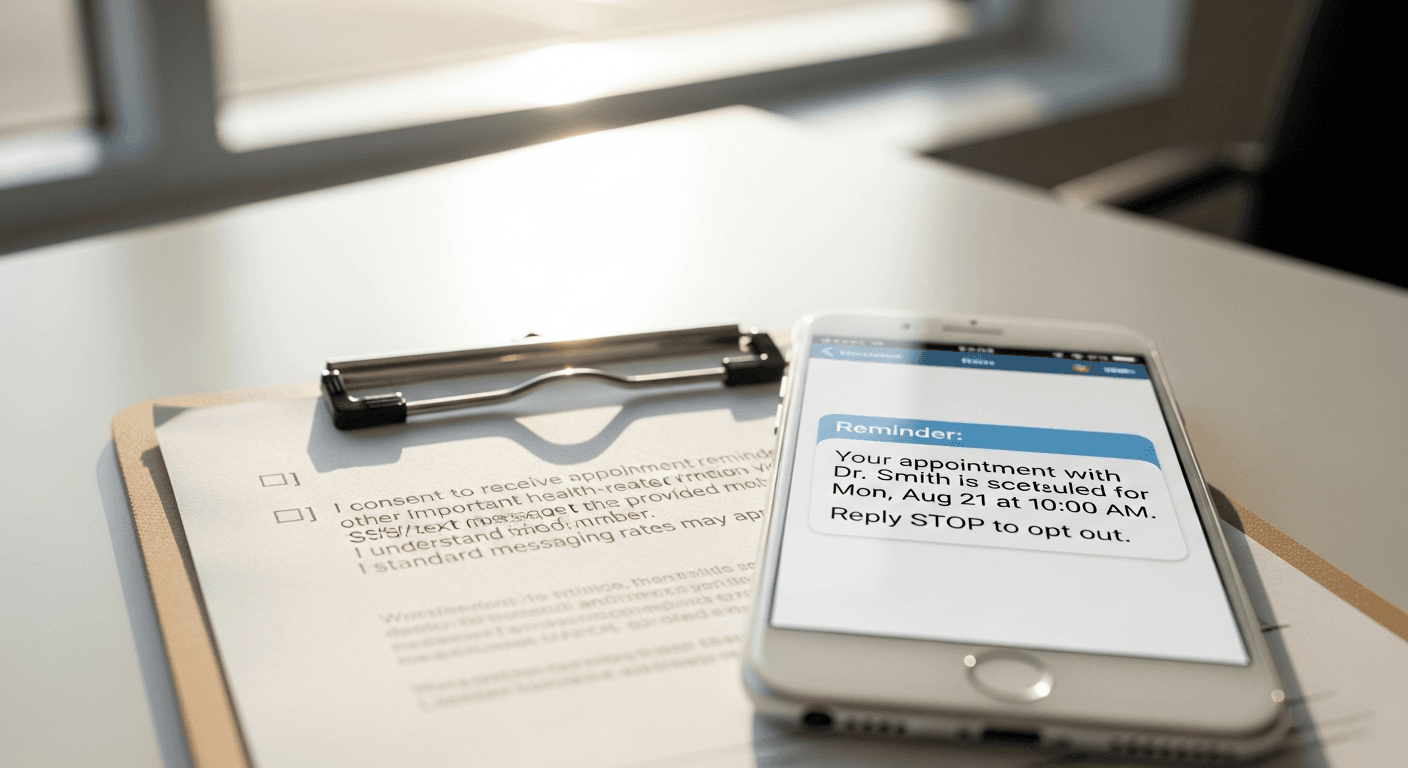
HIPAA SMS consent for appointment remindersis not a checkbox you hide in page forty-seven of intake. Document preference for SMS, store it in the chart, and route through a vendor with a signed Business Associate Agreement—not Brenda's personal phone with patient names in the group thread. (We have seen that group thread. No.)
Minimum-necessary preview text matters because lock screens broadcast the first line. Safe: "Reminder: appointment Tue 3 PM with Dr. Lee at Riverside Family Medicine. Reply C to confirm or call 555-0100. Reply STOP to opt out." Unsafe: "Your A1c follow-up for uncontrolled diabetes is tomorrow." The HHS HIPAA resources are dry reading. They are still cheaper than an OCR fine.
Honor STOP immediately and log it. Separate transactional appointment reminders from marketing blasts when your platform allows distinct message classes—patients treat them differently even if your vendor bundles them in one dashboard.
Reminder cadence that survives real clinic chaos
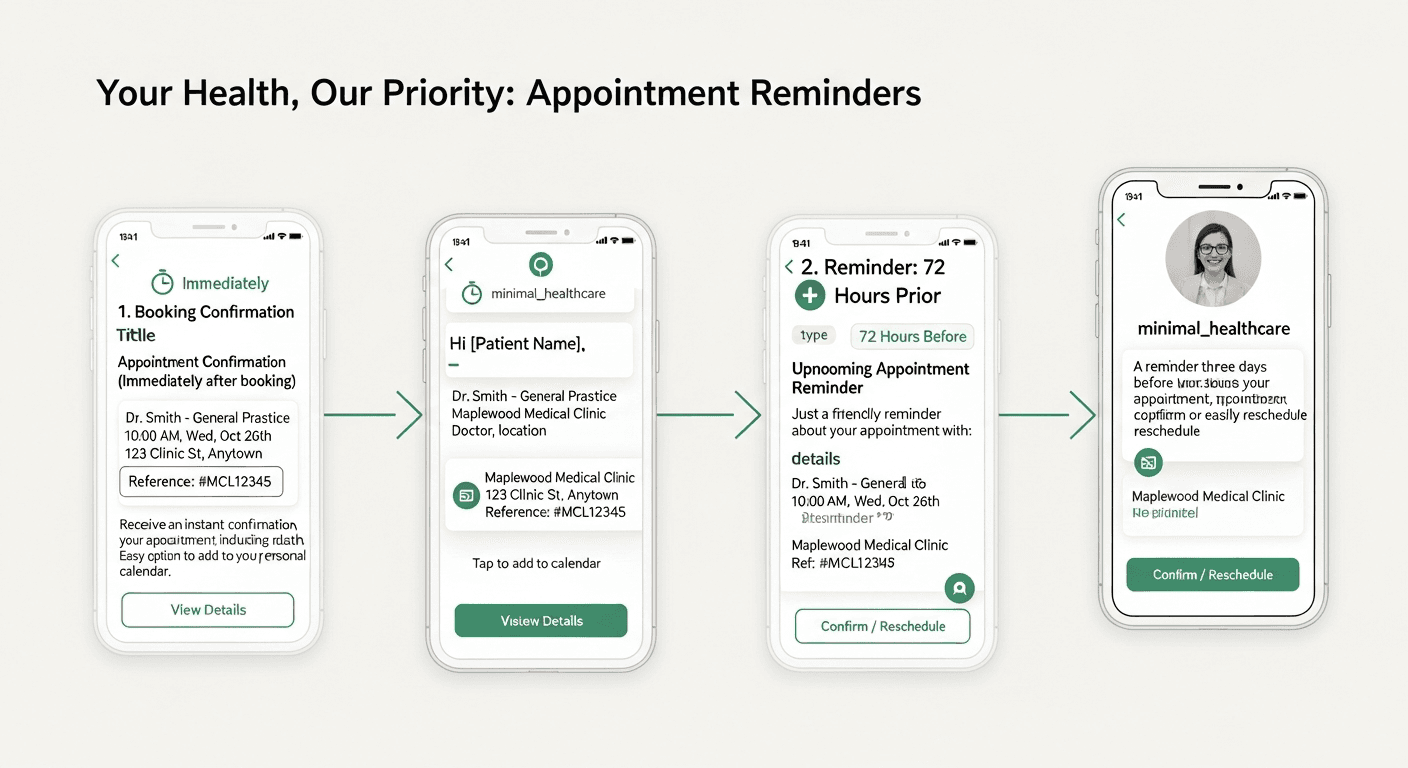
Appointment reminder timing for solo clinicsthat actually sticks is three touches, not one blast the night before. Booking confirmation anchors the visit. A reminder about 72 hours out is when most honest reschedules happen—give a one-tap path to move, not a wall of phone-tree prompts. Same-day check-in is the lightweight hook: "See you at 10 AM—reply C to confirm or R to reschedule."
Two-way SMS beats one-way announcements. "Your appointment is tomorrow" is easy to ignore. "Reply YES to confirm or RESCHEDULE for a link" forces a response that either locks the slot or gives your desk actionable intel before the hole opens. Route confirmations back into the schedule when the EHR integration is configured—otherwise staff re-type replies and the automation tax returns.
We launch new reminder workflows within 14 days from kickoff per our onboarding SLA when the clinic already has clean scheduling data. Garbage export in, garbage text out.
Vet your EHR and vendor before you sign
Before you shop best patient scheduling and CRM software for solo practice lists, ask whether native EHR reminders already suffice. Many solo clinics never outgrow built-in SMS until multi-location routing, waitlist backfill, or two-way confirm breaks manual workflows. See healthcare CRM for solo providers for the broader intake layer map.
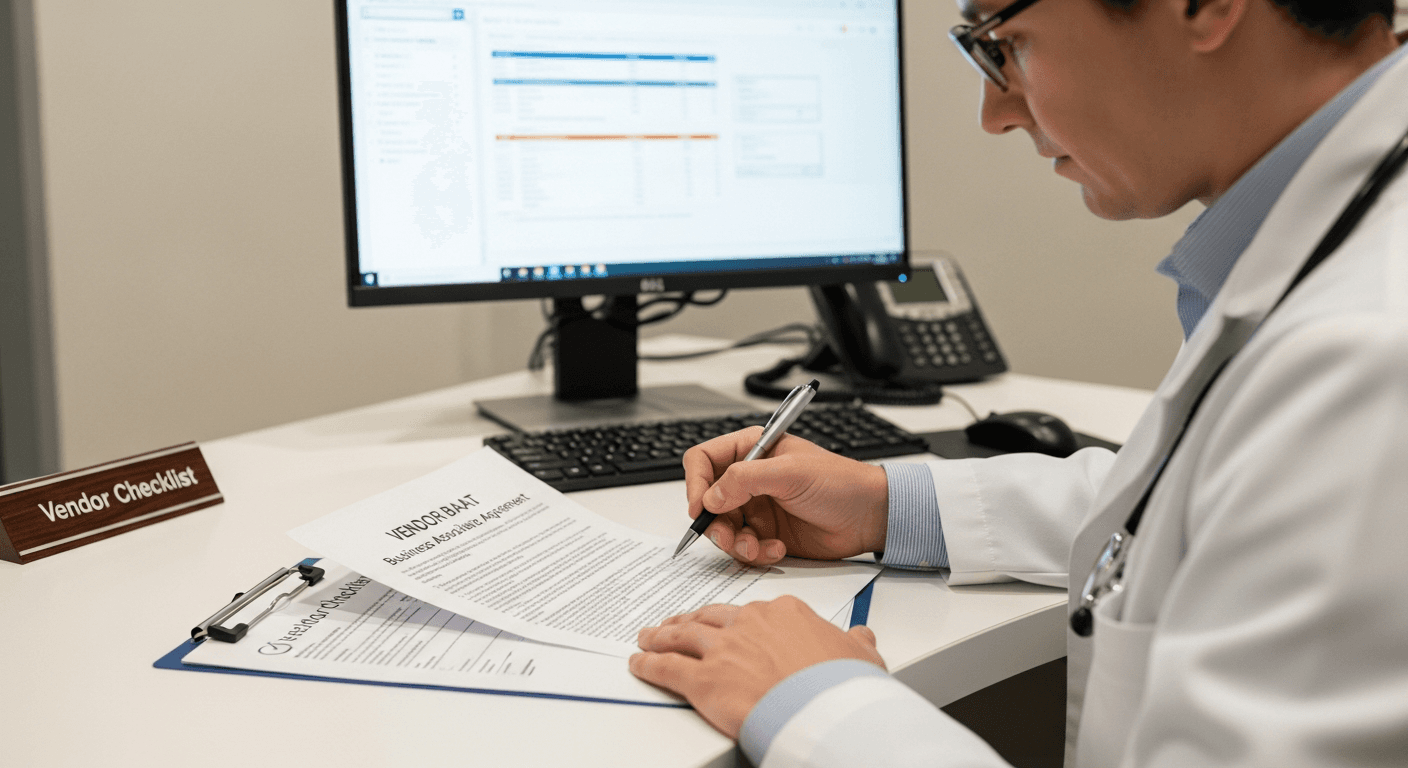
Vendor checklist: signed BAA, encrypted transit and storage, audit logs, STOP handling, timezone-aware scheduling sync, and a demo of what happens when a patient replies RESCHEDULE at 9 PM. Ask who owns the phone number if you leave—hostage numbers are the reminder equivalent of the hostage domain story we hear on discovery calls.
Test with ten real appointments before you flip the whole panel. Watch for duplicate texts after schedule changes, reminders firing for cancelled visits, and messages that still reference a provider who left in 2023. EHR sync is where automation dies quietly.
Tie reminders to retention without mixing intents
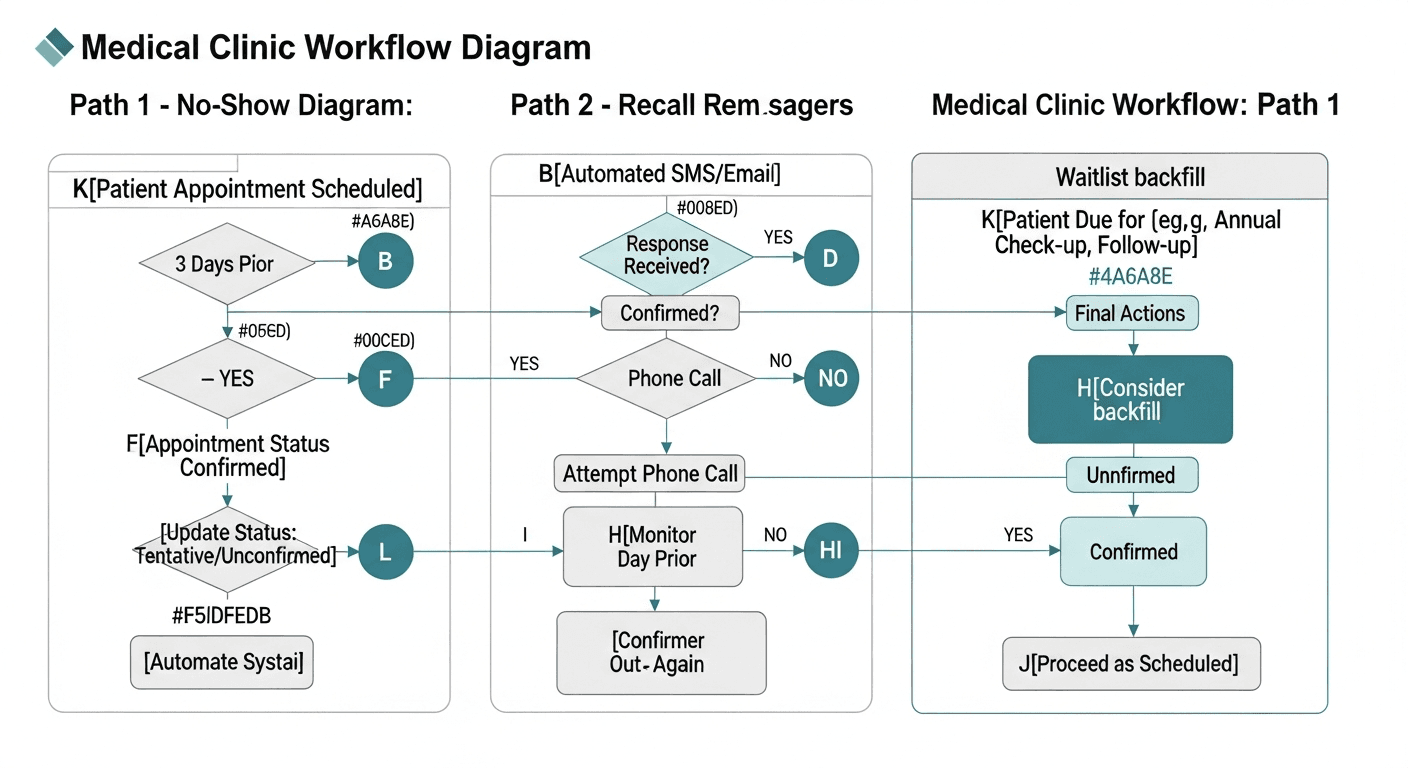
No-show SMS confirms booked visits. HIPAA compliant patient recall systems chase overdue follow-ups in your active panel. Strategies to fill empty appointment slots backfill holes after a cancel. Same patient phone, three different lists—mix them and patients learn to ignore everything.
Retention is the compound effect: fewer no-shows, cleaner recalls, faster backfill, and a map pin that still earns calls. For the broader retention rail, see medical practice patient retention. If ratings slip under 4.0 stars, online conversion can crater by up to 60%—fix operations and review replies before you text harder.
Straight answers
Are automated SMS appointment reminders HIPAA compliant?
Only with a BAA-covered vendor, documented consent, minimum-necessary preview text, and STOP handling—not consumer texting apps at the front desk.
How much can SMS reminders reduce patient no-shows?
A three-touch cadence with two-way confirm/reschedule typically cuts no-shows meaningfully once intake works. Reminders do not fix a hold queue that already hangs up on callers.
What should a HIPAA-safe appointment reminder text say?
Practice name, date, time, location, confirm/reschedule path, opt-out—not diagnosis labels or lab values in preview text.
How many SMS reminders should a clinic send before an appointment?
Booking confirmation, ~72-hour reminder with reschedule path, and a same-day check-in. More touches without preference data usually annoys more than it helps.
Can patients reply STOP to clinic appointment reminder texts?
Yes. Honor STOP immediately, log opt-outs in the chart, and separate transactional reminders from marketing when possible.
Do solo practices need separate reminder software or can the EHR handle SMS?
Many EHRs cover basics until volume, routing, or waitlist backfill breaks manual workflows—then evaluate add-ons with BAAs and two-way sync.
What is the difference between no-show SMS and patient recall?
No-show SMS confirms booked visits. Recall chases overdue follow-ups. Backfill fills cancels today. Keep the lists separate.
If reminders are firing but chairs still sit empty, book a discovery call on pricing. Read how it works when intake is clean and you need owned scheduling ops—not another vendor deck. Go finish your charting.