

Diagnosis: the SERP for patient acquisition strategiesis enterprise guides and intake SaaS pages that assume a marketing department, three locations, and someone whose calendar says "media mix modeling."
Your reality is narrower—one door, one scheduling line, a website that might still load like it is waiting on prior auth. (Yes, you should be charting. We will not tell.)
This guide maps patient acquisition strategies for solo and small independent clinics: what acquisition actually means at one-provider scale, the three layers to fix in order, when to choose owned infrastructure over marketplace rent, and how to report results without vanity metrics.
What patient acquisition means when you are not a hospital system

Patient acquisition is the path from stranger to booked visit. Not brand awareness. Not a billboard with your smiling stock-photo attending. A human who did not know your name yesterday taps call, completes intake, and shows up Thursday.
Hospital marketing decks treat acquisition like irrigation—spray budgets across service lines because waste is absorbable. Solo clinics treat it like vasopressors: small doses, tight indications, stop if intake cannot handle the load.
Secondary terms that belong on this same intent stack include how to attract new patients, how to increase patient volume, and medical practice marketing strategies when the searcher wants a sequence—not a channel buffet. Keep one honest page instead of three thin URLs that fight each other in search.
Retention still matters. Acquisition without recall is like discharging a patient without follow-up instructions. For panel hygiene, cross-read medical practice patient retention.
Three layers: discovery, conversion, operations
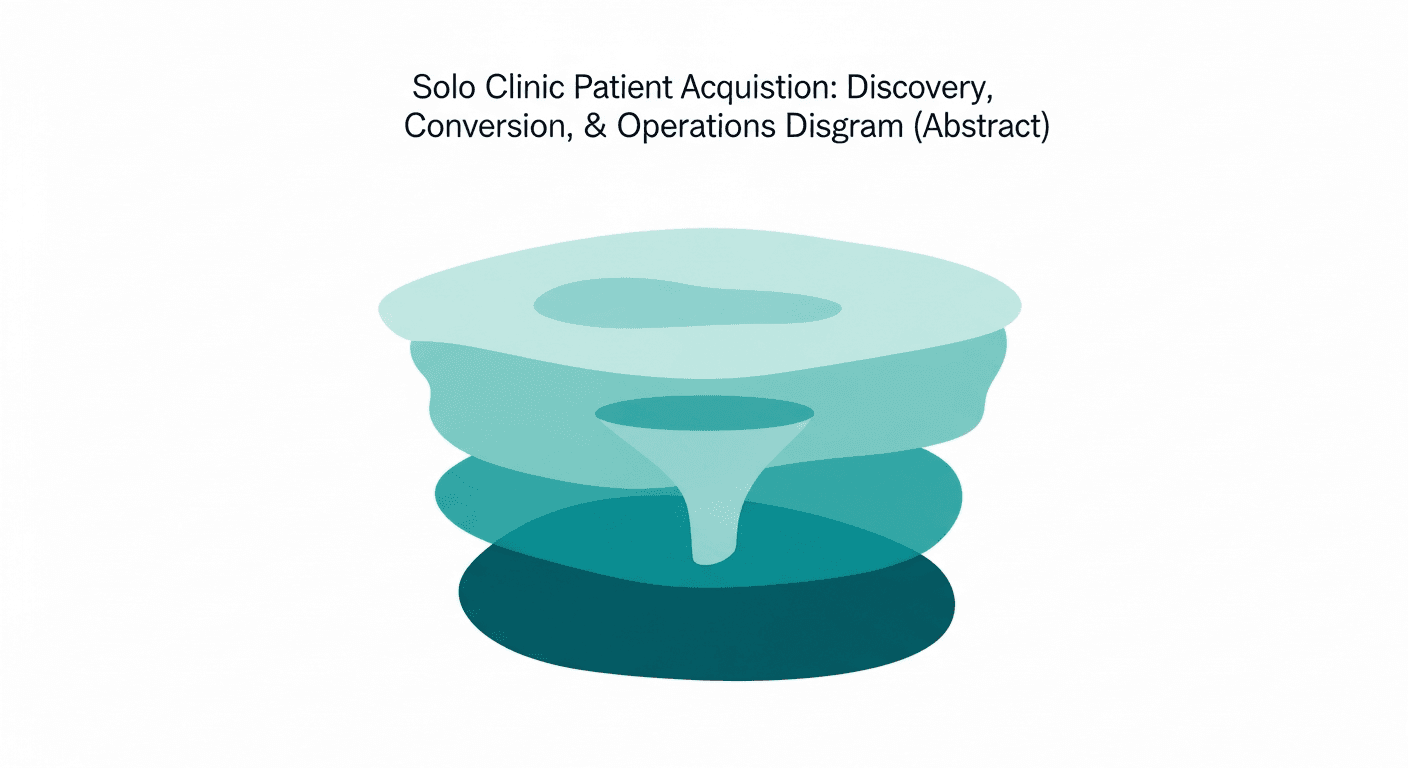
Competitors hand you ten tactics in random order. We use three layers because that is how a one-front-desk clinic actually fails.
Discovery is whether the right patient can find you—Maps, local search, referrals, and paid placement when earned visibility is thin. A clinic on page two of local results captures less than 1% of that search demand. Discovery is circulation, not brochure design.
Conversion is what happens after the click—site speed, trust signals, booking path, phone answer time. A three-second load can push roughly 40% of visitors away. That is four out of ten people leaving your digital waiting room while the front desk holds.
Operations is whether the visit actually happens—scheduling rules, no-show follow-up, review asks, recall cadence. Marketing that fills a calendar your staff cannot service is just expensive chaos.
Fix discovery before you optimize conversion. Fix conversion before you scale operations with more ad spend. Skipping layers is how clinics fund traffic into a voicemail box.
Map, intake, and phone before paid media

Our hot take stays simple. Claim Google Business Profile before you fund a fancy retainer. Google cross-checks that entity against your site and major directories; when the three agree, the map layer stops arguing with itself.
Ghost listings split authority like duplicate charting splits the chart. A partner leaves, the sign changes, and now two profiles argue about the fax number. Merge duplicates, align name-address-phone data, and make sure the number on Maps is the number Brenda actually answers.
Audit the front desk before you buy clicks. Marketing's job is to make the phone ring. If callers sit on hold while someone finishes charting, you are setting ad budget on fire. For map-first sequencing, see local SEO doctors and healthcare PPC management for solo providers.
Official reference: Google explains verification and business information in their Business Profile Help Center.
Owned site vs marketplace rent
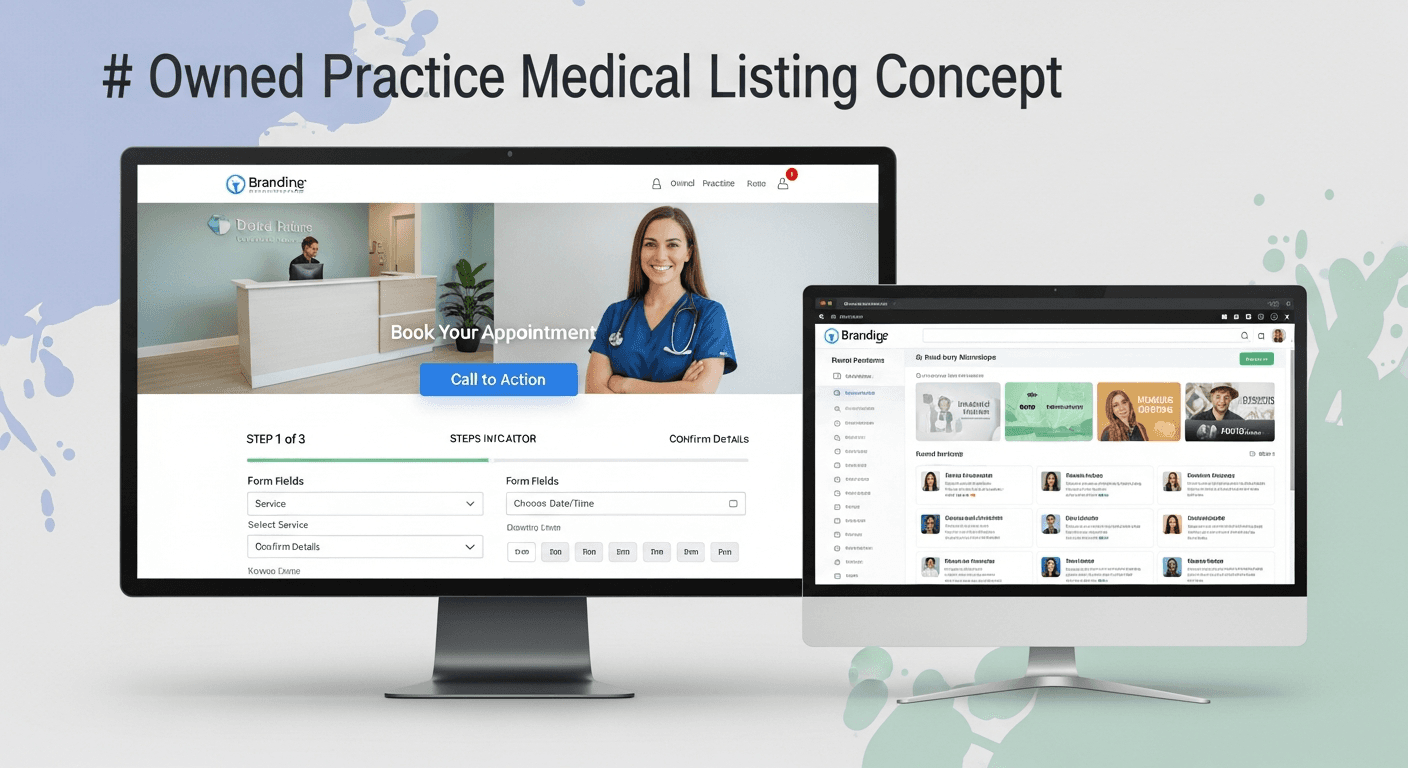
Paid ads are rent. Mature SEO behaves more like equity over time. Marketplaces are also rent—you pay for visibility on someone else's shelf, and when the fee jumps, your Tuesday afternoon empties out.
A specialized dental clinic once showed us a competitor quote: $3,000 a month for a "comprehensive marketing package." Under the hood it was $500 of actual Google Ads and $2,500 of management fees on a template shared by forty other dentists. We separated ad spend from the retainer, rebuilt the owned funnel, and dropped cost per acquisition materially. That is the math we care about.
Marketplaces can fill short-term schedule holes. Use them with eyes open. Pair marketplace spend with an owned booking path so you are not one platform policy change away from zero new patients. Read the full rent-vs-equity argument in ZocDoc vs own patient acquisition channel.
On a twelve-month horizon, average paid cost per acquisition for high-ticket procedures can sit around $150–$300 while mature SEO drags blended acquisition toward $35. Hybrid wins for many clinics we run across 412 scaled campaigns—but only when the owned path converts.
Reporting that ties to booked visits, not vanity metrics

Impressions do not pay malpractice insurance. Likes do not fill the 2:40 slot. Report map calls, form completions that reach scheduling, and cost per booked visit—then ask whether operations can handle the volume.
When ratings drift under 4.0 stars, online conversion can crater by up to 60%. Fix chairside experience and public review replies before you celebrate traffic graphs. Stars are triage for strangers, not decoration.
We launch new campaigns within 14 days from kickoff per our onboarding SLA, then deliver monthly reporting by the fifth of each month. Transparent data beats a PDF that smells like toner and fear.
Google publishes a calm overview of how search fits together in the SEO Starter Guide. HHS maintains marketing and privacy boundaries at HIPAA Privacy Rule resources—know where PHI stops on public forms.
When we want you to do the free stuff first

We once talked a doctor out of a four-figure monthly retainer because his new suite was not verified. Google had mailed a postcard. He had not typed the five-digit code. We told him to find the postcard, finish verification, and call us if Maps still looked wrong. He was fine two days later.
That is the bar. If you have not claimed the profile, fixed obvious duplicates, or listened to how the main line sounds on hold, spend thirty minutes there before you send a wire. We make money when work is real, not when you are guessing in the dark.
If the site is five or more years old and is not reliably mobile-friendly, rebuild before you pour budget into acquisition. You cannot put premium fuel in a broken engine. For the rebuild threshold, see 2026 doctor website checklist for solo providers.
If you want the step-by-step of how we operate before you book time, read how it works.
Straight answers

What are patient acquisition strategies for a solo medical practice?
For an independent clinic, they are the ordered work of getting strangers to discover you, convert to a booked visit, and show up—starting with one clean map entity, a phone tree the front desk can answer, and an owned site path before you rent traffic from marketplaces or ads.
What is the difference between patient acquisition and patient retention?
Acquisition fills the schedule with people who have never booked you. Retention brings existing patients back for follow-ups, recalls, and referrals. Solo clinics that only chase new names while ignoring recall lists leak panel volume like a slow IV.
Should a solo practice run paid ads before fixing local SEO?
Usually no. If Google Business Profile is unverified, duplicated, or sending callers to a stale number, paid clicks amplify confusion. Claim the map entity, merge ghost listings, and confirm intake works before you fund traffic.
Are marketplace listings like ZocDoc a patient acquisition strategy?
They are rent. Marketplaces can fill short-term holes in the schedule, but you do not own the booking path, the reviews, or the patient relationship. Pair marketplace spend with an owned site and map entity so you are not one fee hike away from an empty Tuesday.
Should ad spend be bundled with patient acquisition agency fees?
No. Pay the vendor for strategy and execution; pay Google or Meta directly for media. Bundled invoices hide markup and make it impossible to see whether clicks or slide decks ate the budget.
What metrics matter for patient acquisition reporting?
Booked visits, cost per booked visit, map calls, and form completions tied to scheduling—not impressions, likes, or traffic that bounces in three seconds. Vanity metrics do not pay malpractice insurance.
When should a solo clinic pause patient acquisition spending?
When intake goes to voicemail, online booking breaks on mobile, ratings sit under 4.0 stars with unanswered negatives, or cost per booked visit climbs with no operational fix. Acquisition amplifies a working funnel; it does not replace a broken front desk.
We have been at this since 2016 across 412 clinics with a 92% retention rate because we treat doctors like partners, not billing codes. Go finish your charting. If the acquisition layers still look scrambled after you do the free fixes, book a discovery call on pricing and we will tell you the truth, even when the truth is boring.