

Diagnosis: the SERP for healthcare PPC management for solo providersis agency listicles and enterprise PPC guides that assume a marketing department, three locations, and someone whose job title includes "media mix modeling."
Your reality is narrower—one door, one scheduling line, a website that might still load like it is waiting on prior auth. (Yes, you should be charting. We will not tell.)
This guide covers what solo and small independent clinics should demand from healthcare PPC management: account ownership, separated ad spend, campaign types that fit your chair time, HIPAA-safe landing pages, and honest reporting—not vanity impressions that never booked a visit.
PPC for solo clinics is not the enterprise playbook

Hospital marketing teams run healthcare PPC like irrigation—spray budgets across service lines, geographies, and brand campaigns because they can absorb waste. Solo providers run it like vasopressors: small doses, tight indications, stop if the patient—your intake desk—cannot handle the load.
Enterprise guides tell you to build separate campaigns for orthopedics, cardiology, and urgent care. Fine if you employ twelve subspecialists. If you are one internist with a nurse and a part-time MA, you need one clean campaign architecture tied to services you actually deliver this quarter—not a media plan that reads like a hospital org chart.
Paid ads are rent; SEO is closer to a mortgage. That is our hot take, and we stand on it. PPC buys patients tomorrow; organic search compounds when you stop paying. Solo clinics often need a modest hybrid—local search ads while local SEO for doctors matures—but only if the free layers are not leaking first.
Vanity metrics do not pay malpractice insurance. Impressions without booked visits are a fever chart nobody acts on. If your vendor's weekly report leads with click-through rate but never mentions calls answered or appointments scheduled, you are funding slide decks.
Map, intake, and phone before media buy
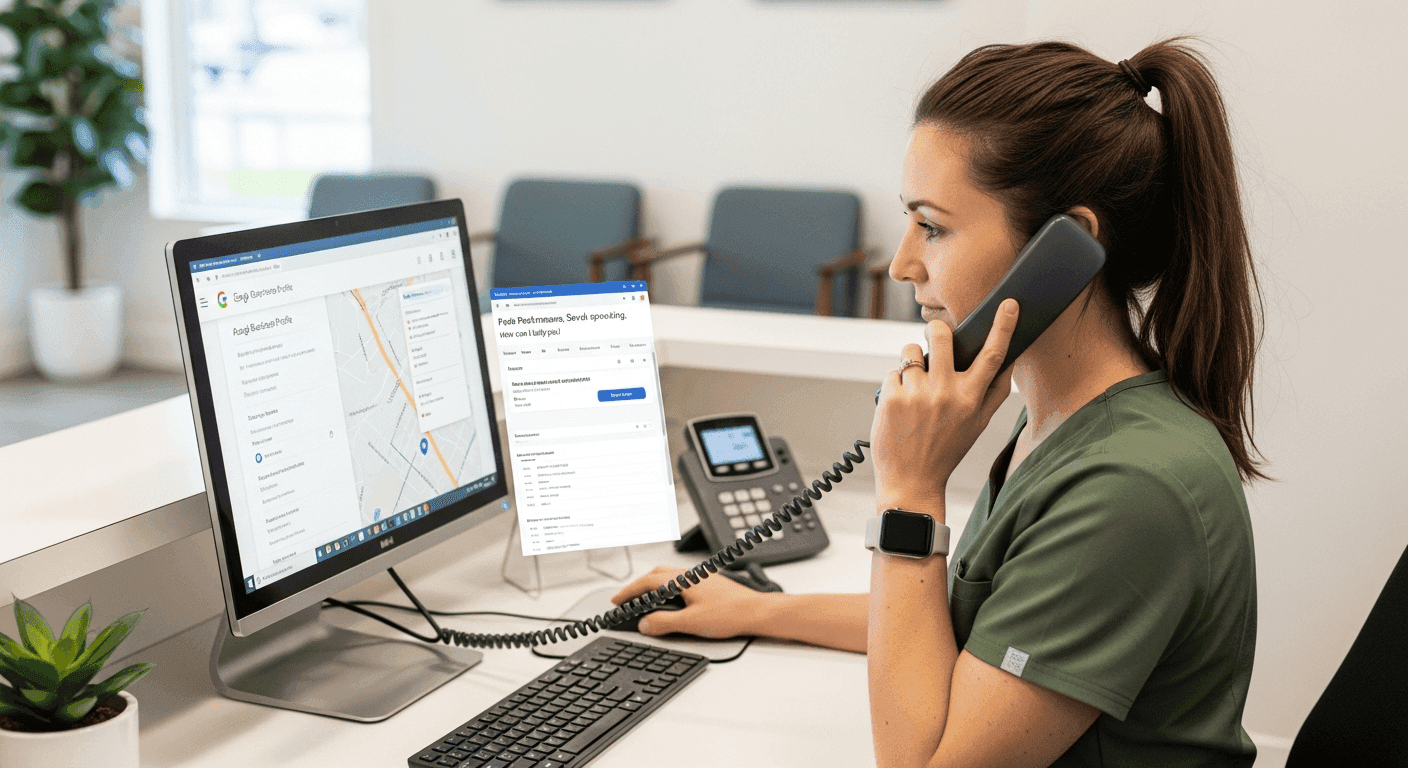
Nine times out of ten, a solo clinic wants healthcare PPC because the phone got quiet. The cheaper fix is often map triage, not media spend. Unverified Google Business Profiles, duplicate listings from an old address, and a main line that rolls to voicemail behave like a burst pipe—paid clicks just flood the basement faster.
We once had a frantic call from a doctor ready to sign a four-figure monthly SEO retainer because his new clinic was invisible on Maps. He had not entered the postcard code Google mailed to his front desk. He verified the profile, ranked locally within days, and we talked ourselves out of a contract. That is the Missing Map Pin story, and it applies double to PPC: do not buy traffic to a map pin that does not exist.
Before any healthcare PPC management contract, run this intake audit:
- Google Business Profile claimed, hours accurate, primary category matches how patients search—not how your credential line reads on a plaque.
- One coherent name-address-phone trail from map to site to citations; merge ghost listings from departed associates or old suites.
- Main scheduling line answered live during business hours; if it goes to voicemail, fix that before call extensions.
- Mobile booking works end-to-end on the phone patients actually use—not just on your desktop in the breakroom.
If the map layer is broken, read why is my medical practice not showing up on Google before you fund ads. Marketing makes the phone ring; your front desk closes the loop.
Separate ad spend from agency fees

Ad spend should be strictly separated from agency fees. You pay us—or any vendor—for strategy and execution. You pay Google directly for the clicks. Bundled invoices are where markup hides and accountability dies.
A specialized dental clinic once showed us a competitor quote for a "comprehensive marketing package"—one monthly number that sounded impressive until we opened the hood. Most of the invoice was management fees on a template website shared with dozens of other dentists; a thin slice actually reached Google Ads. We separated ad spend from the retainer, rebuilt the funnel around owned search, and the practice finally saw what each dollar bought.
Demand line-item clarity in every healthcare PPC management proposal:
- Management fee (strategy, build, optimization, reporting)
- Media spend (paid directly to Google or Microsoft on your card)
- Software (landing pages, call tracking, CRM—listed separately)
- No "package" that obscures which line bought clicks
Same rule for domains and ad accounts. If an agency registers your Google Ads account under their MCC and refuses transfer credentials, that is the Hostage Domain problem wearing a different badge. Own digital assets from day one.
Google Ads setup solo providers should own
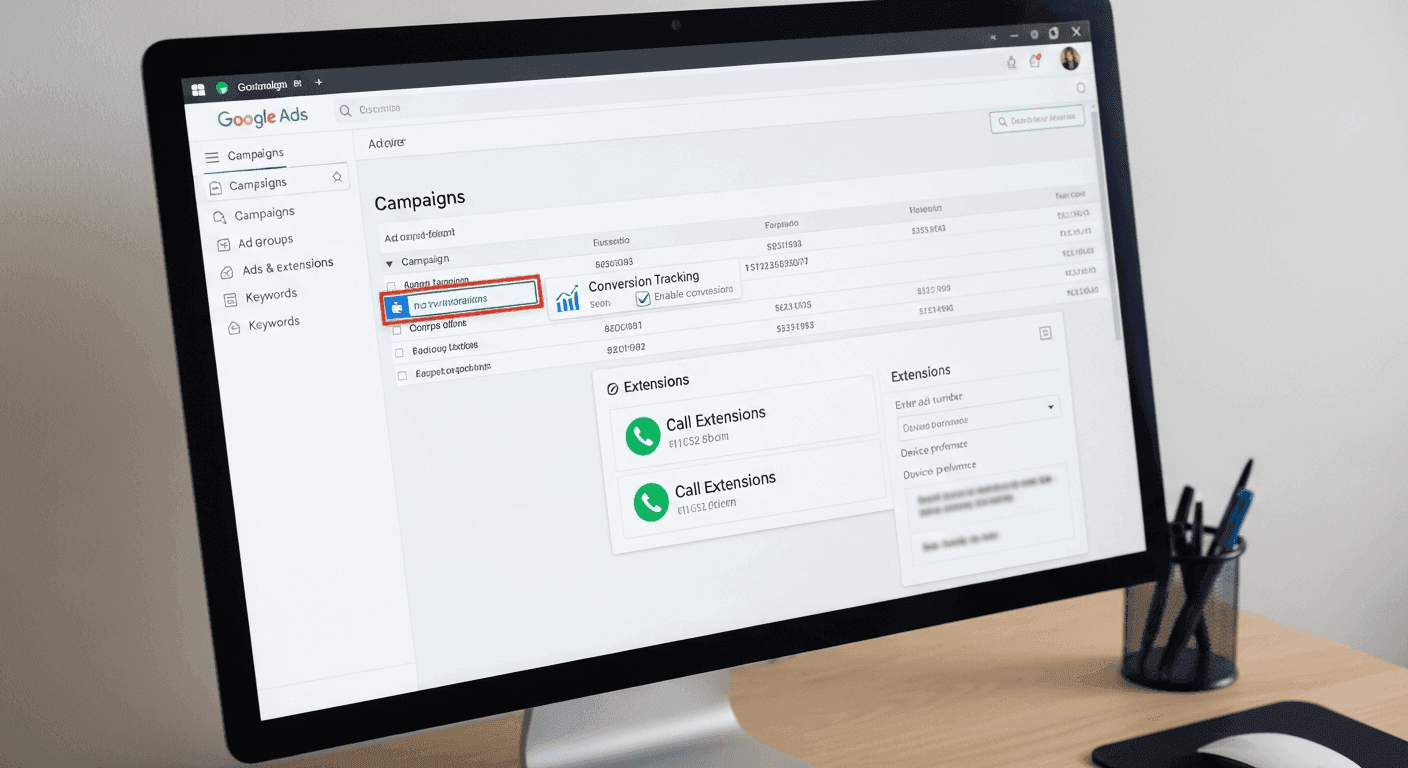
Healthcare PPC management for solo providers starts with account hygiene, not clever bid tricks. Register Google Ads under clinic email, enable conversion tracking on booked appointments and qualified phone calls, and document who has admin access—your office manager, your vendor, nobody else.
Campaign skeleton for a one-location clinic:
- Brand campaign—cheap insurance so competitors do not buy your name while you sleep.
- High-intent service campaigns—keywords that signal booking, not Wikipedia homework.
- Geographic radius that matches where patients actually drive, not where you wish they lived.
- Call extensions only when someone answers; otherwise you are paying to train patients to hit voicemail.
Reporting should answer one question: did paid search produce booked visits at a cost your panel can sustain? A useful real-time patient acquisition ROI dashboard ties ad spend to calls, form fills, and scheduled appointments—not impression share theater. If your vendor cannot show which keywords produced which bookings, you are flying without vitals.
Review search term reports monthly. Healthcare queries attract career searches, symptom homework, and insurance navigation. Negative keywords are digital triage—cut the bleeding early. Google Ads policy for healthcare advertisers also restricts certain claims; policy disapprovals are cheaper than account suspensions.
Campaign types that fit small clinics
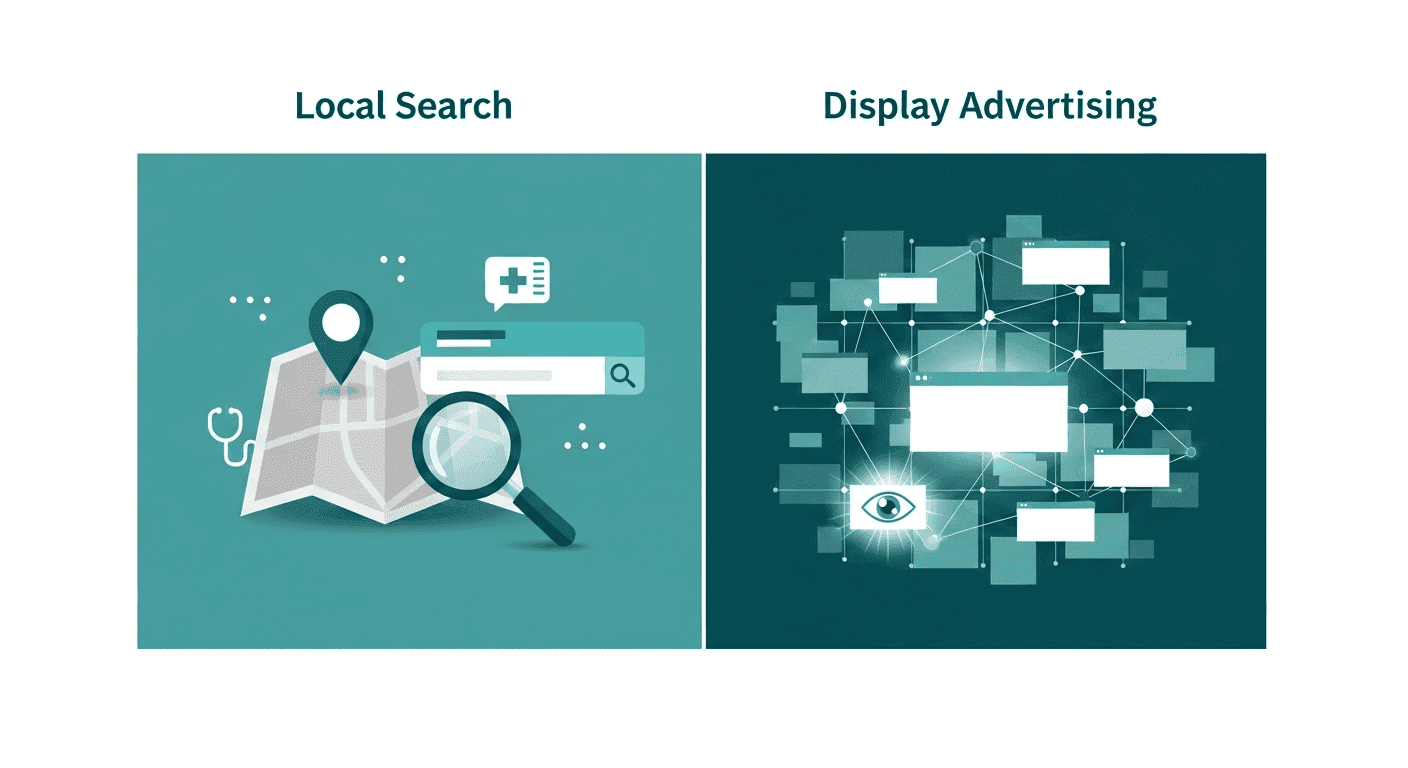
Solo clinics do not need every Google product enabled because a vendor gets commission on spend. Match campaign type to intent and to how much intake bandwidth you have this month.
Search and local intent first.Queries like "family doctor accepting new patients" or "dermatologist near me" carry booking energy. These belong in search campaigns with tight match types until negative keyword lists mature.
Local Services Ads where eligible can work for some specialties, but read eligibility and screening rules before you budget around them. Not every solo practice qualifies, and the intake path still has to convert.
Performance Max and broad display are seductive—Google loves them because they spend. For a solo clinic without clean conversion data and a dedicated landing page per service, PMax often teaches the algorithm to hunt cheap clicks that never schedule. Walk before you sprint.
Local search ads vs display for solo physicians: display builds familiarity; search captures intent. If your schedule has open slots next week, bias toward high-intent search. If you are launching a new service line and have proof-ready landing pages, test modest display retargeting only after search converts reliably.
Align ad copy with landing page headlines. Mismatch—ad promises same-day, page buries the phone number—is a conversion leak worse than slow site speed. For broader patient acquisition strategies, paid search is one channel in the panel, not the whole treatment plan.
Healthcare PPC landing pages and HIPAA intake
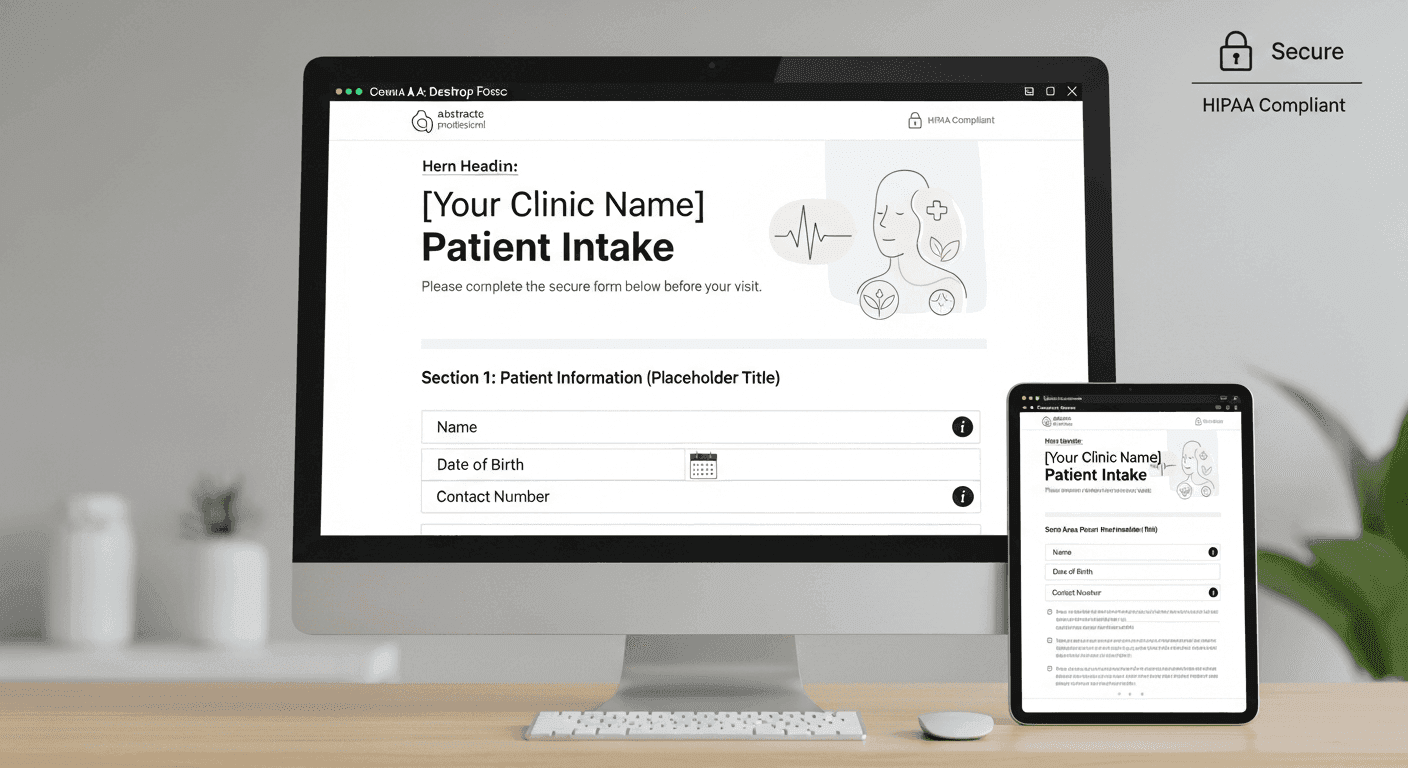
The click is the easy part. The landing page is where solo clinics win or waste healthcare PPC management fees. One service, one headline matching the ad, one obvious call action—book online or tap-to-call—not a homepage that makes patients hunt through your entire credential scroll.
Do not DIY the compliance layer. Generic contact plugins collecting clinical histories are the marketing equivalent of touching the gas line without a permit. HHS guidance on marketing and privacy remains the baseline when patient-identifying information could enter a form or follow-up workflow.
HIPAA-safe healthcare PPC landing pages for solo providers usually include:
- Name, phone, email, preferred appointment window
- Reason for visit in plain patient language—not ICD codes in a dropdown
- No free-text medical history fields on a marketing form
- Thank-you page that sets expectation for callback timing
- Form vendor with a BAA when PHI could be stored or transmitted
Mobile-first is non-negotiable. Patients click ads on phones between meetings. If your landing page hides the call button below three paragraphs of brochure copy, you paid for a bounce. Fast load beats fancy animation—digital plaque on landing pages narrows conversion the same way it narrows arteries on an old website.
When not to hire us yet

We would rather talk you out of healthcare PPC management than invoice you to amplify a broken funnel. Pause—or never start—paid search when:
- Google Business Profile is unverified or fighting duplicate listings
- The main scheduling line routinely hits voicemail during business hours
- Online booking fails on mobile mid-flow
- Negative reviews sit unanswered while ads promise five-star bedside manner
- Your agency holds the Ads account or domain hostage
- Reporting shows clicks but nobody tracks booked visits
Fix the free layers first: claim the map pin, merge ghosts, audit the phone tree, patch the booking link. Then evaluate how we work or compare vendors in our solo-practice agency guide. Book a discovery call when the intake path can handle the volume—not when you need a expensive placebo for a quiet schedule.
Straight answers

What is healthcare PPC management for solo providers?
Running Google Ads sized to your intake—search and local intent, owned accounts, conversion tracking on booked visits, landing pages your front desk can convert—not hospital-scale media plans.
Should a solo doctor run Google Ads before fixing local SEO?
Usually no. Unverified or duplicate map listings send paid traffic to the wrong number. Fix the map entity and phone path first.
Should ad spend be bundled with management fees?
No. Pay vendors for work; pay platforms for clicks. Bundled invoices hide markup and obscure accountability.
Who should own the Google Ads account?
The practice. Grant vendors access; never surrender ownership. Transfer refusals are a red flag.
What campaign types fit small clinics?
High-intent local search first. Call extensions when someone answers. Be cautious with Performance Max until tracking and landing pages are clean.
What landing page fields are HIPAA-safe?
Contact and scheduling fields only—no clinical histories on marketing forms. Use HIPAA-eligible vendors with a BAA when PHI could enter the flow.
When should a solo practice pause PPC?
When intake fails—voicemail, broken booking, silent angry reviews—or when cost per booked visit climbs without an ops fix. Ads amplify working funnels; they do not patch burst pipes.
Healthcare PPC management for solo providers is not about outspending the hospital down the road. It is about owning the account, separating ad spend from fees, and sending paid traffic to an intake desk that actually picks up. Go finish your charting. We will handle the media math when the front door is ready.