

Diagnosis: healthcare SEO for a solo or small group clinic is not a quarterly initiative named after a vendor slide deck. It is the discipline of making your practice findable, credible, and bookable—before you rent every click.
If you only need the map layer—GBP, citations, reviews—read our local SEO for doctors guide. If you need the owned-site and on-page checklist, read physician SEO. This hub sits above both: what healthcare SEO means for independent practices, how the layers stack, and when a healthcare seo company retainer is actually worth signing.
What healthcare SEO means for solo clinics
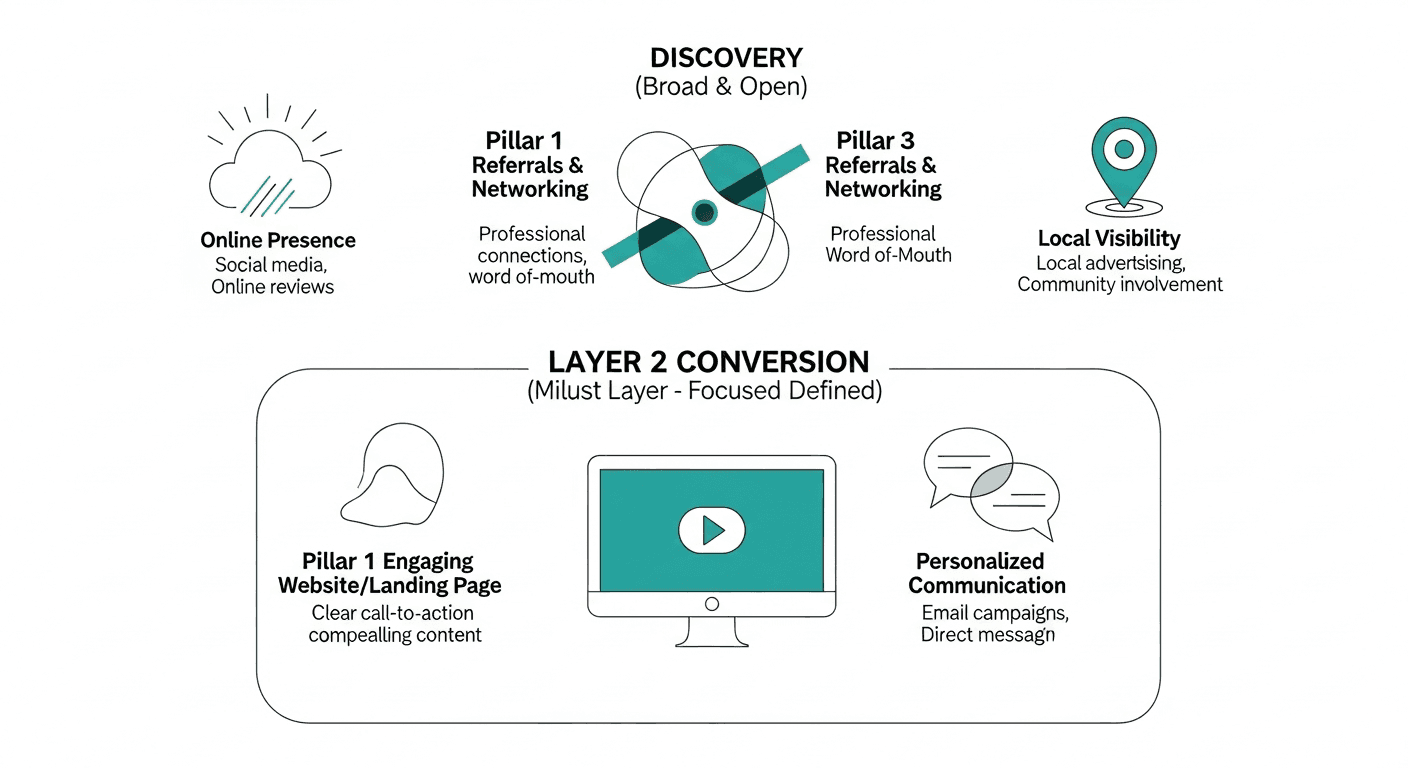
Healthcare SEO is search work scoped to medical sites: owned pages that answer patient questions, local signals that prove you exist at one address, and trust cues that survive YMYL scrutiny. For a solo clinic it is not a content factory. It is a maintainable stack your staff can touch between clinic days.
Patients search in plain language. Referrers search for programs and names. The algorithm does not care that your internal org chart calls you "Center for Advanced Musculoskeletal Optimization." It cares whether the digital front door matches the physical one.
Secondary terms that belong on the same intent path include grow medical practice online and medical practice marketing strategies—but only when the reader wants the full discovery-to-booking map, not a ten-item channel buffet. One hub. One honest scope.
Healthcare SEO is not generic SEO—or a hospital growth deck
Generic SEO blogs tell you to publish more, buy links, and chase volume. Healthcare SEO adds YMYL rules, HIPAA boundaries on intake, hospital map noise, and patient language that rarely matches your billing codes. Copy a retail playbook and you get pretty traffic that cannot book—or worse, a form that should never have touched PHI.
Enterprise guides also love AI Overviews, referrer journeys, and employer funnels. Useful if you run twelve service lines and a paid search team. Less useful if you are one physician trying to fill Tuesday afternoons without hiring a content mill.
Google's quality raters treat medical content as Your Money Your Life. That means experience, expertise, authority, and trust must show on the page—not in a footer badge you bought from a template vendor. For the official framing, see Google's helpful content documentation.
Three pillars: discovery, conversion, operations
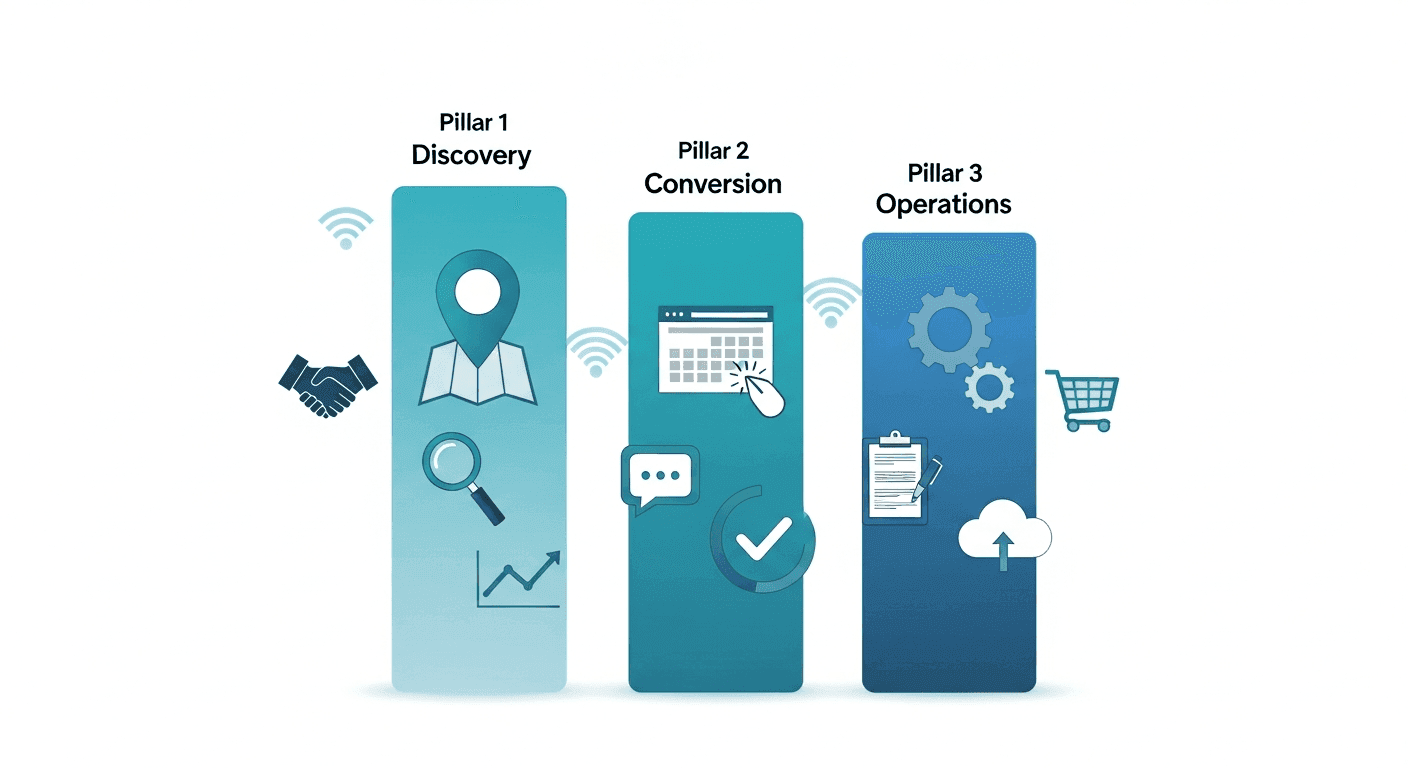
Nine times out of ten, a clinic that says "SEO is not working" has a discovery problem wearing a conversion costume. Fix the layers in order.
Discovery is map and organic visibility—Google Business Profile, citations, condition pages, and the organic terms that feed the phone. Conversion is what happens after the click: mobile speed, booking paths, click-to-call, forms that stay on the marketing side of the HIPAA line. Operations is whether the front desk answers, reviews get replies, and recall does not die in a spreadsheet.
Buying SEO software before discovery is clean is like ordering an MRI before you inspect the wound. You get a expensive picture of a problem you could have triaged at the door. Our patient acquisition strategies guide uses the same three-layer map with more channel detail if you need it.
YMYL trust without a content factory

You do not need fifty blog posts per quarter. You need credible pages that match what patients search: condition summaries written in plain language, physician bios with real credentials and photos that look like your clinic—not a stock-photo ward, and internal links that connect symptoms to booking paths.
Our opinion on stock photography stands: glossy models in fake white coats convert worse than a slightly imperfect iPhone shot of your actual waiting room. Patients are not stupid. They can smell a brochure.
Doctor reviews belong in the trust layer too—not as a reputation circus, but as a steady ask after good visits plus public replies that sound human. Tie review work to our online reputation healthcare guide if the map stars are already bleeding.
Local healthcare SEO and the map handoff
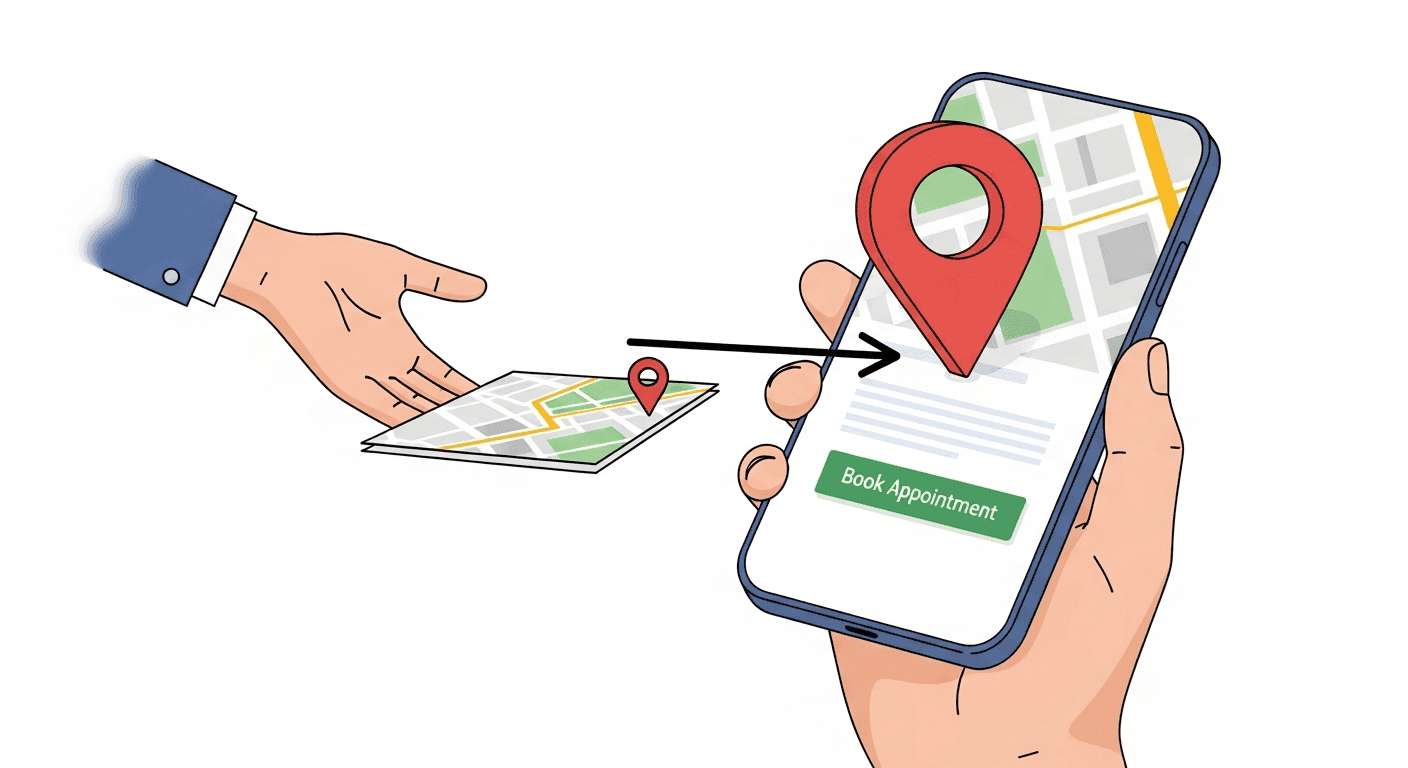
Local healthcare SEO is the bridge between a map tap and a booked visit. Older practices often carry ghost listings—duplicate profiles from a retired associate or an old suite number—that split authority like duplicate charting splits the chart. We merge those roots, align name-address-phone data, and make sure the site footer matches what the front desk says aloud.
Claim your Google Business Profile before you fund a fancy retainer. That is not marketing advice. It is the same class of boring work as reconciling vitals before you order a pressor. For map-specific ops, read Google maps doctors and keep one coherent entity per door.
Official reference: Google explains verification and business information in their Business Profile Help Center.
Agency retainers vs staffable in-house SEO

A medical SEO experts for private practitioners pitch sounds great until you realize half the deliverable is a ranking report nobody at the front desk can read. In-house works when someone can maintain titles, meta descriptions, internal links, and review replies on a sane cadence. Agency work earns its fee when the map is clean, the site needs structural fixes, and nobody has hours to spare.
Our opinion stays blunt: paid ads are rent; SEO is a mortgage. Ads get patients tomorrow. Turn off spend and you vanish from the auction. Mature healthcare SEO compounds—especially local search where independent practices still win on intent. Hybrid wins for many groups, but ad spend should be paid directly to Google. Agencies that bundle clicks into one invoice are skimming. Pay us for strategy. Pay the platform for traffic.
For patient-growth framing beyond search—same refusal to bundle ad spend—see how to get more patients for my practice.
Top US cities to prioritize healthcare SEO first
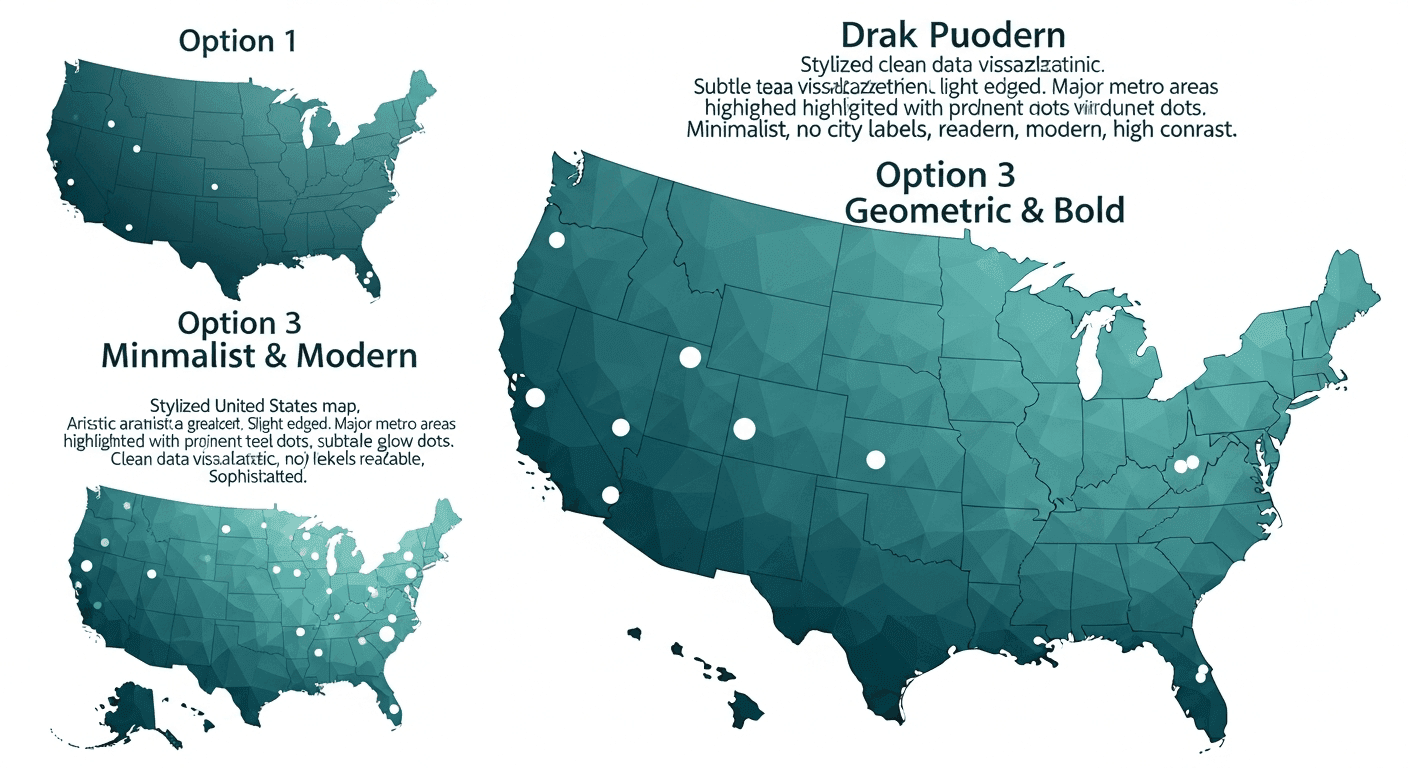
DataForSEO city-volume pulls were unavailable on our account when this guide shipped, so we tier metros the way we advise solo launches: population density, hospital map noise, and whether you actually have privileges or satellite hours there. Never build location pages for cities you cannot serve.
| Tier | Metros to prioritize |
|---|---|
| Tier 1 | New York, Los Angeles, Chicago, Houston, Phoenix |
| Tier 2 | Philadelphia, Dallas–Fort Worth, Miami, Atlanta, Boston |
| Tier 3 | Denver, Seattle, San Diego, Charlotte, Nashville |
Start with your real service radius. Add one location page per metro only when NAP, hours, and booking paths differ—or when competition from hospital find-a-doctor pages forces a clearer local story. Tier 1 is not a mandate to boil the ocean. It is a sequencing cheat sheet when you have capacity to expand beyond your zip code.
When not to hire us yet

We once had a frantic call from a doctor ready to sign a four-figure monthly SEO retainer because his new clinic was not showing on Google Maps. He had not verified the postcard sitting on his front desk. We told him to type the five-digit code and call back if he still needed help. He ranked locally within two days. We talked ourselves out of a retainer because it was the right thing to do.
Do not hire us—or any healthcare seo company—if the profile is unclaimed, if ghost listings fork your phone number, if the site cannot convert map traffic, or if the new-patient panel is full and marketing would lie about capacity. Fix the free layer first. Marketing makes the phone ring; if the front desk puts people on hold forever, you are setting budget on fire.
When the map is clean, the site converts, and you have room on the schedule, read how it works or book a discovery call on pricing.
Straight answers
What is healthcare SEO for a solo medical practice?
Making your clinic findable through owned pages, local map signals, and trust cues you can maintain between patient days—not a hospital content program.
How is healthcare SEO different from physician SEO?
Healthcare SEO is the umbrella. Physician SEO is the owned-site stack. Local SEO for doctors is the map layer. Same clinic, different layers—each has its own guide on this site.
Should we fix Google Business Profile before hiring?
Usually yes. Verify the profile, merge ghosts, align NAP. Paid SEO on top of a forked map layer wastes quarters.
What are the three pillars?
Discovery, conversion, operations—in that order when budget is tight.
Is healthcare SEO different from generic business SEO?
Yes—YMYL rules, HIPAA boundaries, hospital map noise, and patient language that rarely matches internal titles.
Which US cities should we prioritize?
Your real service area first, then Tier 1 metros where you can actually book—only if location pages reflect true NAP and hours.
Agency vs in-house?
In-house for GBP, reviews, and core page edits when someone has bandwidth. Agency when structure, speed, and multi-location cleanup exceed staff hours.
For mobile performance budgets, Core Web Vitals still matter when condition pages pile on images and widgets. Light pages rank better and bleed fewer map clicks.
Healthcare SEO is not a trophy wall on your homepage. It is the boring work that makes the phone ring from search. Go finish your charting. When the map is clean and the site still cannot convert, we will say so—even when the answer costs us a retainer.