

Diagnosis: fix the map pin and the consult path before you fund cosmetic-keyword ads.
Elective surgery marketing is not urgent-care walk-in logic. Nobody bleeds into your lobby from a rhinoplasty search at midnight—they compare, stall, and call three offices. Patient acquisition strategies that work here align search intent with a credible listing and a site that can book a consult without making your coordinator hunt for the form. For the owned-search stack, see physician SEO. For map hygiene, see Google maps doctors. This page stays on the acquisition funnel—visual trust, platforms, referrals, intake—and when not to hire.
Map and consult path before ad spend
Claim your Google Business Profile before you wire Meta or Google Ads to a landing page that cannot convert. For aesthetic surgery, the map card is the first trust filter—stars, photos, hours, and whether tap-to-call actually rings your coordinator. That is the practical side of grow medical practice online for elective work: one verified entity, not three ghost listings from an old suite move.
Ghost listings split authority like tree roots under a sidewalk. An associate who left in 2019, a med-spa address you no longer use, a hospital campus pin that is not your suite—the algorithm does not know which phone number is real. Merge duplicates, align name-address-phone with your site, then talk about creative. Paying for clicks on top of a forked map layer is like bolusing insulin before you check a glucose.
The consult path matters as much as the pin. If the primary action is buried under a video reel and a mission statement, map traffic bleeds. One obvious call button, one short form, one honest line about consult availability. We once talked a surgeon out of a four-figure monthly retainer because the Google verification postcard was still on the front desk unopened. Forty-eight hours later the pin was live. That is the job when the job is not billing.
Owned-site architecture for cosmetic surgery
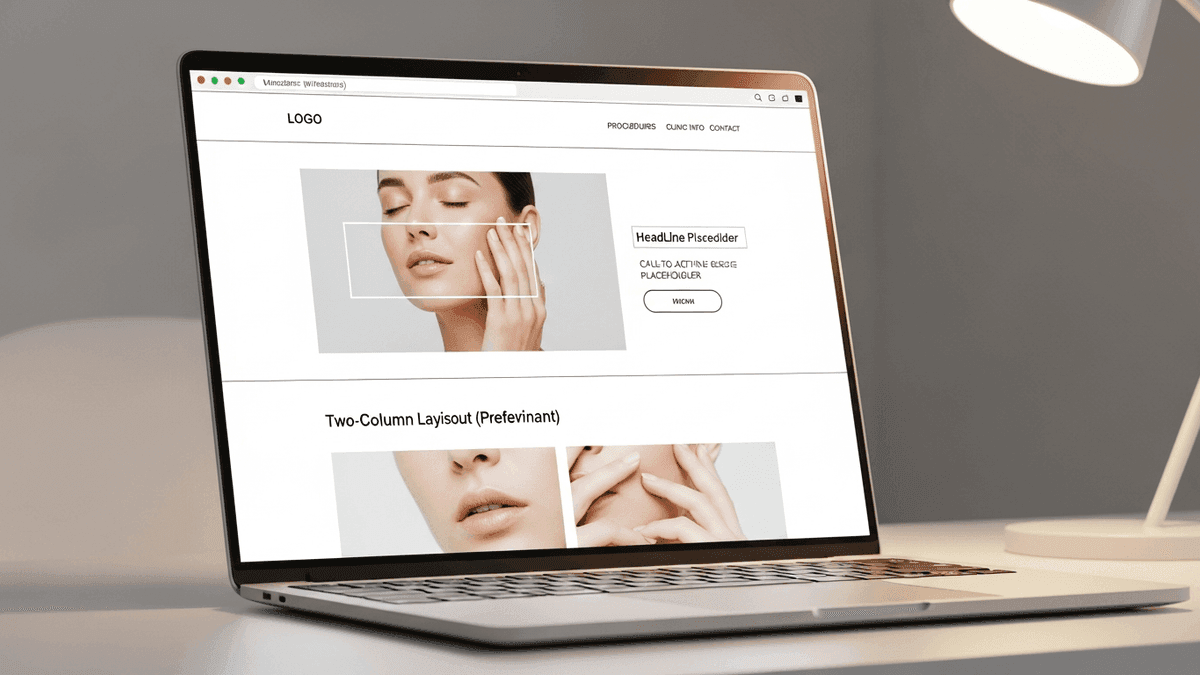
Template-churning agencies slap forty practices on the same skeleton, swap logos, and call it medical practice marketing strategies. Google sees duplicate architecture; patients see a brochure that could be anyone. Your site needs procedure pages for what people search—rhinoplasty, blepharoplasty, mommy makeover, injectables—each answering what it is, who performs it, recovery in plain language, and how to request a consult.
Galleries are not optional for aesthetic work, but they are not a free-for-all. Follow HHS guidance on marketing and privacy and your counsel on before-and-after use—no patient identifiers in captions, no chart details in public copy, no outcome guarantees that read like a warranty. A compliant gallery still builds trust; a reckless one invites OCR attention and platform takedowns.
Mobile-first is how consult requests arrive after a map tap. If load time crawls because widgets stacked like sediment—chat bots, pop-ups, uncompressed hero sliders—you are driving traffic into a waiting room with no chairs. For rebuild-vs-patch decisions, see doctor website builder. For broader practice growth framing, see how to get more patients for my practice.
Visual trust without stock-photo theater

Smiling models in pristine white coats pointing at clipboards look fake because they are. Patients choosing elective work want your actual suite, your real nurses, your face—not a casting agency version of medicine. Slightly imperfect iPhone photos of the OR hallway and consult room often outperform glossy stock on conversion. That is not aesthetic advice; it is pattern recognition from too many site audits.
Video can help when it shows process and scope—what a consult covers, how recovery is discussed, how your team answers common fears—not miracle montages set to royalty-free uplift music. For facial and body aesthetic practices, short-form platforms can fit; your gastroenterologist colleague should not be dancing on TikTok for hemorrhoid care. Platform fit beats platform hype.
Brand consistency beats campaign-of-the-month chaos. One typeface, one tone, one photo standard across site, profile images, and ads. Random Canva templates per season read like a locum agency, not a surgeon patients will trust with their face.
Paid social and search for elective procedures

Paid ads are rent. Mature owned search and procedure pages behave more like equity—but elective cosmetic keywords are expensive, and the auction rewards accounts with clean landing pages and credible listings. Hybrid can work when the map layer is singular and the site converts. Turn off ads and you should still exist locally; that is the test.
Ad spend should be paid directly to Google and Meta. Agencies that bundle platform spend into one invoice are skimming—you pay us for strategy and creative, you pay the platform for clicks. That separation is non-negotiable. Vanity impressions without booked consults are noise; track calls, forms, and consults you can attribute, not a quarterly deck full of charts nobody reads between cases.
Match channel to intent. Search captures procedure curiosity; retargeting reminds people who already visited your blepharoplasty page; broad awareness on social is easy to waste on viewers who will never book. Read increase patient volume owned digital presence for why owned channels should not disappear when rent ends. For dermatology-adjacent cross-traffic, see dermatology specialty.
Referrals, reviews, and public replies

Cosmetic surgeons still live on referrals—dermatologists, primary care, med-spa partners, past patients. Digital marketing should make you easy to recommend: clear procedure pages, correct NAP, bios that list hospital privileges without copying the hospital directory. A referring doc does not want to guess which phone number is current.
Reviews are the stars on the map card. Nine times out of ten the problem is not bad surgery; nobody asked, or the office treats Google like a complaint inbox. Automate a polite post-visit text asking for feedback—no incentives that violate platform rules, no staff writing fake five-star novels. Public replies thank the reviewer, address process concerns, and never include PHI. Treat replies like hallway conversation, not a dictated H&P.
Deeper reputation ops live in online reputation healthcare. For HIPAA-boundary marketing surfaces more broadly, see HIPAA Journal on plastic surgeon digital marketing as a checklist companion—not gospel, but a useful second pair of eyes.
Intake, front desk, and consult conversion
Marketing makes the phone ring. If the front desk puts elective consults on hold while insurance lines eat the queue, ad spend is kindling. Train the script: what a cosmetic consult includes, what financing questions get escalated, how soon someone can be seen. The Monday morning intake crash is not mythology—it is what happens when forms break over a weekend and nobody owns the API.
Online intake must match reality. If every landing page says "same-week consult" and the schedule is six weeks out, you are buying distrust. Align ad copy, site promises, and scheduler availability the way you align pre-op instructions with what nursing actually tells patients.
New patient growth for doctors in aesthetic practices often stalls after the click because nobody owns the handoff from form to coordinator callback. Assign it. Measure it. Fix it before you blame the algorithm for your empty consult slots.
When not to hire us yet
Do not hire us—or anyone—if the profile is unclaimed, if ghost listings still fork your phone number, if the site cannot book or call, or if the consult panel is full and marketing would lie about capacity. Fix the free layer first.
We turn down retainers when the postcard is on the desk, when the last agency registered the domain under their login and called it strategy, or when the OR schedule cannot absorb another elective case. Hostage domains are real: unethical shops register your URL under their account so canceling means losing the site. Own every asset from day one.
When the map is clean, the site converts, and you have consult room, read how it works or book a discovery call on pricing.
Straight answers
What is digital marketing for cosmetic surgeons?
The path from search, maps, referrals, and social to a consult on assets you control—without PHI in public posts or replies.
Should we run ads before fixing the website?
Usually no. Fix the map entity, consult path, and compliant galleries first. Ads to a broken funnel waste elective-keyword budget.
How do we market online without HIPAA trouble?
No identifiers in public replies; BAAs on intake and messaging; counsel-reviewed before-and-after policy.
Is TikTok worth it for aesthetic surgery?
It can be when content is real staff, real rooms, honest scope—not stock theater. Other surgical subspecialties should prioritize local search and referrals.
What should a plastic surgery website include?
Procedure pages, credentials, location, mobile consult CTA, compliant galleries, internal links between related services.
How important are Google reviews?
Often the filter before anyone reads your site. Process beats hope: ask, reply safely, fix intake if reviews mention waits.
When should we hire an agency?
When map hygiene is done, the site converts, consult capacity exists, and nobody in-house can maintain pages and review hygiene between clinic days.
For performance on image-heavy pages, Core Web Vitals still matter when galleries and widgets pile on weight. Light pages keep map clicks from bouncing on load.
We tell surgeons when to verify the postcard instead of signing a retainer. Go finish your cases. When the map is clean and the site still cannot convert a consult, we will say so—even when the answer is boring.